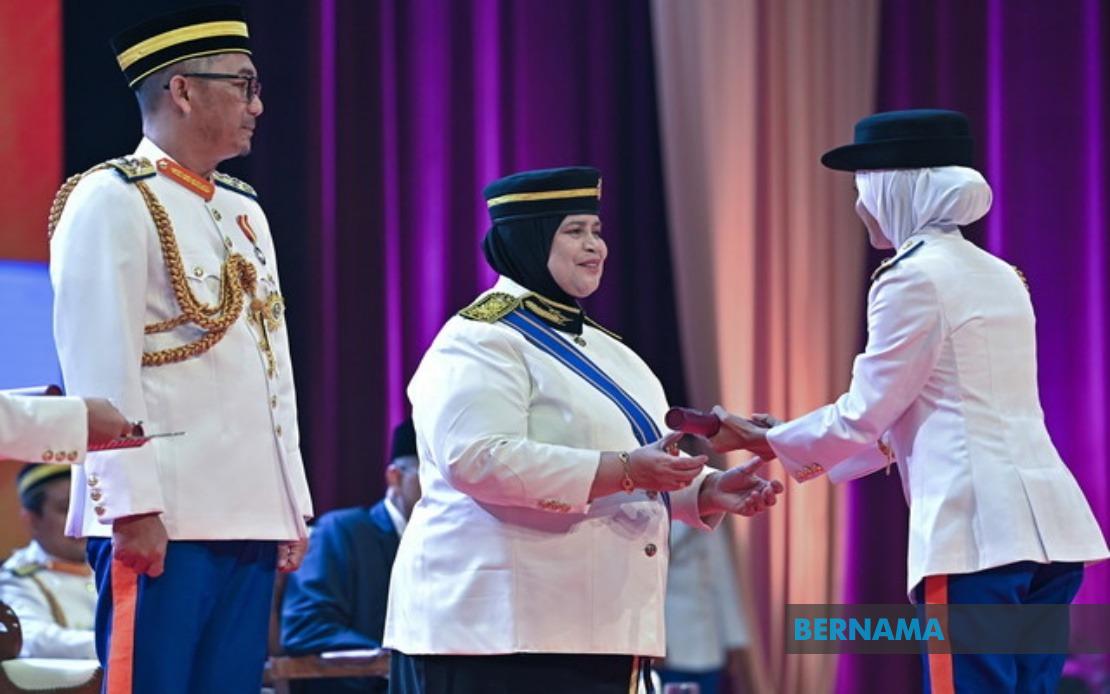
A milestone for Malaysia's Civil Defence Student Corps has been reached with 1,107 cadets from 36 higher learning institutions now eligible to receive a newly sanctioned allowance, with disbursements commencing this month. The development represents a tangible shift from policy discussion to implementation for the youth-oriented programme, which has long sought enhanced recognition of its members' contributions to national safety and emergency response efforts.
Deputy Minister of Rural and Regional Development Datuk Rubiah Wang, speaking at the 17th National Kor SISPA Commissioning Ceremony at Universiti Pendidikan Sultan Idris in Tanjong Malim, articulated the government's commitment to expanding welfare support for the volunteer cadets. She emphasised that the allowance structure reflects a deliberate effort to translate aspirations into concrete action, moving the welfare discussion beyond ministerial tables and into the pockets of participating students. The initiative was unveiled as Rubiah represented Deputy Prime Minister Datuk Seri Dr Ahmad Zahid Hamidi at the ceremony.
The allowance framework operates on an hourly basis, differentiated by educational qualification level. Bachelor's degree holders qualify for RM9.80 per hour, while diploma recipients receive RM8 per hour. This tiered approach acknowledges varying levels of responsibility and competency within the corps, creating a structured incentive system that rewards advanced qualifications whilst maintaining accessible entry points for diploma-level students. The methodology suggests careful calibration to ensure fairness across the programme's diverse membership.
The first phase of implementation carries a financial commitment of approximately RM500,000, though the government has signalled its intention to pursue expanded funding mechanisms in subsequent phases. Rubiah indicated that additional fiscal avenues are being explored to broaden the programme's reach, suggesting that this initial cohort represents merely the beginning of a longer-term welfare enhancement strategy. The phased approach allows the government to manage budgetary implications whilst building momentum for the initiative.
The allowance programme aims to serve multiple policy objectives beyond simple compensation. By providing financial recognition, the government seeks to increase participation rates among university and college students, addressing a potential recruitment challenge within the voluntary civil defence framework. The monetary incentive acknowledges the opportunity cost borne by students who dedicate time to corps activities rather than pursuing other campus or employment opportunities.
Civil Defence operations extend considerably beyond the dramatic disaster response scenarios that dominate media coverage. Kor SISPA cadets contribute throughout the year to campus-based events, community activities, and public safety initiatives both within and beyond university grounds. Rubiah's remarks highlighted this broader operational reality, underscoring that the corps provides consistent, reliable support across multiple contexts rather than responding reactively to emergencies. This perspective is crucial for understanding the cadets' true value within Malaysia's civil defence ecosystem.
The Kor SISPA programme itself represents a substantial investment in youth engagement and emergency preparedness. Established in 2010 across universities, polytechnics, and teacher training institutes, the corps has graduated 11,802 members to date. This track record demonstrates both the programme's viability and its capacity to produce trained personnel equipped with disaster response knowledge, first aid capabilities, and civic commitment. The allowance initiative builds upon this established foundation.
For Malaysian higher education institutions, the allowance programme signals heightened governmental prioritisation of co-curricular activities and civic participation. Universities increasingly compete to attract and retain engaged student populations, and government recognition through financial support enhances the attractiveness of corps participation. This development may encourage institutional investment in facilities and training infrastructure for Kor SISPA units, creating positive feedback loops that strengthen the programme ecosystem.
Regional implications warrant consideration as well. Southeast Asian nations increasingly confront complex disaster scenarios—from typhoons and flooding to industrial accidents and pandemic responses—requiring well-trained civilian reserves. Malaysia's investment in youth civil defence capacity through Kor SISPA positions the country as an exemplar of integrated emergency preparedness strategy. The allowance innovation may prompt neighbouring nations to examine their own youth civil defence programmes and consider comparable incentive structures.
The commissioning ceremony at Universiti Pendidikan Sultan Idris coincided with announcement of the next ceremony's venue: Universiti Sultan Zainal Abidin in 2025. This schedule suggests systematic expansion, with commissioning events rotated across institutions to maintain visibility and reinforce institutional commitment to the programme. Such deliberate sequencing indicates strategic planning beyond ad-hoc announcements.
For current and prospective Kor SISPA members, the allowance represents tangible recognition of their volunteer contributions and signals government commitment to programme sustainability. The hourly calculation method creates direct correlation between service delivery and compensation, fostering transparency and fairness. As Malaysia navigates increasingly complex disaster landscapes and emergency management scenarios, investing in trained civilian capacity through mechanisms like the allowance programme strengthens national resilience structures.
Looking forward, the government's stated intention to explore additional fiscal options suggests the allowance may expand considerably beyond the initial 1,107 beneficiaries. If the first phase succeeds in measurable terms—whether through increased recruitment, improved retention, or enhanced training outcomes—subsequent phases could encompass significantly larger cohorts. The emphasis on phased implementation reflects pragmatic policymaking that balances ambition with fiscal discipline.

