A government-backed tuition initiative has begun providing free academic support to over 1,600 secondary school students across Kuala Lumpur as they prepare for their Sijil Pelajaran Malaysia examinations. The Better SPM Brighter Future Programme, which launched this week at Sekolah Seni Malaysia Kuala Lumpur, aims to give students additional preparation without placing extra financial strain on household budgets at a critical time in their educational journey.
Hannah Yeoh, Minister in the Prime Minister's Department (Federal Territories) and chairman of Yayasan Wilayah Persekutuan, framed the initiative as a response to widespread parental concerns about the mounting costs associated with supplementary education. The programme deliberately sidesteps the private tuition market, which has become increasingly expensive for middle and lower-income families seeking to enhance their children's exam performance. By consolidating resources and expertise through government channels, the scheme offers a sustainable alternative that democratizes access to quality academic preparation regardless of family income.
The four subjects identified as priority areas—Bahasa Melayu, English, History, and Mathematics—represent the core of the SPM curriculum and form the foundation for university entrance and employment prospects. These subjects are particularly critical for students aiming to pursue higher education in Malaysia or internationally, making their selection for subsidized tuition strategically sound. The concentration on these fundamentals reflects an understanding that strong competency in language, numeracy, and social science provides the bedrock upon which students build subject-specific expertise.
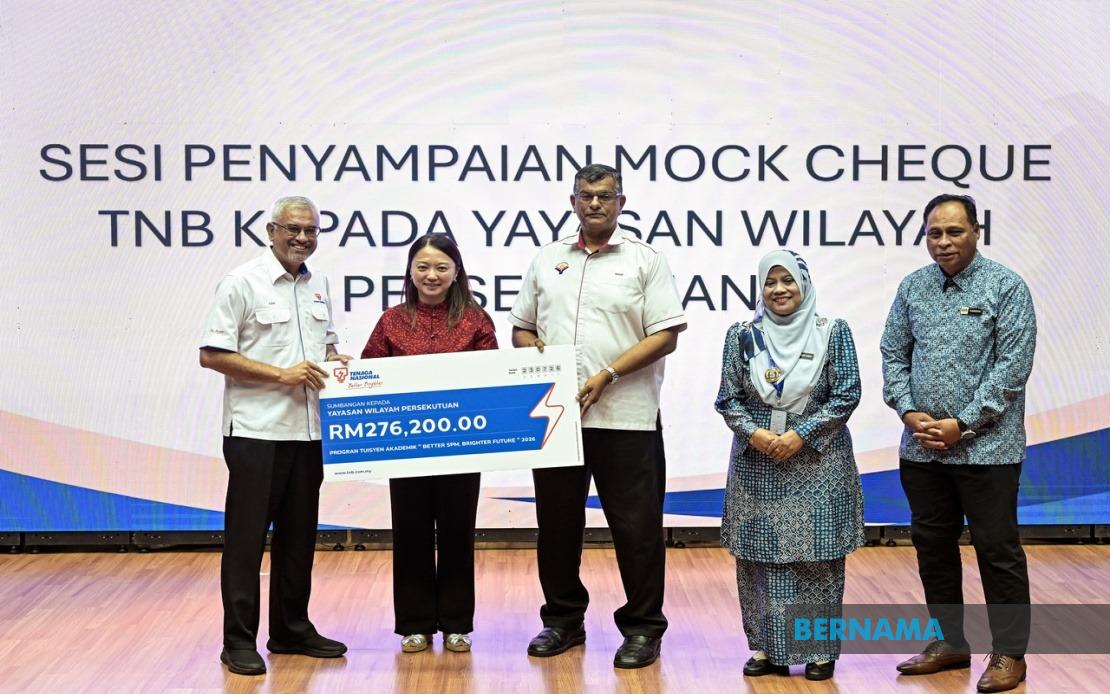
Tenaga Nasional Berhad (TNB) has contributed RM276,200 to Yayasan Wilayah Persekutuan to implement the programme, demonstrating corporate sector participation in education initiatives. This partnership model, which also involves the Kuala Lumpur Federal Territories Education Department, creates a three-way collaboration between government, corporate entities, and educational authorities. Such arrangements have become increasingly common across Malaysia as organizations seek to fulfill corporate social responsibility obligations while addressing specific community needs.
The 40 secondary schools participating in the programme span across Kuala Lumpur, suggesting an attempt at geographic inclusivity within the federal capital. This distribution ensures that students from diverse neighborhoods and socioeconomic backgrounds have access to the tuition services, rather than concentrating benefits in affluent areas where private alternatives are readily available. The breadth of school participation also indicates the scale of implementation, moving beyond pilot projects to establish a meaningful intervention affecting thousands of families.
Yeoh's remarks about the initiative reflect a broader policy philosophy emphasizing accessibility and burden-sharing. By explicitly acknowledging the financial constraints families face when seeking supplementary education, the government acknowledges a real gap in the education ecosystem. Private tuition has become a significant household expense in Malaysia, with families often spending hundreds of ringgit monthly for additional classes. This free alternative offers relief particularly to those who cannot afford such expenses without compromising other necessities.
The timing of the programme's launch, aligned with the SPM examination cycle, ensures maximum relevance and utility for current students. SPM remains a pivotal qualification in Malaysia's education system, determining pathways to Form Six, vocational training, or direct employment entry. Success in these examinations often correlates with lifetime earning potential and career opportunities, making the stakes particularly high for form five students and their families. By intervening at this critical juncture, the programme potentially influences outcomes for thousands of young Malaysians.
The programme's focus on supporting students without burdening parents carries particular weight given Malaysia's economic context. Many families balance competing financial priorities, and education-related expenses frequently compete with housing, healthcare, and food costs. Free tuition removes this tension, allowing students to access academic support without their parents facing difficult choices. This aspect of the initiative addresses a dimension of educational equity often overlooked in discussions focused purely on school infrastructure and curriculum.
Yeoh's additional comments about public responsibility for cleanliness at Dataran Merdeka, while seemingly tangential to the education initiative, reveal a connected philosophy about citizen engagement and shared responsibility. Her emphasis on educating the public rather than merely criticizing behavior suggests a preventive approach to social issues, mirrored in the proactive provision of education support. The implication is that government investment in student preparation and civic awareness contributes to broader social development beyond immediate academic outcomes.
The Better SPM Brighter Future Programme represents a scaling of educational support that previously may have been available only through private channels or targeted scholarships. By making comprehensive tuition services available to 1,600 students across 40 schools, the initiative democratizes preparation for Malaysia's most important secondary examination. This approach acknowledges that exam success depends not merely on intelligence or motivation, but on access to quality instruction and resources—factors that should not be determined by family wealth.
For Malaysian families and education stakeholders, the programme signals increasing government commitment to making quality educational support universally accessible. As the education landscape evolves and competition for university places intensifies, free tuition programmes may become essential infrastructure rather than supplementary initiatives. The success of this Kuala Lumpur-based effort could inform decisions about expanding similar schemes to other states, potentially reshaping how Malaysia supports students during critical examination periods.

