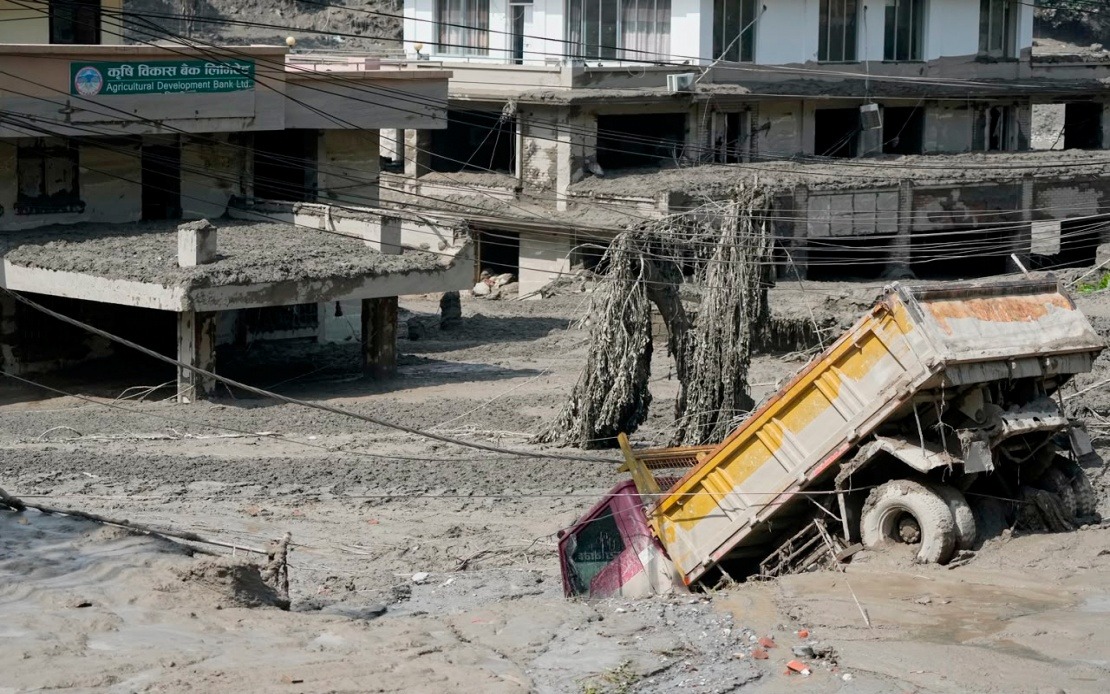
The Malaysian Foreign Ministry confirmed on Wednesday that eleven of its nationals have gone out of contact in Nepal's Rasuwa district after severe flooding swept through the region. The embassy in Kathmandu received initial reports from travel agencies regarding the missing persons, who are believed to be trapped in the affected area. The loss of communication is attributed directly to the extensive damage sustained by Nepal's communications and electrical infrastructure during the disaster.
A catastrophic flash flood inundated the Bhote Koshi River valley in Rasuwa district on Wednesday morning, causing widespread destruction across residential areas, commercial zones, and critical infrastructure. The scale of the flooding has severely hampered rescue and recovery efforts, with communication blackouts making it nearly impossible to reach individuals in affected zones. The incident underscores the vulnerability of remote mountainous regions in Nepal, where infrastructure is often inadequate to withstand extreme weather events.
Wisma Putra, Malaysia's foreign ministry headquarters, stated that the embassy is maintaining active coordination with Nepalese government authorities and search and rescue teams currently deployed in the region. The ministry has not yet been able to verify the safety status of the eleven Malaysians and continues to gather information through available channels. Officials emphasised that the diplomatic mission is treating the matter with urgency given the challenging conditions on the ground and the limited accessibility to affected communities.
The ministry has issued comprehensive safety guidance to all Malaysian nationals either residing in Nepal or traversing the country, particularly those in areas affected by the floods or at risk from ongoing meteorological hazards. Citizens have been instructed to exercise heightened awareness, maintain strict adherence to directives issued by Nepalese authorities, and avoid venturing into regions experiencing active emergency situations. This advisory reflects the ministry's concern that secondary flooding or landslides could occur in the aftermath of the initial disaster.
To facilitate better coordination during emergencies, Wisma Putra has reminded Malaysians of the importance of maintaining updated registration details through the e-Konsular portal. This online system allows citizens abroad to keep their contact information current with Malaysian diplomatic missions, enabling faster communication and assistance during crises. The ministry stressed that maintaining accurate records significantly improves response times when emergencies occur, particularly in situations where conventional communication networks are non-functional.
The embassy has provided multiple contact channels for Malaysians seeking immediate assistance. The Kathmandu mission can be reached through its general hotline at +977 1 544 5680 or +977 1 544 5681, with a dedicated consular line at +977 1 544 5689. An emergency helpline operating at +977 980 100 8000 has been established specifically for urgent situations, while email inquiries can be directed to [email protected]. The provision of these multiple channels reflects acknowledgment that standard communication methods may be compromised during disasters.
The incident in Rasuwa district represents a sobering reminder of the natural hazards facing tourists and workers in Nepal's mountainous terrain. Monsoon seasons frequently trigger flooding and landslides across the Himalayan foothills, but extreme events like Wednesday's flash flood demonstrate how quickly such disasters can escalate beyond predictable patterns. For Malaysian travellers and residents, the flooding serves as a stark illustration of the importance of monitoring weather conditions and exercising caution during high-risk seasons.
Nepal's disaster response capacity, while improving in recent years, remains strained by the country's challenging geography and limited resources. The Rasuwa district, situated in the northern part of the country near the border with Tibet, is particularly vulnerable due to its remote location and rugged terrain. Access to affected areas is often complicated by damaged roads and bridges, making it difficult for rescue teams to reach stranded individuals quickly. The international community, including Malaysian diplomats, must work within these structural constraints when coordinating emergency response.
The Foreign Ministry indicated that additional updates would be provided as verified information about the missing Malaysians becomes available. This measured communication approach reflects standard diplomatic protocol during active emergency situations, where premature or unverified statements could complicate rescue operations or spread misinformation. The ministry's commitment to close monitoring suggests that regular bulletins may be issued as the situation develops and search efforts continue in cooperation with Nepalese authorities.
The incident highlights broader regional vulnerabilities across South and Southeast Asia regarding natural disaster preparedness and international coordination. As climate patterns potentially intensify extreme weather events, countries like Malaysia must maintain robust diplomatic infrastructure and emergency response mechanisms to protect their nationals abroad. The situation in Nepal also underscores the importance of travel insurance, updated emergency documentation, and regular communication with family members when undertaking journeys to mountainous or geologically active regions.

