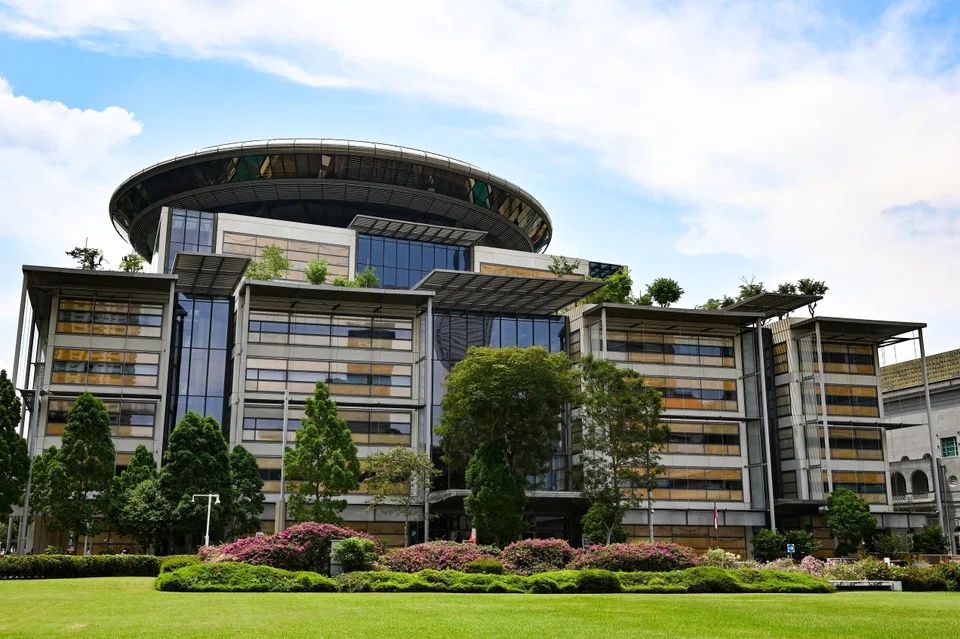
Singapore's High Court has delivered a significant setback to Standard Chartered Bank by upholding the dismissal of its strike-out application, permitting a US$2.7 billion lawsuit to proceed toward trial. The court's decision, handed down in late June, marks a major breakthrough for liquidators pursuing one of the largest financial recovery efforts stemming from the 1Malaysia Development Bhd scandal. The ruling essentially validates the substance of the claimants' allegations and suggests that a full hearing on the merits will now take place, a development that carries substantial implications for both the bank and Malaysia's ongoing efforts to reclaim misappropriated state funds.
The litigation centres on Standard Chartered's alleged facilitation of fraudulent transfers within the 1MDB ecosystem. According to the liquidators' claims, the bank authorised more than 100 intra-bank transfers that, taken collectively, enabled the concealment of funds siphoned from the failed sovereign wealth fund. Critically, the suit contends that Standard Chartered proceeded with these transactions despite encountering numerous warning signals that should have prompted heightened scrutiny. The bank's conduct is thus characterised not merely as passive negligence but as active assistance in obscuring the flow of stolen assets through its financial infrastructure.
The case was initially filed in June 2025 by liquidators Angela Barkhouse and Toni Shukla, acting on behalf of three former 1MDB subsidiary entities: Alsen Chance Holdings Ltd, Blackstone Asia Real Estate Partners Ltd, and Brightstone Jewellery Ltd. These subsidiaries served as vehicles through which substantial sums were diverted during the scandal. By channelling the recovery claim through these corporate entities rather than the Malaysian government directly, the liquidators have constructed a legal framework that may strengthen their position in the Singapore jurisdiction, where corporate governance principles and fiduciary duty violations carry considerable weight.
Standard Chartered had mounted a vigorous defence, first attempting to have the entire suit dismissed without proceeding to trial, arguing presumably that the claims lacked sufficient legal foundation or were procedurally deficient. The bank's strike-out application represented a relatively low-threshold challenge, designed to eliminate weak cases at an early stage. When Singapore's High Court rejected this initial bid in November 2025, Standard Chartered escalated the matter to an appeal, essentially asking a higher court to reconsider whether the case should be permitted to advance. The bank's appeal has now been dismissed as well, exhausting what may have been its final opportunity to prevent the case from reaching full trial proceedings.
For Malaysia, the implications extend beyond the immediate financial stakes. Successful asset recovery through foreign courts strengthens the country's broader claims against those who benefited from 1MDB's collapse and enhances Malaysia's credibility in demanding accountability from international financial institutions. The case also signals to global banks that they cannot shield themselves behind technical legal defences when facilitating large-scale fraud, particularly when they ignored obvious indicators of misconduct. Singapore's courts have thus positioned themselves as potential allies in Malaysia's recovery campaign, provided the liquidators can prove their allegations at trial.
The legal representation assembled for the liquidators reflects the gravity of the undertaking. Lok Vi Ming SC leads a team including Joseph Lee, Mohd Haireez, Tan Kah Wai, and Koo Jin Rong at LVM Law Chambers LLC, demonstrating the deployment of senior counsel expertise necessary for a case of this complexity and value. The appointment of Lim Chee Wee Partnership in Kuala Lumpur as global coordinating counsel underscores the transnational dimension of 1MDB asset recovery, which involves simultaneous legal battles across multiple jurisdictions. This coordinated approach maximises pressure on defendants and ensures consistency in strategy across different forums.
Standard Chartered has signalled its intention to seek further appellate remedies, announcing plans to apply for permission to file another appeal. However, the bank's options are narrowing as it has already exhausted the first tier of appeal, and any subsequent applications would likely face significant procedural hurdles. Nevertheless, the bank's determination to contest the case underscores the substantial financial exposure it faces—a US$2.7 billion claim represents a material liability for any institution, and the bank may judge continued litigation, however costly, preferable to accepting settlement or judgment.
The trial itself remains some distance away, as comprehensive litigation of this magnitude typically requires months or even years of discovery, witness preparation, and expert analysis. During this period, both parties will exchange documents, identify critical witnesses, and construct their evidentiary records. The bank will attempt to establish that it lacked actual knowledge of the fraudulent nature of the transactions or that it had reasonable grounds to believe the transfers were legitimate commercial activity. The liquidators must demonstrate not merely that irregularities existed, but that Standard Chartered deliberately disregarded red flags or possessed sufficiently suspicious circumstances to trigger a duty to investigate further.
For the broader Malaysian recovery effort, this victory validates the strategy of pursuing 1MDB-related claims through multiple legal channels simultaneously. While Malaysian authorities continue investigating and prosecuting individuals within the country, international asset recovery teams work parallel cases in foreign courts. The standard of proof may differ—criminal cases require guilt beyond reasonable doubt, while civil cases proceed on the balance of probabilities—but successful civil judgments can bolster arguments in other forums and create diplomatic leverage in negotiations with other financial institutions.
The ruling also reflects an evolving global attitude toward corporate responsibility in complex fraud schemes. Regulators and courts worldwide increasingly scrutinise the role of financial intermediaries, particularly when patterns of suspicious transactions should have triggered compliance reviews. Standard Chartered's case will likely be monitored closely by other major banks facing similar allegations in other jurisdictions, with the outcome potentially influencing settlement calculations and trial strategies across multiple cases.
As the case progresses to trial, Malaysian stakeholders—from policymakers to citizens affected by the 1MDB collapse—will watch for evidence of precisely how international banking systems can be exploited and what safeguards prove inadequate. The litigation serves not merely as a financial recovery mechanism but as a public examination of institutional failures that enabled one of Asia's largest financial frauds to persist. Success in Singapore could demonstrate that even well-resourced global banks cannot escape accountability for facilitating misconduct, a lesson with resonance extending far beyond Malaysia's borders.

