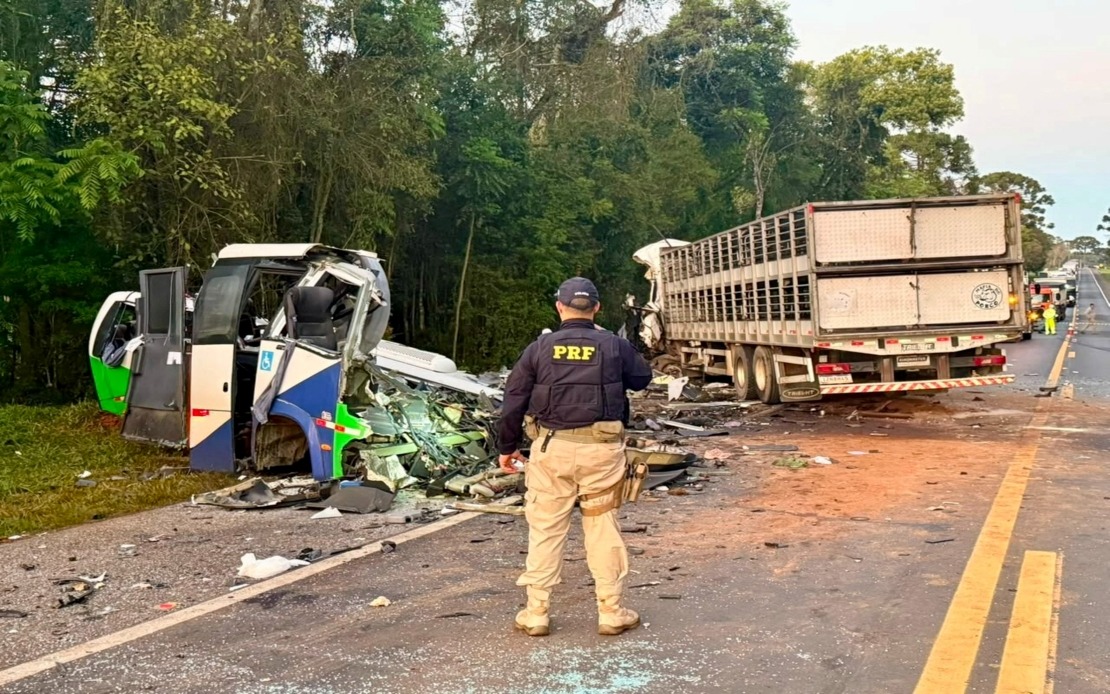
A devastating road accident in southern Brazil has claimed 23 lives after a minibus transporting hospital patients collided head-on with a heavy lorry in the early hours of Wednesday morning. The crash occurred on a national highway near Ipiranga in the Campos Gerais region of Paraná state, instantly becoming one of the deadliest traffic incidents recorded in the area. Among the fatalities were 13 women, eight men, two children, and the driver of the lorry, according to statements issued by state authorities investigating the tragedy.
The minibus involved in the collision was operated by Brazil's health service system and was en route to medical facilities serving the greater Curitiba metropolitan area, approximately 200 kilometres from the accident site. Preliminary investigations suggest that the lorry may have drifted across the centre line of the road before striking the minibus directly. The circumstances surrounding why the heavy vehicle veered into the opposing lane remain under scrutiny as accident reconstruction specialists continue gathering evidence at the crash site.
Emergency responders worked frantically at the scene following the impact, which left five additional survivors with serious injuries requiring immediate hospitalisation. These injured passengers were transported to medical facilities in Paraná, though their condition has not been detailed in official statements. The collision completely blocked traffic on the national highway for several hours as rescue teams extracted casualties and investigators documented the scene.
The roadway where the accident occurred is part of a major transport corridor connecting multiple regions across southern Brazil, handling significant daily traffic volumes. In many sections, the highway operates with only two lanes in each direction, limiting opportunities for vehicles to safely manoeuvre around obstacles or recovering vehicles. This infrastructure constraint, common across Brazil's interior highway network, raises questions about road safety measures and whether additional safety infrastructure could have mitigated the severity of the collision.
The Paraná state government has declared three days of official mourning in response to the tragedy, acknowledging the scale of loss within the community. The incident marks a sobering reminder of the dangers inherent in Brazil's transportation system, where accidents involving public health service vehicles carrying vulnerable passengers—often elderly or critically ill individuals—can result in catastrophic loss of life.
Road safety advocates point to such major accidents as evidence that Brazil's highways, particularly those in developing regions of the country, require substantial investment in modern safety features. Divided highways with proper barriers, improved lighting, and better road markings have proven effective in reducing head-on collision fatalities in developed nations. The two-lane sections of Paraná's national highways remain particularly vulnerable to accidents of this magnitude, especially during early morning hours when visibility is reduced and driver fatigue may be a contributing factor.
The investigation into the specific cause of the lorry's lane deviation continues, with authorities examining whether mechanical failure, driver error, fatigue, or weather conditions played a role in the accident. Surveillance footage from nearby properties and witness statements are being gathered to reconstruct the precise sequence of events leading to the collision. Determining liability and accountability will be crucial for both the lorry operator's insurance proceedings and any potential criminal charges that may arise from the investigation.
For Malaysian observers of regional safety issues, the incident underscores broader concerns about road safety standards across Latin America and the developing world. While Malaysia has implemented significant improvements to its highway infrastructure and traffic safety measures over recent decades, comparative analysis of incidents like this one in Brazil highlights the importance of maintaining investment in preventive infrastructure and enforcement. The collision between a health service vehicle and commercial transport echoes concerns raised periodically in Malaysia regarding the safety of medical transport operations and the vulnerability of patients during inter-hospital transfers.
The tragedy also raises questions about transport regulation and oversight in Brazil's public health system. Ensuring that vehicles designated for patient transport meet modern safety standards, that drivers receive appropriate training and rest breaks, and that routes are planned to minimise risk are all critical factors in preventing such catastrophic incidents. The presence of only two children among the fatalities suggests that the minibus may have been carrying predominantly adult patients rather than a general population group, indicating a specific patient demographic was being transported when the collision occurred.
As Brazil grapples with the aftermath of this major accident, the nation's transport authorities will face pressure to review safety protocols on highways where health service vehicles regularly operate. The incident serves as a tragic reminder that even essential services like hospital transportation are not immune to the risks that inadequate road infrastructure and safety measures can create. The three-day mourning period declared by Paraná's government provides time for communities affected by the accident to mourn the loss while investigators continue their detailed examination of what led to this preventable tragedy.

