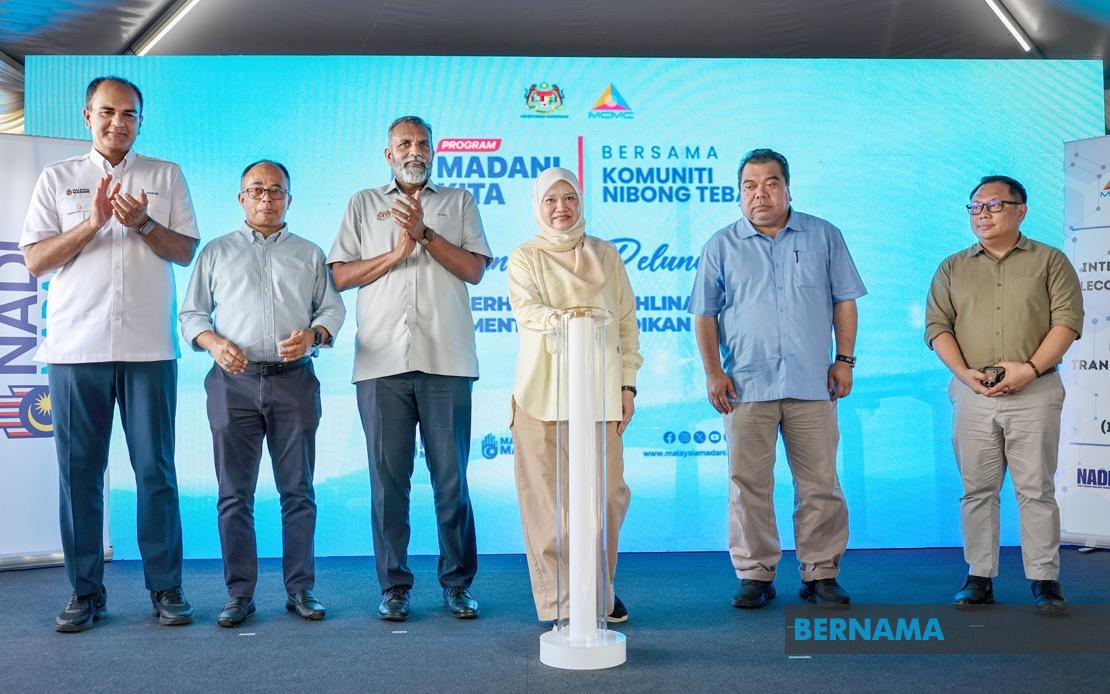
The Malaysian government is reshaping how citizens interact with public services through an expanding network of community-based outreach initiatives. The Communications Ministry has now conducted 41 MADANI Kita programmes, a collaborative effort designed to dismantle barriers between ordinary Malaysians and the bureaucratic apparatus. Rather than relegating government communication to press releases and official websites, these programmes physically bring multiple ministries and agencies into communities, creating spaces where citizens can engage face-to-face with public servants.
The initiative represents a deliberate shift in how Putrajaya approaches citizen engagement. According to Mano Verabathran, deputy secretary-general of the Communications Ministry responsible for telecommunications infrastructure, the programmes operate through a coordinated framework involving three key bodies: the Community Communications Department (J-KOM), the Malaysian Information Department (JaPen), and the Malaysian Communications and Multimedia Commission (MCMC). These organisations work through the National Information Dissemination Centre (NADI) to coordinate logistics and activities. The structural arrangement signals institutional commitment to making these interactions genuinely accessible rather than tokenistic.
Beyond merely disseminating policy information, these programmes address a fundamental gap in public administration: citizens' desire to witness tangible benefits from government initiatives. Verabathran emphasised that Malaysians increasingly expect more than abstract announcements. They want to understand how policies translate into practical improvements to their daily lives. This distinction matters significantly in a context where government credibility often hinges on demonstrable results rather than rhetorical promises. By bringing services, demonstrations, and explanatory sessions directly to neighbourhoods, the MADANI Kita framework attempts to close the perception gap between policy intention and lived experience.
The programmes function as genuine two-way communication channels rather than one-directional information broadcasts. Participants gain opportunities to seek clarification on policies, pose questions directly to officials, and articulate concerns that might otherwise remain unheard within traditional bureaucratic channels. For government agencies, these interactions provide unfiltered feedback about how communities perceive their work and where messaging or implementation may require adjustment. This feedback loop proves invaluable for evidence-based policy refinement, particularly in areas where public perception diverges substantially from official objectives.
Activities within MADANI Kita programmes extend significantly beyond conventional civic engagement. Rather than limiting themselves to seminars and information booths, organisers incorporate technology showcases, educational workshops, and skills development opportunities alongside competitive sports and e-sports tournaments. This diversified programming reflects recognition that effective public engagement requires appealing to varied demographics and interests. Young Malaysians, who might otherwise avoid government-sponsored events, find attraction in e-sports competitions and technology initiatives. The approach acknowledges that sustainable citizen engagement demands genuine entertainment value and relevance to people's actual interests, not merely obligatory attendance at official functions.
The youth-focused dimension carries particular strategic importance for Malaysia's developmental trajectory. By channelling young people's energies into structured competitions emphasising team spirit, discipline, and skill development, these programmes contribute to talent identification and nurturing within communities that might lack conventional pathways to opportunity. This is particularly significant in suburban and smaller urban areas where resource constraints can limit access to coaching, facilities, and competitive exposure. E-sports integration specifically taps into an entertainment medium where Malaysian youth demonstrate substantial engagement, transforming that enthusiasm into structured community participation.
Earlier iterations of the programme demonstrated substantial public appetite for these interactions. The MADANI Kita Permatang Pauh edition, held in coordination with the Penang International Halal Expo 2026 from July 24 to 26, attracted more than 17,000 attendees. This attendance figure suggests that when government agencies align outreach efforts with established community events and celebrations, participation rates surge significantly. The Penang case demonstrates that piggybacking on existing foot traffic and festive atmospheres can amplify the reach and impact of government engagement initiatives without requiring entirely separate mobilisation campaigns.
The Nibong Tebal launch, officiated by Education Minister Fadhlina Sidek, illustrates how the programmes garner senior political attention. When serving MPs and cabinet ministers participate directly in these events, they reinforce messaging about government accessibility and commitment to constituent service. However, such participation also raises questions about sustainability and equity: whether all communities receive equivalent ministerial attention and resources regardless of political dynamics or demographic size. The involvement of Fadhlina Sidek, who represents the constituency where this particular programme launched, suggests political decentralisation of engagement efforts rather than concentration of visibility in federal capital regions.
For Malaysian policymakers and administrators, the MADANI Kita framework offers potential lessons applicable beyond the Communications Ministry's immediate portfolio. The structural principle of coordinating multiple agencies around shared community engagement objectives could inform government operations across sectors. Healthcare agencies, educational institutions, and social welfare departments might similarly benefit from consolidated outreach efforts that present government services as interconnected systems serving holistic citizen needs rather than fragmented, siloed functions. This integrated approach aligns with contemporary public administration best practices emphasising whole-of-government coordination.
From a Southeast Asian perspective, Malaysia's experiment with scaled community engagement programming holds broader relevance. Regional governments increasingly confront legitimacy challenges arising from perceptions that bureaucratic structures prioritise procedural compliance over constituent service responsiveness. The MADANI Kita model, by embedding accessibility within programme design and compelling direct official-citizen interaction, addresses this legitimacy gap. Neighbouring countries grappling with similar public trust deficits might examine whether comparable community engagement frameworks could strengthen governmental effectiveness and public confidence.
The expansion trajectory indicated by the 41 completed programmes suggests institutional momentum. Continuation and scaling of these initiatives depends partly on sustained resource allocation and political commitment across electoral cycles. The programmes require sustained funding, trained personnel, and coordination bandwidth that compete with other governmental priorities. Nonetheless, if the demonstrated public enthusiasm in places like Permatang Pauh reflects broader sentiment, the political benefits of expanded accessibility may justify continued investment. Communities valuing direct government engagement represent constituencies invested in institutional functionality rather than institutional reform or replacement.
Ultimately, the MADANI Kita proliferation reflects an administrative philosophy positing that government legitimacy strengthens when citizens directly experience service quality and official responsiveness rather than merely hearing claims about them. Whether this philosophical commitment translates into sustained institutional change depends on whether the programmes remain government-initiated spectacles or evolve into permanent, accessible structures embedded within community rhythms. The coming years will reveal whether these initiatives represent transformative shifts in Malaysian governance culture or temporary enthusiasms subject to budget cuts and political reorientation.

