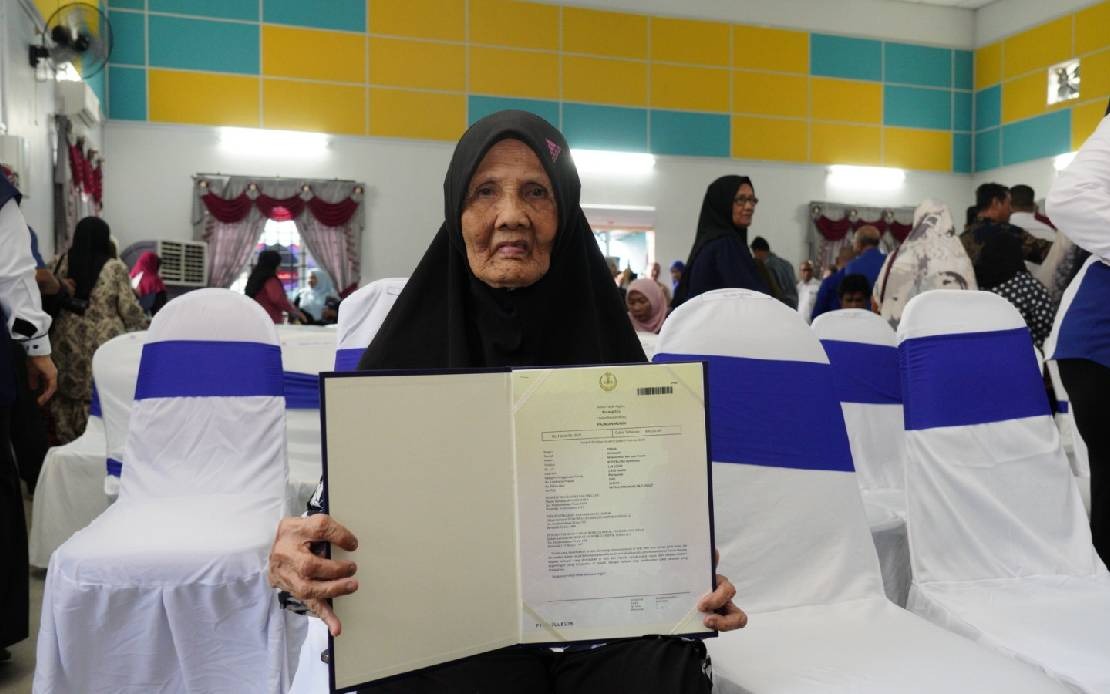
Perak has marked a significant milestone in its rural development agenda with the handover of land ownership grants to 47 participants in the FELCRA Berhad Seri Gala Area Village Rearrangement Programme (PPSK). The ceremony, held in Ipoh on July 14, underscores the state's commitment to transforming agricultural communities through systematic land consolidation and long-term economic security for rural families.
Perak Menteri Besar Datuk Seri Saarani Mohamad characterised the FELCRA Consolidation and Rehabilitation (P&P) Programme as a standout model for rural advancement, distinguishing it from conventional development approaches. Beyond simply maximising previously idle land, the programme has catalysed broader community transformation by stimulating local economies, generating sustainable employment pathways, and nurturing entrepreneurial ventures among rural residents. According to Saarani, these tangible outcomes have rekindled public confidence in the viability and returns of agricultural development in Malaysia's countryside.
The distribution of land ownership titles transcends mere bureaucratic procedure. For Saarani, the symbolic significance lies in restoring dignity to rural communities by establishing legitimate, documented asset ownership that provides durable economic foundations. By converting land into formalised holdings under individual or group ownership, the programme addresses a fundamental barrier to rural prosperity: the lack of collateralisable assets that farmers can leverage for credit, business expansion, or generational wealth transfer. This institutional shift has profound implications for household financial stability and intergenerational mobility in farming communities.
The P&P Programme's design reflects evolving thinking about rural development architecture. Rather than imposing standardised top-down solutions, the model combines methodical land planning with cost-efficient administration, delivering continuous streams of benefit to participant households. The initiative transforms underutilised land into a productive economic resource generating measurable returns while simultaneously fostering community confidence in land-based livelihoods. Equally important, the programme helps recalibrate the rural-urban development balance, channelling investment and opportunity-creation toward regions historically marginalised in Malaysia's growth narrative.
FELCRA Berhad's operational footprint illustrates the programme's scale and significance within Malaysian agriculture. The agency currently administers approximately 32,000 hectares across nearly 20,000 participant households nationwide. Perak ranks as the second-largest FELCRA operational jurisdiction after Pahang, positioning the state as a substantial laboratory for rural consolidation and cooperative farming models. This concentration of resources and expertise in Perak creates opportunities for knowledge-sharing, value-chain development, and economies of scale that benefit individual smallholders.
The grant handover ceremony also served as the formal inauguration of the FELCRA Berhad Seri Gala PPSK Grand Hall, a physical infrastructure investment supporting participant coordination, training delivery, and community gatherings. The presence of state-level officials including Rural Development Committee chairman Datuk Mohd Zolkafly Harun, along with FELCRA leadership including chairman Datuk Seri Ahmad Jazlan Yaakub and participant affairs director Zainal Abidin Alias, reflected the cross-sectoral coordination required to operationalise rural transformation at scale.
Zainal Abidin contextualised the Seri Gala initiative within a broader philosophical shift in rural development thinking. He referenced recent remarks by Deputy Prime Minister and Rural Development Minister Datuk Seri Dr Ahmad Zahid Hamidi, made during World Rural Development Day 2026 celebrations in Jengka, Pahang, arguing that contemporary rural advancement cannot focus narrowly on physical infrastructure. Instead, comprehensive rural development demands simultaneous attention to human capital accumulation, community economic resilience, entrepreneurial capacity-building, household welfare improvements, and community agency in determining local futures. This holistic perspective aligns with international best practices in development economics, which increasingly recognise that sustained poverty reduction and prosperity require simultaneous investment across social, institutional, and economic dimensions.
The emphasis on human capital development particularly resonates for Malaysian policymakers confronting demographic shifts and youth outmigration in rural areas. By coupling land ownership with business skills training, cooperative governance education, and market linkage support, programmes like PPSK attempt to make farming careers competitive with urban employment alternatives. This counteracts the decades-long trend of rural youth abandonment that has squeezed agricultural labour supplies and left many communities demographically depleted.
For regional observers, the Perak initiative offers instructive lessons about scaling smallholder development across Southeast Asia. Countries throughout the region grapple with similar challenges: large populations dependent on subsistence agriculture, fragmented landholdings, limited access to credit, and difficulty achieving economies of scale. The FELCRA consolidation model, by clustering individual plots into managed units and applying professional oversight, creates organisational structures that can negotiate input supplies collectively, coordinate output marketing, and implement improved agronomic practices. These structural innovations potentially reduce per-hectare costs while improving quality and consistency.
The programme's land formalisation component addresses a foundational development constraint identified by economists across the developing world. When smallholder farmers lack documented title to their plots, they face constrained access to formal credit, reduced incentives for long-term soil improvement investments, and vulnerability to tenure disputes. By issuing formal grants, FELCRA removes these barriers, enabling participants to mortgage land for production credit, undertake productivity-enhancing investments, and plan with confidence across longer timeframes.
Looking forward, the sustainability of such programmes depends on several factors extending beyond initial grant distribution. Participants require ongoing technical support, input supply reliability, and credible market outlets for their produce. They benefit from cooperative institutions that pool resources for equipment purchases, input procurement, and collective marketing. Extension services must adapt continuously as agronomic challenges emerge and climate patterns shift. These supporting systems require sustained institutional capacity and consistent funding—factors that distinguish successful rural programmes from those that achieve initial momentum before stalling.
The Seri Gala PPSK grant handover also reflects Malaysia's broader developmental federalism, whereby state governments translate national rural development frameworks into locally-adapted implementations. Perak's particular geography—encompassing diverse agroecological zones from lowland rice country to highland vegetable and horticulture areas—requires flexible programme design acknowledging regional variations in crop suitability, climate patterns, and market access. The state's second-ranking position among FELCRA regions suggests effective institutional capacity and political commitment to rural advancement, elements not uniformly present across Malaysian states.
Ultimately, the recognition of 47 rural household land ownerships in Seri Gala represents far more than administrative completion of a paperwork process. It embodies a development strategy predicated on the conviction that rural prosperity flows from secure asset ownership, professional agricultural support systems, cooperative organisational structures, and aligned government policies. As Malaysia continues navigating post-pandemic economic reconstruction and evolving global agricultural trade dynamics, such evidence-based rural development models—grounded in participant agency, institutional innovation, and long-term household economic security—offer a counterweight to narratives emphasising inevitable rural decline and inevitable urban concentration.

