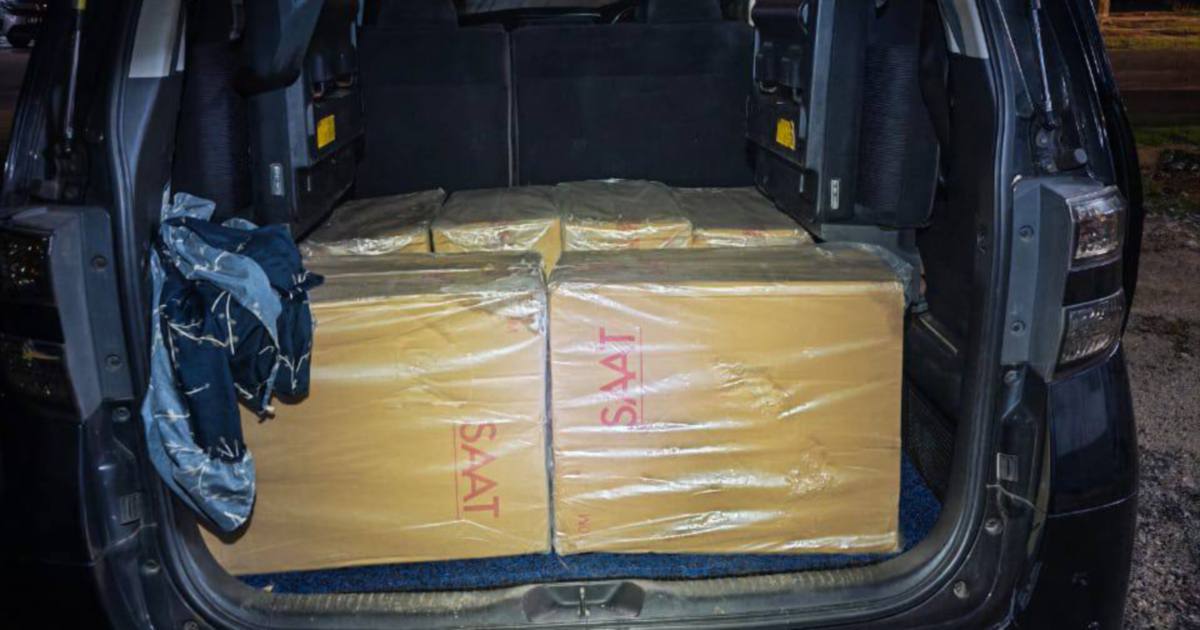
The General Operations Force (GOF) has dismantled what appears to be a significant cigarette trafficking operation in Kelantan, seizing a substantial consignment of duty-unpaid smokes from a vehicle intercepted during an early morning patrol. Acting on intelligence or routine checkpoint activity at the Pasir Tumboh Bridge near Kota Baru, enforcement personnel flagged down a Toyota Vellfire and discovered approximately 60,000 cigarette sticks concealed within the vehicle. The contraband haul, estimated to carry a retail value of RM112,200, represents a substantial loss to the illicit trade networks that routinely attempt to circumvent Malaysia's stringent excise taxation regime on tobacco products.
The driver, a 37-year-old male, was taken into custody following the discovery. Authorities have not yet disclosed detailed information regarding his background, prior involvement in smuggling activities, or the suspected origin and intended destination of the cigarettes. The arrest represents part of ongoing enforcement efforts by the GOF and other agencies tasked with combating the illegal tobacco trade that has plagued Malaysia for decades, draining government revenue and fuelling organised crime networks operating across borders.
The seizure underscores the persistent challenge posed by cigarette smuggling in Malaysia's northeastern states, particularly Kelantan and Terengganu, which share porous land and maritime borders with Thailand. The region has long served as a transit corridor for contraband cigarettes flowing from southern Thailand, where significantly lower taxation and regulatory oversight create price differentials that incentivise trafficking. Organised syndicates exploit these geographical advantages, moving illicit stock through established supply chains that service a substantial informal market across the peninsula.
Malaysia's excise duties on tobacco products remain among Southeast Asia's highest, making legal cigarettes considerably more expensive than their counterparts across the border. While public health advocates welcome the high taxation as a deterrent to smoking, particularly among younger demographics, the policy has simultaneously created lucrative opportunities for smugglers. The price gap between Malaysian and Thai cigarettes can exceed 50 per cent, providing substantial profit margins for traffickers willing to undertake the operational and legal risks involved in movement and distribution.
The GOF, a paramilitary wing operating under the Ministry of Defence, has escalated its involvement in customs and excise enforcement in recent years. The force operates alongside the Royal Malaysian Customs Department and other agencies in what officials describe as an integrated counter-smuggling strategy. However, resource constraints, the sheer volume of cross-border traffic, and the sophistication of smuggling networks continue to limit interdiction capacity. Authorities estimate that the volume of seizures captures only a fraction of contraband entering the country through various channels.
The Pasir Tumboh Bridge, located in the Bachok district, serves as a major transport artery connecting Kelantan to Terengganu and onward to other states. Its proximity to the Thai border and the presence of numerous small towns and rural communities along surrounding routes make the area a favoured corridor for smuggling operations. The early morning timing of the GOF's interception suggests either scheduled patrols or specific intelligence leading to deployment of enforcement personnel at that location and time.
Cigarette smuggling networks operating in Malaysia have become increasingly organised and sophisticated, utilising multiple concealment techniques, dummy companies, and complex supply chains to evade detection. Traffickers frequently employ private vehicles, commercial lorries, and even motorcycles to move inventory, adapting transportation methods in response to enforcement patterns. The capture of 60,000 cigarettes represents either a single shipment or the accumulated stock from multiple smaller movements, though authorities have not clarified whether additional vehicles or suspects remain under investigation.
The financial impact of cigarette smuggling extends beyond lost excise revenue. The informal market undercuts legitimate retailers, depressing sales volumes and reducing turnover tax collection. Illicit cigarettes often lack proper taxation stamps and health warnings, posing additional public health risks. Furthermore, the profits generated by trafficking operations frequently flow into broader criminal enterprises, including drug trafficking and money laundering networks that destabilise communities and strain law enforcement resources.
Government agencies have periodically announced enhanced border security measures, including increased surveillance and checkpoint operations, aimed at stemming the inflow of contraband cigarettes. However, these efforts face ongoing resource limitations and operational challenges. The arrest and seizure in Kota Baru reflects individual successes within this broader enforcement landscape, though the persistence of large-scale smuggling operations suggests that current strategies have yet to achieve comprehensive disruption of the illicit trade.
The case has been referred to relevant authorities for further investigation and prosecution. The driver's identity and criminal history, along with details regarding the suspected source and destination of the cigarettes, may provide intelligence valuable to ongoing counter-smuggling operations. Conviction under Malaysia's customs and excise laws carries significant penalties, including substantial fines and potential imprisonment, deterrents intended to discourage participation in trafficking activities.

