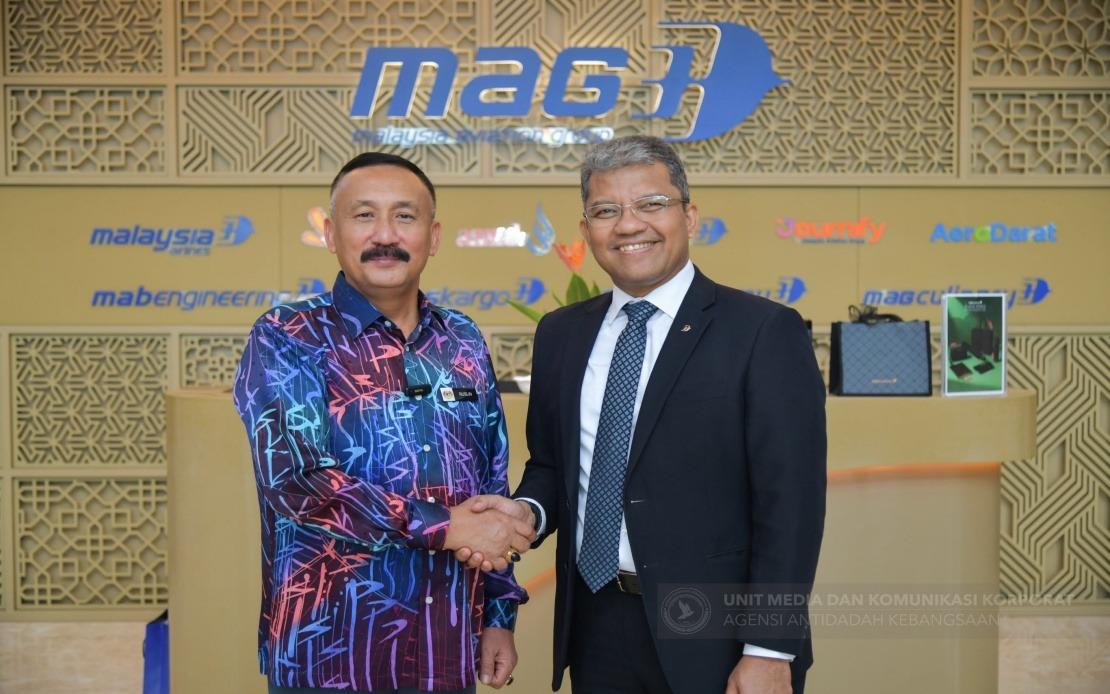
The National Anti-Drugs Agency (AADK) and Malaysia Aviation Group (MAG) have moved to formalize their commitment to combating substance abuse through the execution of a new memorandum of understanding, marking a significant step in extending drug prevention efforts into Malaysia's critical aviation sector. The partnership was announced following a formal courtesy visit by AADK Director-General Datuk Ruslin Jusoh to MAG Chief Executive Officer Captain Nasaruddin A Bakar in Sepang, where both organizations discussed the framework for coordinated action against narcotics and prohibited substances affecting their workforce.
The collaboration represents a recognition that drug-related challenges extend beyond conventional law enforcement domains and require targeted intervention within high-security industries where operational safety and personnel integrity are paramount. Aviation represents one of Malaysia's most regulated sectors, where any compromise in employee reliability could have cascading consequences for passenger safety, national security, and international confidence in Malaysian carriers. By embedding anti-drug initiatives directly into Malaysia Airlines and related MAG operations, the agencies are addressing a vulnerability that transcends ordinary workplace concerns.
Central to the partnership is the implementation of the Drug-Free Workplace initiative, locally branded as TEKAD, which will be deployed across MAG facilities and premises. This programme represents a proactive mechanism designed to create an institutional culture that actively discourages substance abuse while providing pathways for employee rehabilitation and support. The focus on workplace environments acknowledges that prevention at the organizational level often proves more effective than reactive enforcement, particularly in sectors where maintaining personnel morale and trust is essential for operational continuity.
Datuk Ruslin articulated the strategic significance of embedding AADK expertise within aviation operations, noting that the collaboration would enhance drug prevention capacity not merely at the agency level but would simultaneously strengthen Malaysia Airlines' institutional capacity to manage these issues internally. This distribution of responsibility reflects evolving best practice in drug control policy, where governmental agencies work in partnership with private sector entities to create redundant safety systems. The aviation industry's existing regulatory framework, which already incorporates rigorous security protocols and personnel vetting mechanisms, provides an existing foundation upon which substance abuse prevention can be logically grafted.
From a Southeast Asian perspective, this partnership carries particular significance given the region's ongoing struggles with drug trafficking and consumption. Malaysia's geographic location along major transnational smuggling routes, combined with its status as both a transit point and destination market for narcotics, requires that domestic industries implement vigilant internal controls. Personnel working in aviation, port facilities, and border-adjacent industries occupy positions of potential vulnerability to recruitment by trafficking organizations or personal substance dependency, making sectoral prevention efforts strategically important beyond individual welfare considerations.
The emphasis on safety within flight operations underscores how drug-related impairment among aviation personnel—whether pilots, ground crew, or administrative staff—could theoretically compromise the safety protocols that protect millions of annual passengers traversing Malaysian airspace. While aviation maintains among the world's most stringent safety records, the involvement of AADK with MAG signals an institutional commitment to eliminate even theoretical gaps in personnel reliability. This preventive orientation distinguishes the approach from purely punitive models, offering rehabilitation and support mechanisms alongside enforcement.
Datuk Ruslin's commitment to creating a safer, healthier, and drug-free work environment reflects a broader policy shift toward recognizing workplace wellness as integral to national economic productivity. As Malaysia seeks to maintain its competitive position as a regional aviation hub and enhance the reputation of its carriers internationally, demonstrating rigorous internal controls and personnel management becomes increasingly important. Airlines face continuous scrutiny from international aviation authorities, and maintaining exemplary safety and personnel standards contributes to maintaining the certifications and operational licenses essential for commercial viability.
The involvement of AADK Deputy Director-General (Operations) Zainudin Abdullah alongside delegations from both organizations suggests that the partnership encompasses operational dimensions beyond ceremonial commitment. The presence of senior operational personnel indicates that implementation frameworks, resource allocation, and performance metrics have likely been discussed in substantive terms. This level of engagement suggests the initiative moves beyond symbolic cooperation toward institutionalized mechanisms for information sharing, joint training, and coordinated response protocols.
The timing of this partnership, formalized in August, aligns with broader government initiatives to strengthen institutional responses to drug-related challenges. Malaysia has progressively enhanced anti-narcotics efforts through sectoral engagement, recognizing that comprehensive drug control requires participation across multiple institutional domains. By extending AADK reach into aviation through cooperative arrangements rather than regulatory mandates, the approach leverages existing relationships and organizational cultures to achieve policy objectives while maintaining operational autonomy within private sector entities.
For Malaysia's aviation workforce, the partnership offers both protective and supportive dimensions. Employees gain access to prevention education and, critically, rehabilitation support systems that acknowledge substance dependency as a health issue amenable to treatment rather than exclusively a disciplinary matter. This approach aligns with international best practices in occupational health and safety, recognizing that addressing root causes of substance abuse—whether stemming from personal trauma, medical conditions, or social factors—proves more effective than punitive responses alone in achieving sustained behavioral change.
The partnership also carries implications for Malaysia's international standing on drug control. As a nation frequently assessed by international bodies on its counter-narcotics performance, demonstrating institutional innovations and sectoral cooperation strengthens Malaysia's credibility as a committed participant in global drug control frameworks. The model potentially offers a template for extending similar arrangements into other critical sectors, including port operations, telecommunications, banking, and public administration, creating a comprehensive institutional architecture for drug abuse prevention.
Looking forward, the success of this collaboration will likely be measured through metrics assessing employee participation rates in TEKAD programming, changes in substance-related incidents or violations within MAG operations, and the sustainability of institutional mechanisms established through the MoU. Whether this partnership leads to measurable reductions in substance abuse among aviation personnel, and whether it stimulates similar initiatives across Malaysian industry, will ultimately determine whether this represents a significant advance in national drug control strategy or primarily a symbolic gesture of inter-institutional coordination.

