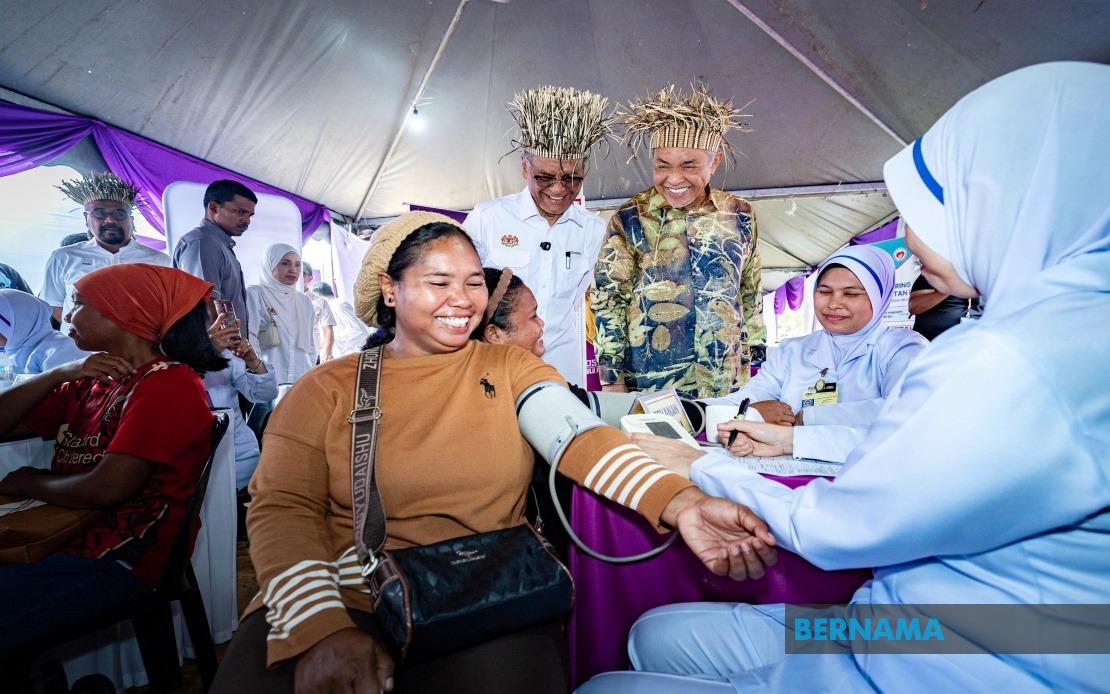
Melaka Chief Minister Datuk Seri Ab Rauf Yusoh has received comprehensive authority from Barisan Nasional to engage in discussions with potential coalition partners regarding the forthcoming Melaka State Election, according to BN chairman Datuk Seri Dr Ahmad Zahid Hamidi. The announcement underscores a deliberate strategy to permit flexible negotiations whilst maintaining party discipline through formal approval channels. Ahmad Zahid made the declaration while attending the launch of the 2026-2035 National Social Determinants of Health Strategic Plan for Orang Asli at Kampung Air Banun in Gerik, signalling the coalition's readiness to explore various political arrangements in the state.
Ahmad Zahid, who simultaneously holds the position of UMNO president, acknowledged that seat allocation discussions typically present considerable complexity. He urged all parties involved to approach these conversations with structured dialogue and pragmatism, suggesting that virtually no disagreement becomes insurmountable when tackled through proper channels. His remarks reflect an understanding that Malaysian electoral mathematics frequently demands creative solutions, including potential seat swaps and sharing arrangements that extend beyond traditional party boundaries. The emphasis on proper procedure demonstrates BN's intention to avoid the public acrimony that has sometimes accompanied coalition negotiations in previous electoral cycles.
The negotiation framework established by Ahmad Zahid incorporates a clear hierarchical approval process. Any arrangements reached between Ab Rauf and prospective partners must first be reviewed and endorsed by UMNO's senior leadership before advancing to the BN Supreme Council for final ratification. This structure ensures that individual negotiations do not bypass collective party decision-making, maintaining internal cohesion whilst permitting ground-level flexibility. The procedure also provides safeguards against agreements that might contradict broader coalition interests or party ideology, though it requires sufficient trust between negotiators and party headquarters to function smoothly.
Pakatan Harapan has responded positively to BN's openness on seat distribution matters. Communications director Datuk Seri Fahmi Fadzil characterised the coalition's willingness to negotiate as a genuine opportunity worthy of serious exploration. This stance suggests that PH may view the Melaka election as a potential avenue for expanding its presence in traditionally BN-dominated territory, or alternatively as an opportunity to prevent PN from making significant gains in the state. The tone of PH's response indicates that formal discussions between the coalitions remain preliminary but not precluded, pending clarification of terms and expectations.
Perikatan Nasional has similarly positioned itself as receptive to discussions with BN regarding Melaka. PN chairman Datuk Seri Dr Ahmad Samsuri Mokhtar confirmed that the coalition stands prepared to engage in seat allocation conversations, adding another potential player to negotiations that could reshape the state's political landscape. The simultaneous openness from both major opposition coalitions suggests competitive positioning, with each seeking to maximise territorial advantage whilst potentially hedging against unfavourable electoral outcomes. For PN, particularly, gaining ground in Melaka could represent progress in its efforts to establish stronger parliamentary and state-level presence following recent electoral setbacks.
The announcement reflects broader patterns in Malaysian electoral politics whereby coalitions increasingly adopt fluid, negotiation-based approaches to state elections rather than contesting rigidly along single-party lines. Such flexibility responds to voter fragmentation, demographic shifts, and the recognition that outright majority control rarely emerges without coalition support. The Melaka scenario illustrates how BN, despite its traditional dominance, recognises that accommodation of competing interests—whether from PH, PN, or other quarters—may ultimately prove more electorally effective than rigid coalition discipline.
For Melaka voters, the emerging coalition landscape carries significant implications. Multiple power-sharing arrangements could yield different policy priorities, resource allocation patterns, and governing philosophies depending on which partners ultimately align. A BN-dominated administration differs fundamentally from potential BN-PH cooperation or alternative configurations, each affecting everything from infrastructure investment to social service delivery. Voters will face an unusual situation where pre-election coalition composition remains genuinely uncertain, complicating traditional voting calculations based on familiar party alignments.
The negotiation process also reflects calculations by all parties regarding the Melaka electorate's preferences. The state has demonstrated volatility in recent elections, shifting between coalitions in ways that confound traditional stronghold assumptions. By positioning themselves as flexible and open to productive cooperation, BN, PH, and PN each attempt to project reasonableness whilst simultaneously signalling their willingness to accept power-sharing arrangements if necessary. This competitive reasonableness itself becomes a campaign message, with each coalition claiming credit for pragmatism and collaborative spirit.
Ab Rauf's empowerment carries particular significance given his tenure as Chief Minister. His ability to negotiate directly rather than requiring constant referral to party headquarters suggests confidence in his judgment and negotiating acumen. However, the requirement for ultimate BN approval ensures that any arrangement he reaches cannot deviate too substantially from party preferences. This balance between autonomy and accountability reflects a mature recognition that effective negotiation requires both flexibility at the table and accountability to broader party structures. The framework Ahmad Zahid described should theoretically permit meaningful progress whilst preventing individual overreach.
The timeline for these negotiations remains fluid. No official election date has been announced, providing theoretically adequate opportunity for extended discussions. However, Malaysian electoral politics typically compresses timelines considerably once formal processes commence, meaning that serious negotiation groundwork must occur during this current period. The various coalitions' public expressions of openness suggest that back-channel discussions may already be underway, with public statements serving partly to establish negotiating positions and partly to signal electorate that all parties pursue responsible, discussion-based approaches to power-sharing.
Looking forward, the outcome of Melaka negotiations could establish precedents for future state and federal electoral discussions. Should seat-swapping or coalition partnerships prove effective and publicly acceptable, similar arrangements may proliferate in subsequent contests. Conversely, if negotiations collapse publicly or produce unpopular arrangements, parties may revert to more adversarial stances. The Melaka election thus carries significance beyond that single state, potentially reshaping how Malaysian coalitions approach electoral competition more broadly.

