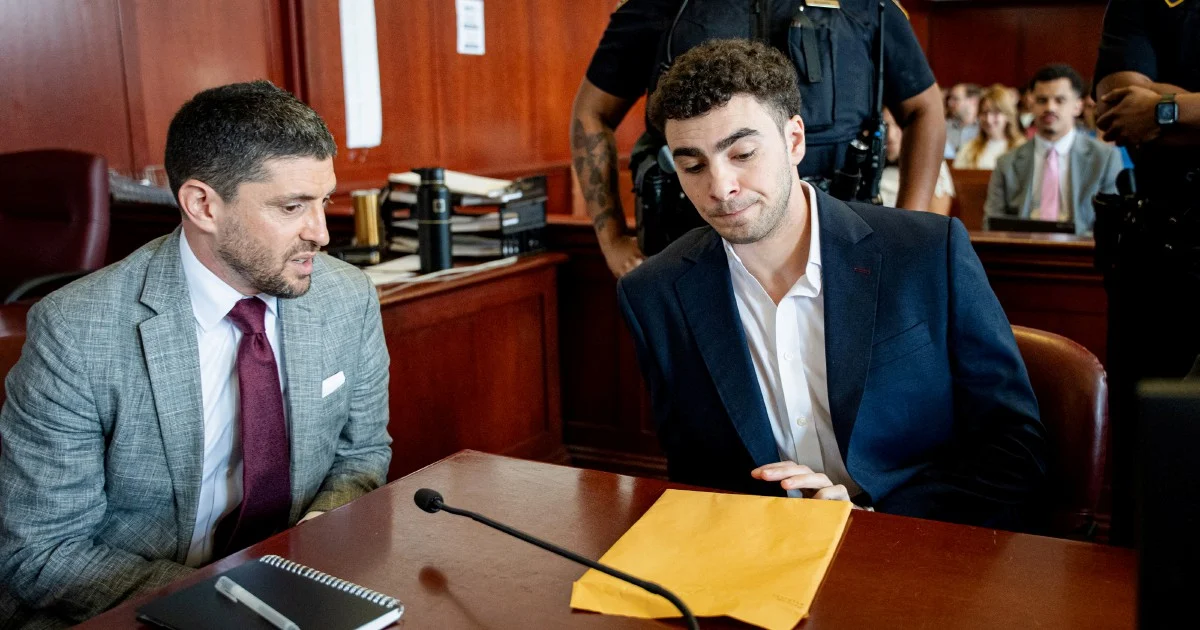
Luigi Mangione, the man accused of fatally shooting health insurance executive Brian Thompson on a Manhattan street, has temporarily abandoned his strategy to present evidence of acute mental health deterioration as part of his trial defence, court documents filed on Friday reveal. The decision marks a significant tactical shift in how his legal team intends to approach the high-profile case that has gripped New York and attracted considerable national attention.
The withdrawal of mental health evidence represents a calculated legal manoeuvre rather than an admission of the underlying circumstances. Defence strategies in capital or high-profile murder cases often evolve as litigation progresses, with attorneys reassessing which lines of argument are most likely to resonate with a jury or achieve favorable outcomes. For Mangione's legal team, this repositioning suggests they may be considering alternative defence theories or preparing for a different evidentiary approach at trial.
This case has captivated the American public partly because it involves the death of a prominent insurance sector figure, highlighting the deep anxieties many Americans feel about healthcare administration and insurance practices. Brian Thompson's background as a health insurance executive became central to public discourse surrounding the incident, with some commentators engaging in heated discussions about the ethics and impact of the insurance industry. Such contextual factors often influence how defence teams craft their strategies, as they must navigate both the legal merits and the court of public opinion.
Mental health defences in criminal proceedings are notoriously complex and frequently controversial. They require defendants to present credible clinical evidence of severe psychological impairment that either prevents them from understanding the nature of their actions or eliminates their capacity to form the requisite criminal intent. Courts have become increasingly sceptical of mental health defences in recent years, and juries often view such arguments with considerable suspicion, particularly in cases involving premeditated violence. Mangione's legal team may have concluded that pursuing this line would prove counterproductive without overwhelming psychiatric evidence.
The timing of the withdrawal is tactically significant. By removing mental health evidence from consideration early in proceedings, the defence avoids allowing prosecutors to establish a narrative of prior warnings, escalating mental illness, or observable red flags that Mangione's own behaviour might have demonstrated. Conversely, the decision could indicate that mental health documentation available to the defence was insufficient to meet the elevated evidentiary threshold courts typically demand for such defences.
For Malaysian and Southeast Asian observers, this case illuminates the substantial differences in how major Western democracies approach criminal justice and mental health intersections. In many Commonwealth jurisdictions including Malaysia, mental health defences exist within different legal frameworks, with varying standards for admissibility and different burdens of proof. The withdrawal also underscores how American media-saturated trials can generate enormous public pressure that influences legal strategy in ways less commonly seen in regional courts.
The filing provides minimal detail regarding the reasons behind this strategic pivot, leaving considerable room for speculation among legal observers and the media. This opacity is itself a deliberate tactic—defence teams typically restrict public commentary about trial strategy to avoid prejudicing their position or revealing negotiating postures to prosecutors. The decision may signal that plea negotiations remain active, or that Mangione's legal team has identified more promising avenues for mounting a viable defence.
Prosecutors will view this withdrawal as eliminating one potential complication to their case. The district attorney's office can now focus on establishing motive, opportunity, and intent without needing to counter sophisticated psychiatric testimony. For a case involving an accused perpetrator whose alleged actions have already been dissected extensively through forensic evidence and surveillance footage, removing psychological defences streamlines the narrative prosecutors intend to present to the jury.
The Thompson case sits at an intersection of criminal justice, healthcare industry criticism, and public anger about institutional accountability. While many observers expressed visceral reactions to Thompson's death, Mangione's legal team must ensure that such public sentiment does not overwhelm the fundamental requirement that guilt be proven beyond reasonable doubt. Abandoning the mental health defence momentarily may represent an effort to focus jurors' attention on the specific evidence of guilt rather than inviting broader sociological arguments about mental health and violence.
Looking forward, this withdrawal does not permanently foreclose mental health arguments. Defence teams can revive such strategies at various points during trial proceedings, depending on how evidence emerges. The filing represents a provisional decision reflecting the current strategic assessment rather than a final, irreversible commitment. As discovery continues and trial approaches, Mangione's attorneys may determine that fresh psychiatric evaluations or expert opinions justify reintroducing mental health evidence.
The case continues to evolve within New York's criminal justice system, with each procedural decision receiving intense scrutiny. For observers internationally, including those across Malaysia and Southeast Asia, the prosecution and defence of high-profile murder cases in American jurisdictions demonstrates how legal strategy, public attention, and institutional pressures intersect to shape the trajectory of serious criminal proceedings. The outcome will likely influence discussions about criminal responsibility, mental health, and justice system fairness for years to come.

