The African Union's Peace and Security Council has made a forceful statement against what it views as destabilizing external involvement in Sudan's ongoing conflict, signalling the continent's determination to resolve the crisis without outside pressure. Meeting with Sudan's Sovereignty Council Chairman Abdel Fattah al-Burhan in Khartoum on Sunday, the AU delegation—led by Algerian diplomat Mohamed Khaled in his capacity as the council's rotating chair—conveyed a unified African position rejecting both foreign interference and the creation of competing power structures within the war-torn nation.
The timing of this intervention reflects growing concern among African leaders that Sudan's internal struggle risks becoming a proxy battleground for international powers with competing geopolitical interests. The AU's explicit rejection of "parallel entities or governments" appears directed at attempts by various factions to establish rival administrations claiming legitimacy, a development that threatens to permanently fragment the state apparatus and entrench territorial divisions. Khaled described the Khartoum meeting as productive, though the underlying message was unmistakable: the continent believes external powers have been stoking the flames of conflict rather than facilitating genuine resolution.
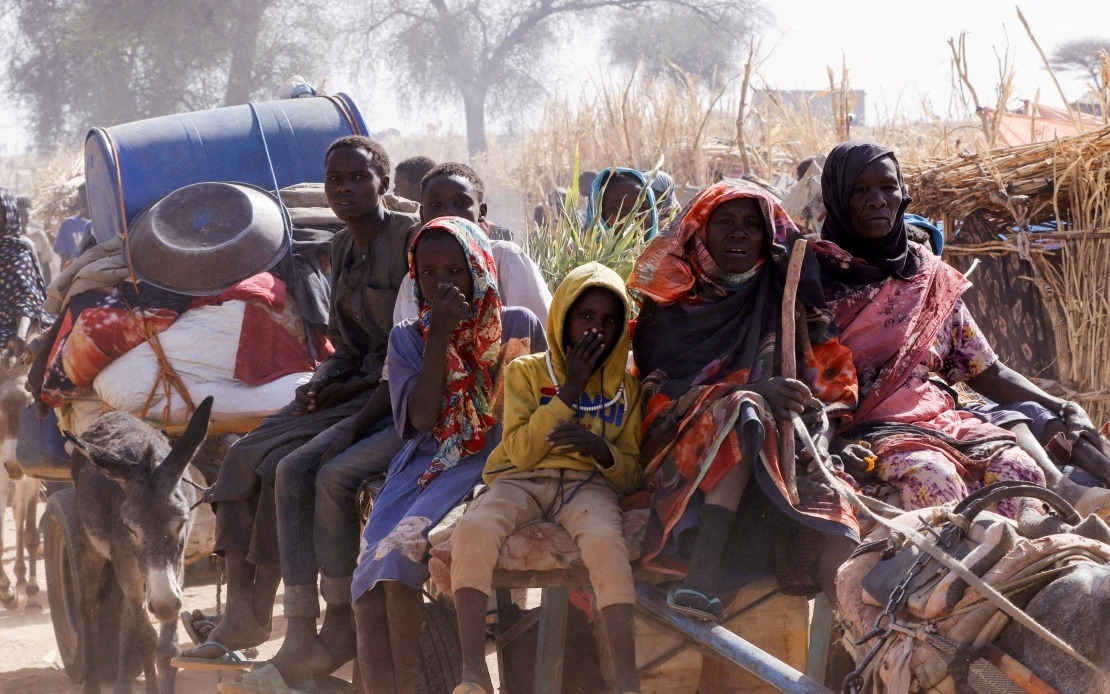
Sudan's descent into armed conflict began in April 2023 when tensions over military integration boiled into open warfare between the regular armed forces and the paramilitary Rapid Support Forces (RSF). What commenced as a dispute over institutional restructuring has metastasized into a humanitarian catastrophe of staggering proportions. UN estimates place the death toll in the tens of thousands, with approximately 13 million people displaced—a figure representing more than a quarter of Sudan's population and constituting one of the world's worst ongoing displacement crises, comparable to Syria at the height of its civil war.
The human cost of the fighting extends far beyond casualty numbers. The displacement of such massive population segments has triggered cascading regional instability, overwhelming neighbouring countries including Egypt and Ethiopia, which host hundreds of thousands of Sudanese refugees. The breakdown of state institutions has created dangerous vacuums where humanitarian access becomes nearly impossible, threatening famine conditions in several regions. For Southeast Asian observers, Sudan's trajectory offers cautionary lessons about how institutional disputes can rapidly metastasize into existential state crises when military factions refuse democratic subordination to civilian authority.
Khaled's emphasis on dialogue and national reconciliation as the foundation for peace reflects a distinctly African approach to conflict resolution, rooted in the principle that external military intervention or sanctions regimes often entrench rather than resolve such disputes. The AU position echoes earlier continental efforts to champion African solutions to African problems, a philosophy that has gained traction as external interventions—whether by Russia, the United States, or regional powers—have frequently failed to produce lasting stability. The council's call for "comprehensive political settlement" and "constitutional system through free and fair elections" sketches a pathway toward inclusive governance, though implementing such mechanisms amid active warfare presents formidable practical challenges.
Sudanese Prime Minister Kamil Idris's announcement that intra-Sudanese dialogue would commence soon represents a modest signal that at least some elements of the government recognise the necessity of negotiated settlement. However, such announcements must be treated cautiously, given the deep mistrust between military factions and the RSF's historically intransigent negotiating posture. The RSF, which evolved from the Janjaweed militia accused of atrocities in the Darfur conflict, has demonstrated limited commitment to inclusive governance structures, complicating any realistic pathway toward genuine political reconciliation.
The AU's insistence on Khartoum's return to functional operations from the capital city signals recognition that state collapse benefits no faction in the long term. When government institutions cease functioning, even those initially advantaged by state breakdown eventually suffer from the resulting security vacuums and economic collapse. The council's description of this governmental consolidation as "pivotal" underscores the fundamental principle that sustainable peace requires restoration of basic state capacity to provide services, maintain security, and arbitrate disputes through legal mechanisms rather than military force.
For Malaysia and the broader Southeast Asian region, Sudan's experience carries important implications regarding the fragility of institutions in post-conflict settings and the dangers of allowing military actors to operate beyond civilian democratic control. Several Southeast Asian nations have navigated their own transitions from military rule to democracy, providing relevant comparative experience. The region's experience suggests that inclusive dialogue mechanisms, constitutional protections for minority interests, and credible commitments to electoral accountability offer more durable stabilisation pathways than victors' justice or institutions designed to perpetuate one faction's dominance.
The AU's apparent frustration with external interference likely reflects awareness that international powers including Russia, the UAE, and Egypt have pursued their own strategic interests in Sudan rather than prioritising humanitarian resolution. The council's firm messaging that such interference "fuels the conflict" constitutes both a diagnosis and an implicit demand that global actors recalibrate their Sudan engagement toward supporting rather than undermining African-led peace processes. Whether such international actors will heed this appeal remains uncertain, particularly given the strategic minerals and geopolitical positioning that make Sudan significant to multiple external powers.
Moving forward, the AU's challenge lies in translating diplomatic positions into concrete mechanisms that can coerce both the military and the RSF toward negotiated settlement while simultaneously preserving state institutions from further deterioration. The council's call for inclusive transitional processes and expanded political participation offers necessary framing, but implementation will require sustained pressure on all Sudanese factions to abandon maximalist objectives in favour of power-sharing arrangements and constitutional constraints. Without such mechanisms, periodic truces will simply punctuate prolonged conflict rather than achieving genuine peace.

