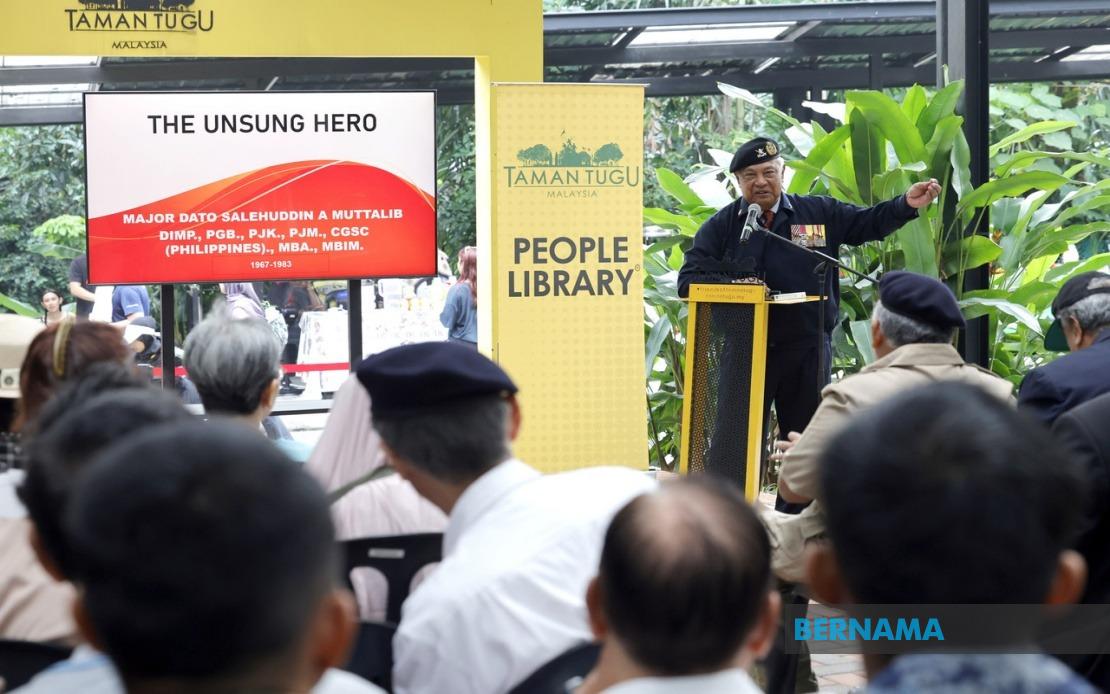
Nearly five decades have elapsed since Malaysian security personnel engaged in some of the nation's most dangerous and consequential operations, yet the memories of those who lived through the anti-communist struggle remain vivid and haunting. At an event held in Kuala Lumpur marking Warriors' Day on July 31, retired veterans gathered to recount experiences that shaped not only their own lives but the trajectory of the country's modern history. The reminiscences offered by these ageing operatives provide rare insight into the shadowy world of counterinsurgency work that defined a critical period in Malaysia's nation-building.
Superintendent (Retired) Paul Kiong Sing Chu, now 82 years old, served as an undercover operative embedded within the Communist Party of Malaya during one of the organization's final and most desperate phases. His recollections underscore the extraordinary personal danger faced by those who worked in the intelligence and security services during this era. Operating undercover meant living a lie, maintaining a false identity for extended periods while surrounded by individuals who would have executed him without hesitation had his true allegiances been discovered. The psychological toll of such work extended far beyond the immediate operational theater, affecting officers throughout their careers and into retirement.
One incident that crystallized the mortal stakes of undercover work occurred in the early 1980s when Kiong was tasked with transporting three active Communist Party members through a police checkpoint in Chemor, Ipoh. The scenario represented precisely the kind of moment where undercover operatives risked exposure and death simultaneously. As Kiong approached the roadblock, he faced an impossible calculus: if the communist members detected suspicious behavior from police officers or if the checkpoint personnel grew suspicious of his vehicle, a firefight could erupt at any moment. Positioned literally between the two sides, Kiong recognized that any exchange of gunfire would place him in the crossfire with minimal chance of survival. His decision to navigate the vehicle into a side lane before reaching the checkpoint ultimately averted disaster, demonstrating both the split-second judgment required of undercover operators and the razor-thin margins separating life from death in such operations.
Kiong's career spanned 31 years within the Royal Malaysia Police, culminating in recognition of his service through the award of the Seri Pahlawan Gagah Perkasa medal, a decoration acknowledging extraordinary courage in the line of duty. His motivation for recounting these experiences publicly centered on education and historical preservation. He emphasized the importance of younger generations understanding the magnitude of sacrifice and commitment demonstrated by security personnel who operated during the anti-communist campaigns. In an era when the threat posed by communist insurgency seems increasingly distant to younger Malaysians, such testimonials serve as crucial reminders of the genuine and sustained threat that the nation faced.
The experiences of military personnel paralleled in many respects those of their police counterparts, though the operational theaters and tactical circumstances differed significantly. Major (Retired) Datuk Salehuddin Abd Muttalib carried forward memories from covert operations conducted in Sarawak, where Malaysian forces engaged members of the Indonesian Communist Party during a period of regional instability and cross-border security concerns. The Sarawak operations represented a particularly complex challenge, involving not merely domestic security threats but international dimensions that complicated both tactical and diplomatic considerations. These campaigns pushed military personnel into situations where conventional rules of engagement collided with the irregular nature of communist insurgent activity.
Salehuddin's account revealed the profound moral and spiritual dimensions of counterinsurgency work that often remain unexamined in historical narratives focused primarily on tactical and strategic outcomes. During one operation, he participated in an encounter that resulted in the death of a communist operative. Learning subsequently that the deceased individual had been a Muslim, Salehuddin experienced a crisis of conscience regarding the religious and moral implications of his action. The fact that the individual had fallen to Malaysian bullets while advancing a foreign communist ideology created a profound dissonance in Salehuddin's mind. This internal conflict between duty to nation and religious conviction represented a burden that extended well beyond the moment of combat.
The emotional weight of such moral complexities became concrete a decade later when a man appeared at Salehuddin's home and introduced himself as the nephew of the communist operative who had been killed during the Sarawak operation. The reunion neither resolved nor erased the ethical tensions surrounding the encounter, but it did personalize the abstract category of "enemy combatant" into a human being with family, relationships, and a position within a social network. For Salehuddin, this unexpected visitation served as a permanent marker in his memory, a moment that rendered unavoidable the human cost of counterinsurgency work that statistics and official histories could not capture.
The programme that brought these veterans together was organized by the Malaysia Military History Tourism Association in partnership with Taman Tugu, an initiative designed to preserve and transmit institutional memory regarding Malaysia's military heritage. Approximately 200 participants attended the event, suggesting significant public interest in these narratives despite the passage of decades since the conclusion of major anti-communist operations. The gathering incorporated not only the personal testimonies of five veteran speakers but also broader educational objectives aimed at deepening public understanding of the sacrifices made by security personnel in preserving national sovereignty and territorial integrity.
The significance of such public forums extends beyond mere nostalgic reminiscence. For Malaysian society, particularly younger citizens who have never experienced the security threats that shaped previous generations, these accounts provide essential context for understanding contemporary national security frameworks and the institutional cultures within police and military organizations. The stories illustrate the human dimension of security work, moving beyond the abstraction of "national defense" to reveal the individual decisions, risks, and moral struggles of men who were conscripted into situations demanding extraordinary courage and sacrifice. Veterans' testimonies also serve a validation function, publicly acknowledging contributions that often remain obscure or undervalued in national consciousness.
The timing of these recollections around Warriors' Day, observed annually on July 31, places them within an official framework of national remembrance and gratitude. This institutional recognition, while valuable, cannot fully compensate individuals who bear lasting psychological and emotional scars from their service. Many veterans of the anti-communist campaigns have passed away without having opportunities to share their experiences, while others remain reluctant to discuss traumatic episodes. Programs facilitating veteran testimonies thus represent valuable interventions for historical documentation and national memory preservation at a moment when the generation that directly experienced these events remains alive to offer firsthand accounts.
For Malaysia and Southeast Asia more broadly, the historical experience of communist insurgency and the security responses it generated remain relevant to contemporary discussions regarding terrorism, insurgency, and internal security. The operational approaches, intelligence tradecraft, and counterinsurgency doctrines developed during the anti-communist campaigns influenced security practices across the region and continue to shape institutional approaches to contemporary threats. Veterans' accounts illuminate not only what happened historically but also how security institutions learned from and adapted to emerging challenges. This comparative understanding becomes particularly valuable as nations throughout Southeast Asia confront evolving security threats requiring sophisticated intelligence, community engagement, and ethical application of force.

