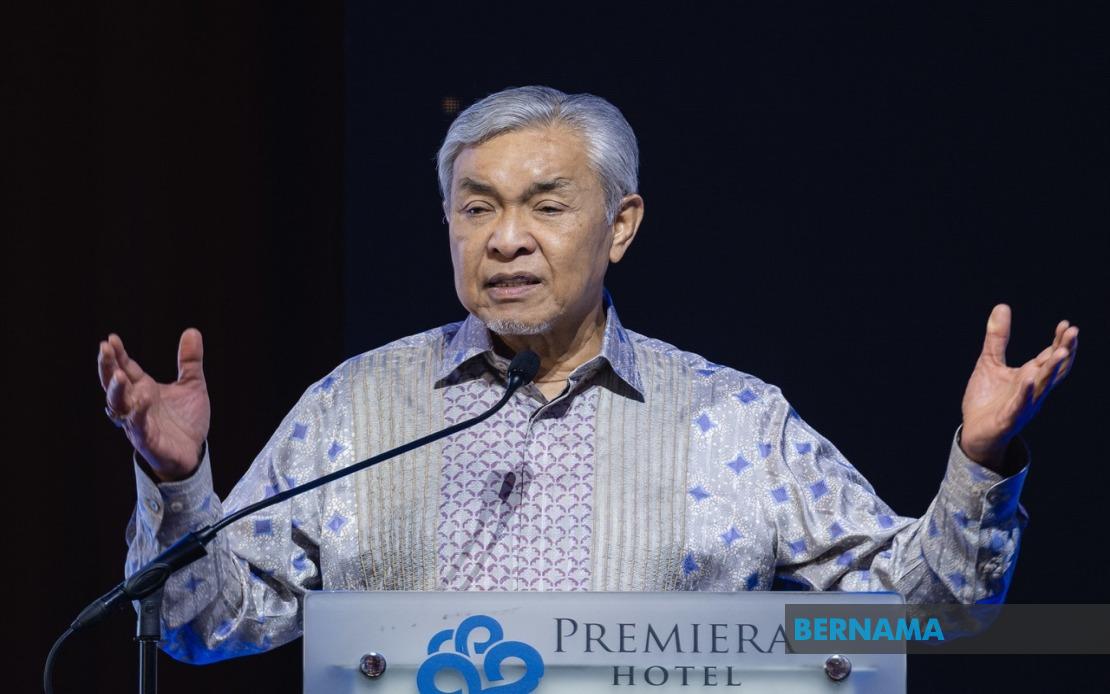
Deputy Prime Minister Datuk Seri Dr Ahmad Zahid Hamidi has signalled openness to incorporating fresh rural road infrastructure projects across Sabah and Sarawak into Budget 2027, provided these initiatives address connectivity gaps for communities currently isolated from major urban centres. Speaking after presiding over the Ministry of Rural and Regional Development's annual awards ceremony in Kuala Lumpur, Ahmad Zahid—who also heads the rural development portfolio—indicated that any outstanding requests for road infrastructure would enter the budgeting process once preliminary consultations conclude with relevant stakeholders.
The undertaking represents a significant development for East Malaysian communities that have long struggled with inadequate transport infrastructure. Rural road networks form the backbone of economic activity in remote regions, enabling farmers and small businesses to reach markets, schools, and healthcare facilities. The absence of proper connectivity perpetuates poverty cycles and limits educational and employment opportunities for younger generations. By positioning rural road development as a budgetary priority, the federal government acknowledges these longstanding infrastructure deficits that have hindered development trajectories across both states.
Ahmad Zahid underscored that his ministry maintains exclusive responsibility for constructing roads designed to bridge remote settlements with established towns and population centres. This clarification of departmental jurisdiction reflects broader efforts to streamline governance structures and eliminate overlapping mandates that historically complicated project execution. By reinforcing the Ministry of Rural and Regional Development's role in this domain, the government seeks to establish clearer accountability mechanisms and accelerate decision-making timelines for infrastructure approvals.
However, Ahmad Zahid cautioned that actual implementation of any approved projects will remain contingent on frameworks administered by the Ministry of Finance and the Public Works Department. This procedural requirement means that even budget allocation does not guarantee immediate construction commencement. Projects must navigate financial regulations, procurement protocols, and technical assessments before ground-breaking begins. The layered approval process, while ensuring fiscal discipline and engineering standards, often introduces delays that can stretch timelines significantly beyond initial announcements.
The deputy prime minister used the occasion to articulate a broader philosophical reorientation within his ministry, calling for adoption of what he termed a "new discipline" centred on evidence-based evaluation of existing programmes. Ahmad Zahid explicitly called for the termination of initiatives that fail to generate measurable community benefits, acceleration of schemes demonstrating tangible results, and comprehensive overhaul of underperforming projects. This performance-based approach signals a departure from the conventional model where funding often continued regardless of effectiveness, addressing longstanding criticisms that rural development spending sometimes produced minimal substantive returns.
A critical dimension of Ahmad Zahid's vision extends beyond physical infrastructure construction. He articulated that contemporary rural development must transcend the traditional infrastructure-building paradigm and instead cultivate comprehensive economic ecosystems capable of generating sustainable employment and income streams. This conceptual shift recognises that roads alone—while essential—cannot resolve structural rural challenges without complementary investments in agricultural modernisation, small and medium enterprise support, digital connectivity, and skills development. The approach aligns with regional best practices where infrastructure serves as a foundation for broader socioeconomic transformation rather than as an end in itself.
The emphasis on institutional mindset transformation reflects recognition that bureaucratic culture often constitutes a significant impediment to effective programme delivery. Ahmad Zahid challenged ministry personnel to embrace digital modernisation not merely as a systems migration exercise but as a catalyst for fundamental operational restructuring. This appeals for courage in decision-making and genuine change orientation acknowledge that technological upgrades frequently fail to produce anticipated benefits when organisational cultures remain rooted in conventional practices. The call for integrity and accountability in all actions represents an implicit acknowledgment of public sector governance challenges that have periodically undermined rural development programme credibility.
Ahmad Zahid's insistence on continuous learning and innovation among ministry staff carries particular significance for Southeast Asian governance contexts where institutional capacity frequently determines implementation success. By promoting lifelong professional development and encouraging creative problem-solving approaches, the government attempts to elevate service delivery standards across rural regions. This emphasis on human capital development recognises that even well-resourced programmes fail without competent, motivated personnel capable of navigating complex project requirements and adapting strategies to diverse local conditions.
For Sabah and Sarawak specifically, these budgetary signals offer qualified encouragement after years of infrastructure investment variations. Both states have experienced periodic cycles of attention and neglect regarding rural development funding, creating uncertainty among community leaders and local authorities regarding long-term commitment levels. Ahmad Zahid's public commitment to formal consideration within the Budget 2027 framework provides a more concrete foundation for planning and expectation-setting, though the procedural requirements mean delivery timelines remain uncertain. Local governments and community organisations will likely now mobilise to prepare detailed project proposals and ensure their inclusion in formal consultations.
The broader policy direction Ahmad Zahid articulated also carries implications for how rural development strategies evolve across Malaysia. By explicitly linking infrastructure investment to measurable socioeconomic outcomes and community welfare improvements, the government establishes accountability standards that should, theoretically, guide project selection and implementation monitoring. Whether these principles translate into consistent practice across multiple budget cycles remains to be observed, as institutional changes of this magnitude typically encounter significant implementation obstacles related to entrenched bureaucratic practices and political pressures that sometimes override performance-based criteria. Nevertheless, the articulation of these principles represents an important step toward more intentional, outcome-focused rural development programming throughout the country.

