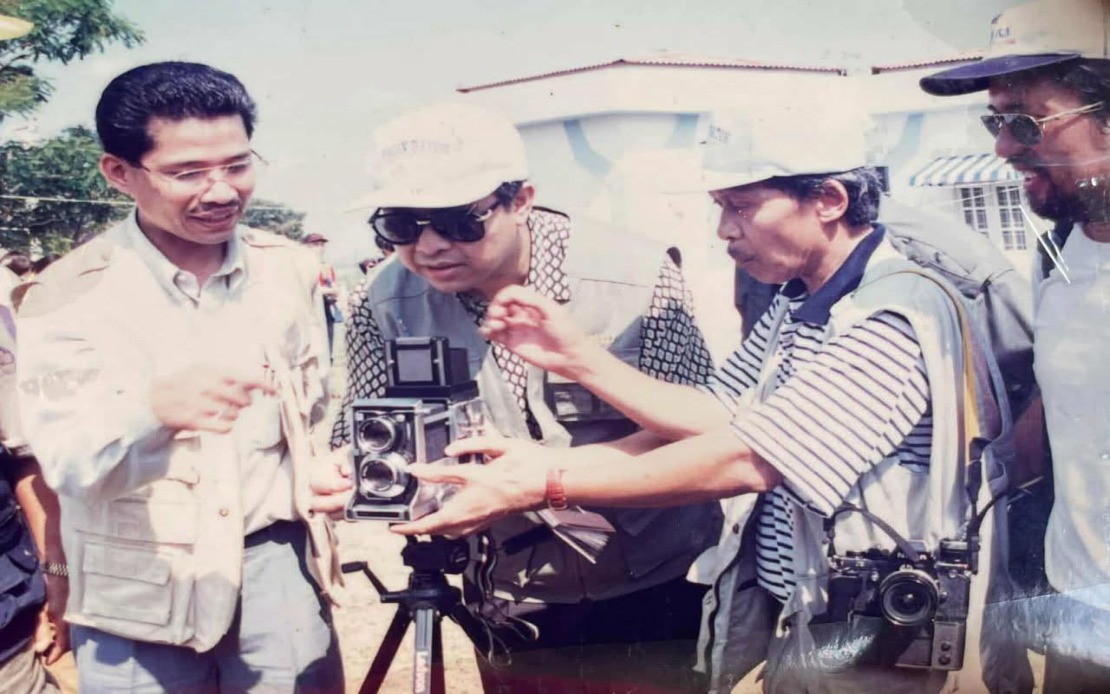
Deputy Prime Minister Datuk Seri Dr Ahmad Zahid Hamidi marked World Photography Day 2026 by honouring the diverse community of image makers whose work shapes how society documents and remembers its most significant moments. In remarks published on social media, Ahmad Zahid recognised the broad spectrum of photography professionals and enthusiasts who collectively preserve the visual narrative of human experience across Malaysia and beyond.
The tribute encompassed multiple categories of practitioners, from seasoned commercial photographers and photojournalists who document events professionally to those informal archivists who serve as memory keepers within their own circles. Ahmad Zahid specifically highlighted the often-overlooked role of family photographers—those individuals tasked with capturing gatherings and celebrations, whose work frequently becomes the primary visual record of personal and social history for ordinary households. This inclusive framing underscores how photography transcends professional boundaries, functioning simultaneously as art, journalism, historical documentation, and intimate personal practice.
At its core, Ahmad Zahid's message articulated a fundamental truth about the medium: photographs serve simultaneously as ephemeral pleasures and enduring historical artifacts. Some images are treasured as emotional keepsakes, carried in wallets or stored in digital archives for personal reflection. Others transition from domestic settings into public spaces, framed and displayed in homes and institutions. Yet the most significant photographs often transcend their original context entirely, becoming the visual foundation upon which historians, educators, and societies understand pivotal moments and eras.
The Deputy Prime Minister's reflection on the technical and artistic dimensions of photography revealed deeper appreciation for the craft involved. Behind each successful image lies an intentional process: observation, patience, anticipatory timing, and the decisive moment when the photographer recognises the precise instant to capture. Ahmad Zahid noted that this process can occur within seconds, yet the resulting image possesses the capacity to preserve meaning, narrative, and emotional truth across decades or generations. This observation speaks to photography's unique temporal quality—its ability to freeze transient moments and render them permanent.
The recognition carries particular resonance in Southeast Asia, where photography has become increasingly democratised through digital technology and smartphone ubiquity. Malaysia's visual culture has expanded dramatically, with citizen journalism and social media documentation now playing roles alongside traditional media photography. The Deputy PM's inclusive tribute acknowledges this shifting landscape, validating contributions across all levels of photographic practice rather than privileging professional credentials alone.
World Photography Day itself, celebrated annually on August 19, commemorates the announcement of the daguerreotype photographic process in 1839—a watershed moment in visual technology history. The occasion provides opportunity for reflection on how photography has evolved from technical novelty to essential communication medium, shaping public discourse, preserving endangered cultural heritage, and creating visual evidence that influences everything from journalism to justice systems.
Ahmad Zahid's message carries implicit recognition of photography's role in Malaysian public life and governance. Government events, state occasions, and policy announcements increasingly depend on skilled visual documentation to reach broader audiences. Media photographers operating within Malaysia's complex information landscape face particular pressures and responsibilities, balancing editorial judgment, technical excellence, and the demands of multiple stakeholder interests. The Deputy PM's acknowledgment of media photographers specifically signals understanding of these professional pressures.
The broader context of this tribute involves photography's relationship to memory and identity formation. In Malaysia's multicultural society, photography serves as bridge between individual experience and collective narrative. Family albums preserve intergenerational memories across communities; photojournalism documents social change and political processes; artistic photography explores cultural identity and environmental concerns. Each photograph contributes to how Malaysians understand themselves and their place within broader Asian and global contexts.
Future-oriented framing in Ahmad Zahid's remarks—emphasizing that photographs taken today will become tomorrow's memories—suggests awareness of accelerating technological change in image capture and storage. As digital technology enables unprecedented volumes of image creation, questions emerge about preservation, authenticity, and meaning-making. The sheer abundance of photographs paradoxically complicates memory formation; selective curation becomes more challenging when alternatives to forgetting become technically impossible.
The Deputy PM's greeting also implicitly values the discipline and intentionality that characterise deliberate photography, distinct from the casual image capture that characterises contemporary digital culture. Professional and serious amateur photographers invest time, skill, and aesthetic consideration into their work. Acknowledging this alongside casual family documentation reflects appreciation for both rigorous craft and democratic participation in visual culture.
For Malaysian photographers and image-makers navigating increasingly complex professional environments—from traditional photojournalism facing economic pressures to commercial and event photographers adapting to digital platforms—official recognition from political leadership provides symbolic validation. Government acknowledgment of photography's cultural and historical importance can influence funding, educational support, and policy frameworks affecting the profession.

