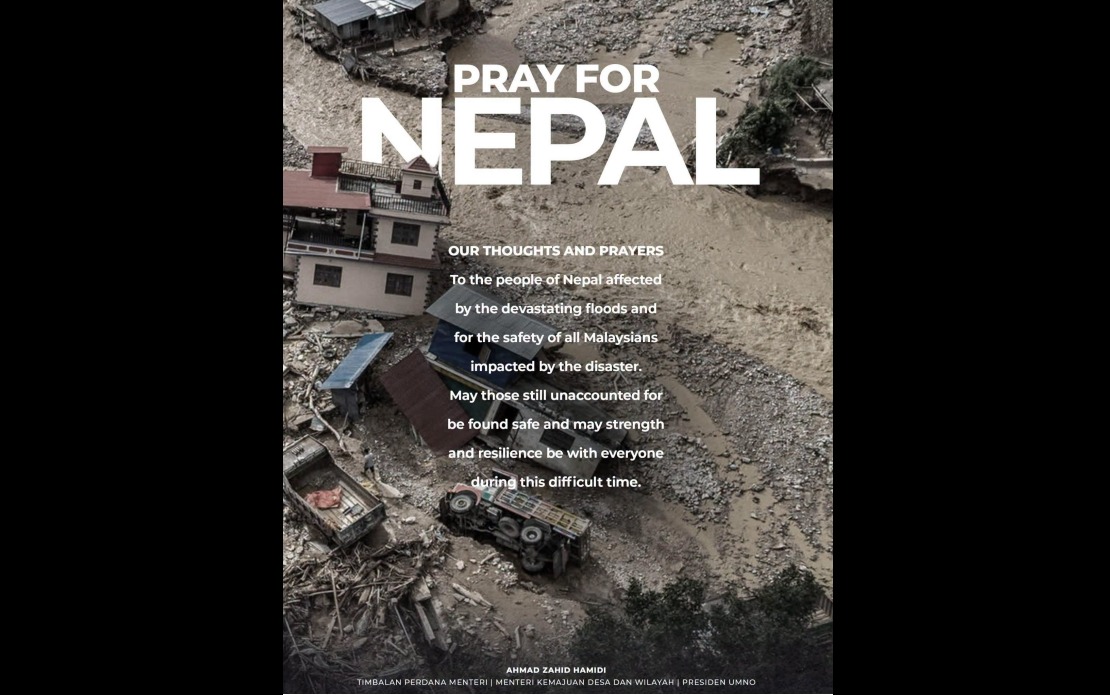
Deputy Prime Minister Datuk Seri Dr Ahmad Zahid Hamidi has publicly expressed deep anxiety regarding the plight of Malaysian citizens stranded or impacted by the catastrophic flooding that continues to ravage parts of Nepal. In a statement released on August 27, he emphasised his concern for the whereabouts and welfare of those Malaysians still unaccounted for in the disaster zone, urging authorities to reunite them safely with their families at the earliest opportunity.
The deputy premier extended his sympathies to bereaved families who have lost relatives in what has become one of Nepal's most destructive natural disasters in recent memory. His remarks underscore Malaysia's commitment to standing alongside Nepal during this humanitarian crisis, reflecting the broader regional solidarity that Southeast Asian nations typically demonstrate in times of natural calamity.
In a Facebook post, Ahmad Zahid articulated the gravity of the situation, noting that the flash flooding has not only claimed numerous lives but has also displaced entire families and devastated communities across the affected regions. He acknowledged the profound human suffering that accompanies such environmental catastrophes, particularly the anguish of relatives desperately searching for news of missing loved ones.
The deputy minister's statement conveyed both personal empathy and official concern, as he noted his thoughts and prayers were with the Nepali people and especially those grieving the loss of family members. This personal touch in his remarks reflects the humanitarian dimension of Malaysia's diplomatic engagement with its South Asian neighbours, moving beyond formulaic condolences to express genuine solidarity.
Ahmad Zahid specifically appealed for the acceleration and success of ongoing search and rescue operations being conducted by Nepali authorities and international relief teams. He stressed the importance of bringing those still in danger to safety, recognising that time remains critical in rescue operations immediately following natural disasters of this magnitude. His call for expedited rescue efforts highlights Malaysia's understanding of the urgency required in such situations.
The deputy premier also offered spiritual encouragement to affected families, praying that they would find strength and resilience in the challenging days ahead. Such statements acknowledge the long-term psychological and emotional toll that disasters inflict on communities, extending Malaysian concern beyond immediate rescue to the broader recovery and healing process.
According to data compiled by Nepal's tourism board and released on the evening of August 27, the death toll from the devastating flash floods had reached 359 as of 5:30 pm local time. This figure underscores the catastrophic scale of the disaster, with the toll likely to rise as rescue operations continue and reports from remote or inaccessible areas filter in. The scale of casualties places this incident among the deadliest flood events Nepal has experienced.
For Malaysian citizens travelling, working, or residing in Nepal, the flooding has created significant uncertainty and concern among families back home. Nepal remains a popular destination for Malaysian tourists, pilgrims visiting Buddhist and Hindu holy sites, and workers employed across various sectors, making the disaster particularly relevant to Malaysia's diaspora community.
The timing of Ahmad Zahid's statement reflects Malaysia's broader commitment to coordinating consular assistance and information gathering regarding affected nationals. Given the challenges of communication in disaster zones, Malaysian authorities have likely been working to compile accurate information about the status of citizens in Nepal, a process that typically involves coordination with local authorities and diplomatic channels.
This expression of concern from Malaysia's second-highest political leader demonstrates how regional disasters transcend borders and demand diplomatic attention, even when the primary impact occurs outside one's territory. The disaster in Nepal exemplifies the interconnectedness of South and Southeast Asia, where nationals from one country frequently find themselves caught in the midst of emergencies in neighbouring regions.
The Malaysian government's response, articulated through Ahmad Zahid's statement, establishes a foundation for potential humanitarian assistance or coordinated relief efforts should circumstances warrant such intervention. Many Southeast Asian nations, including Malaysia, maintain protocols for deploying medical teams, rescue personnel, or financial assistance to affected countries following major disasters.
As rescue operations continue across Nepal and more information emerges regarding the full extent of the disaster's impact, Malaysian authorities will likely maintain close monitoring of the situation and provide updated guidance to citizens in the affected areas. The deputy premier's public statement serves both to reassure Malaysian families that their government is engaged with the crisis and to signal to Nepal that Malaysia stands ready to provide support during this critical period.

