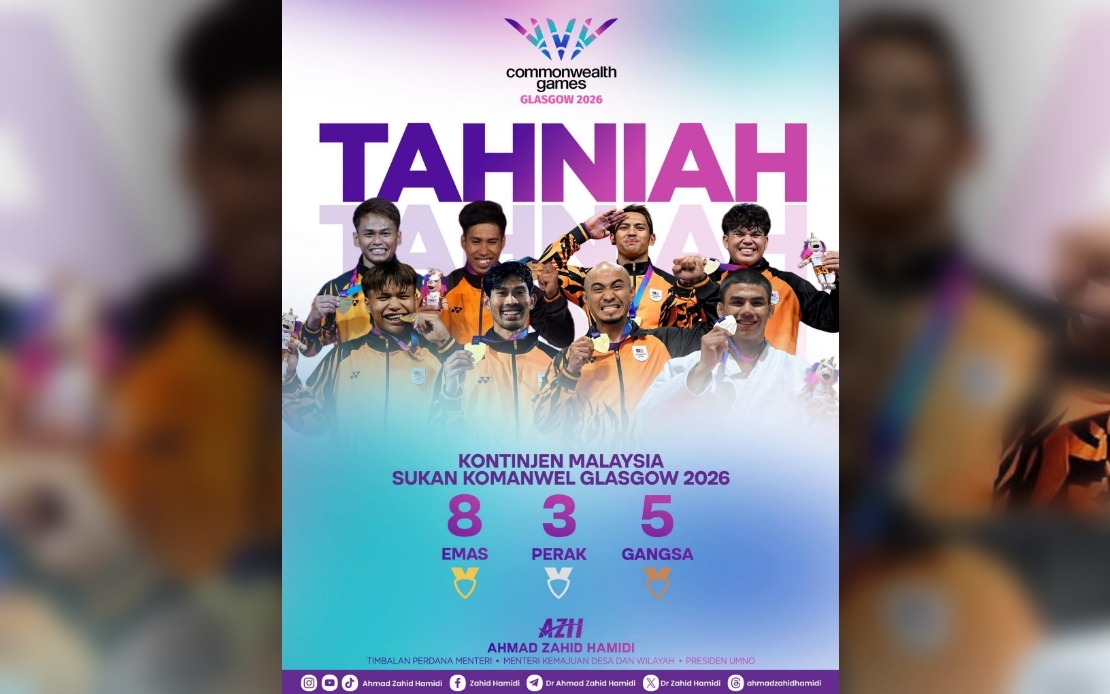
Deputy Prime Minister Datuk Seri Dr Ahmad Zahid Hamidi has praised Malaysia's Commonwealth Games delegation for delivering what he described as the country's most impressive medal haul in over a decade and a half. The Malaysian contingent of 59 athletes, encompassing 22 para-athletes, returned from the recently concluded Glasgow Commonwealth Games with eight gold, three silver and five bronze medals—a total that surpassed the performance benchmarks set before the Games and positioned the nation 10th in the overall medal standings.
The achievement carries particular significance within the context of Malaysia's recent sporting trajectory. Since the Melbourne Commonwealth Games in 2010, the nation has not assembled a delegation that brought home such a substantial medal count, marking a turning point in how the country's athletes have performed on this major international stage. The success encompasses both traditional Olympic sports and Paralympic disciplines, reflecting the breadth of Malaysia's competitive talent across multiple athletic domains.
In his congratulatory message distributed via Facebook, Ahmad Zahid acknowledged not merely the medal winners but the entire support apparatus that enabled this performance. He recognised the contributions of coaches, officials, and support staff who worked behind the scenes to prepare athletes for competition. This inclusive approach underscores an understanding that international sporting success depends on coordination across multiple levels of organisation and expertise, from nutrition specialists to medical teams to technical coaching staff.
The Deputy Prime Minister's statement carried an implicit message about national pride transcending medal tallies alone. He emphasised that Malaysian supporters hold all athletes in equal regard regardless of whether they returned with hardware, positioning the Games as a platform for demonstrating national character through dedication and perseverance. This framing proves relevant in Malaysia's sports culture, where resources for athlete development remain limited compared to wealthier nations, making the commitment displayed by competitors particularly noteworthy.
For Southeast Asia more broadly, Malaysia's performance reflects regional sporting capability at Commonwealth-level competition. The Games themselves have evolved significantly since their inception as a forum linking former British Empire territories, now encompassing nations across the Pacific, Africa, the Caribbean, and Asia. Malaysia's consistent participation and improving results position the country within a competitive Asian contingent that includes Australia, India, and several smaller island nations, each vying for prominence within this particular sporting calendar.
The reference to careful preparation as a foundation for success carries implications for Malaysia's approach to athlete development infrastructure. Commonwealth Games performances typically offer a reliable barometer of how well national sporting systems are functioning, particularly regarding talent identification, coaching standards, and the quality of training facilities available to competitors. A strong showing suggests that despite resource constraints, Malaysian sporting bodies have managed their athlete preparation cycles effectively.
The para-athlete component of the contingent—22 of the 59 total competitors—deserves particular attention within the Malaysian context. Disability sports have gained traction in Malaysia in recent years, though funding and public visibility remain challenges compared to able-bodied competitions. The substantial representation of para-athletes in the Glasgow contingent and their contribution to the medal count indicates growing infrastructure and talent development in this category, aligning with global trends toward greater inclusivity in major sporting events.
Ahmad Zahid's invocation of team spirit as a driving factor echoes a theme common in Malaysian political discourse surrounding national achievements. Whether substantively true or rhetorically deployed, the emphasis on collective effort rather than individual heroics reflects cultural values that Malaysian leadership frequently emphasises in public statements. This rhetorical positioning helps consolidate public support for continued investment in sporting infrastructure and athlete welfare programmes.
Looking forward, the Deputy Prime Minister's hope that the Glasgow results will inspire future achievements sets an implicit target for the 2026 Commonwealth Games in Victoria, Australia. As the host nation for that edition of the Games, Australia will inevitably dominate the medal standings, but Malaysia will seek to maintain or improve upon its Glasgow performance. The timing of Ahmad Zahid's statement, coming shortly after the conclusion of the Glasgow Games, suggests that sporting momentum may influence Malaysian government priorities regarding athlete support and facility development in the coming quadrennial cycle.
The medal breakdown itself—eight gold, three silver, five bronze—indicates competitive balance across Malaysian sports programmes. Gold medals typically reflect areas of genuine dominance or sustained excellence in particular disciplines, while the broader medal spread suggests that multiple sporting federations have successfully developed competitive athletes. This diversity of success provides a foundation for strategic investment decisions about which sports merit enhanced support to drive further improvement.
Within Malaysian domestic politics, successful Commonwealth Games performances provide convenient vehicles for demonstrating government effectiveness in non-contentious domains. Sports achievements generate positive headlines and public sentiment without the polarising effects of economic policy or social legislation. By publicly celebrating the athletes and their support structures, Ahmad Zahid positions the administration as engaged with nation-building in its broadest sense, acknowledging contributions beyond the conventional political arena.

