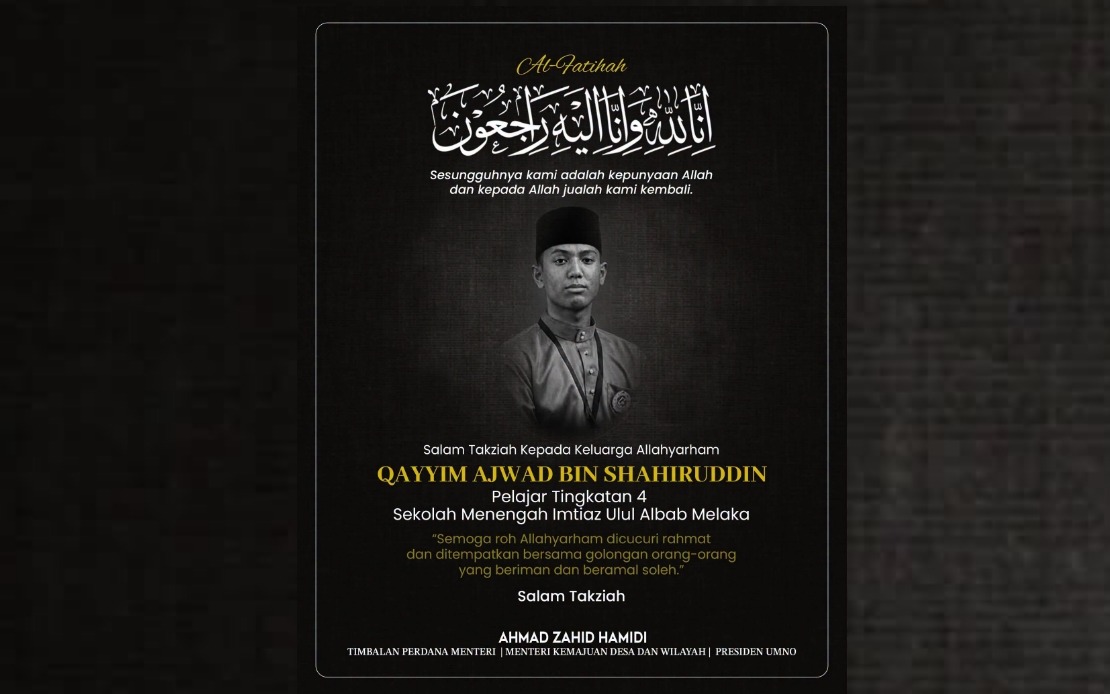
Deputy Prime Minister Datuk Seri Dr Ahmad Zahid Hamidi has conveyed his sympathies to the bereaved family of Qayyim Ajwad Shahiruddin, a pupil at Sekolah Menengah Imtiaz Ulul Albab in Melaka who passed away following complications from a vehicle collision that occurred in mid-July. The teenager's death marks a tragic conclusion to injuries sustained when the school vehicle was struck during a journey home from a sporting event.
In a statement made public through social media, Ahmad Zahid characterised the loss as profoundly significant, emphasising the emotional toll such incidents inflict on educational institutions and their communities. He simultaneously extended prayers for the complete recuperation of other individuals wounded in the same collision who remain under medical supervision. The Deputy Prime Minister's intervention underscores the serious attention senior government officials accord to incidents affecting schoolchildren and institutional safety.
The tragic incident unfolded on July 8 when the vehicle carrying students and an accompanying educator from SM Imtiaz Ulul Albab collided with a commercial lorry in the Solok Duku area of Melaka. The group had been returning from a table tennis competition hosted at Sekolah Jenis Kebangsaan Cina Cheng when the accident occurred. Beyond Qayyim Ajwad, the collision resulted in injuries to his teacher and two additional students, whose conditions necessitated ongoing hospital care throughout the intervening weeks.
In his public remarks, Ahmad Zahid articulated a personal connection to the school and its student population, describing them in familial terms that reflect both his political constituency and his broader advocacy for youth welfare. This rhetorical framing serves to humanise the tragedy beyond mere statistics, positioning the incident within a framework of institutional responsibility and governmental concern for educational safety. Such expressions carry weight in Malaysian political discourse, where public figures frequently invoke personal relationships with institutions to underscore the gravity of particular events.
The Deputy Prime Minister invoked Islamic principles and practices in his condolence message, calling for the recitation of al-Fatihah and requesting divine mercy upon the deceased. This spiritual dimension is customary in Malaysian political communications, particularly when addressing Muslim-majority audiences and reflecting the intersection of faith and public duty that characterises leadership in the country. The reference to prayers for the soul's journey reflects broader cultural sensibilities within Malaysian society regarding death and remembrance.
Road accidents involving school transport remain a persistent concern across Malaysia and the wider Southeast Asian region, where vehicle safety standards, driver training protocols, and road infrastructure quality continue to warrant scrutiny. The July 8 collision near Melaka represents merely one incident among numerous traffic-related injuries and fatalities affecting young people annually. Such events frequently prompt reviews of safety measures and insurance protocols governing educational institutions' transportation arrangements.
The multi-week interval between the initial accident and Qayyim Ajwad's eventual death underscores the severity of injuries sustained in the collision. Modern medical interventions often preserve life in the immediate aftermath of serious trauma, yet complications arising from such injuries can manifest gradually, sometimes resulting in delayed fatalities. This temporal dimension adds complexity to both the family's grieving process and institutional accountability discussions, as accountability mechanisms may become unclear when deaths occur substantially after the initial incident.
Malaysia's education system operates within a framework requiring institutions to maintain insurance coverage and safety protocols for student transport. However, enforcement and adequacy of such measures remain subjects of ongoing national debate. The involvement of a commercial lorry in the collision raises additional questions regarding road-sharing dynamics and whether specific factors contributed to the accident's severity. Such investigations typically proceed through formal channels, though public attention often dissipates rapidly unless systemic failures emerge.
For SM Imtiaz Ulul Albab specifically, this tragedy will likely necessitate internal reviews of transportation procedures and support mechanisms for grieving students and staff. Educational institutions hosting external competitions must balance opportunities for student development against the inherent risks accompanying travel. The school's response to this incident will establish precedents for how it manages student welfare going forward and may influence how other institutions in Melaka approach similar activities.
The incident illuminates broader questions about youth safety infrastructure across Malaysia. While Ahmad Zahid's condolences represent appropriate institutional acknowledgment, substantive policy responses addressing root causes of school-related accidents require sustained attention from education ministries, transportation regulators, and road safety authorities. Periodic expressions of governmental sympathy, while meaningful to affected families, must ideally catalyse systemic improvements preventing future tragedies.

