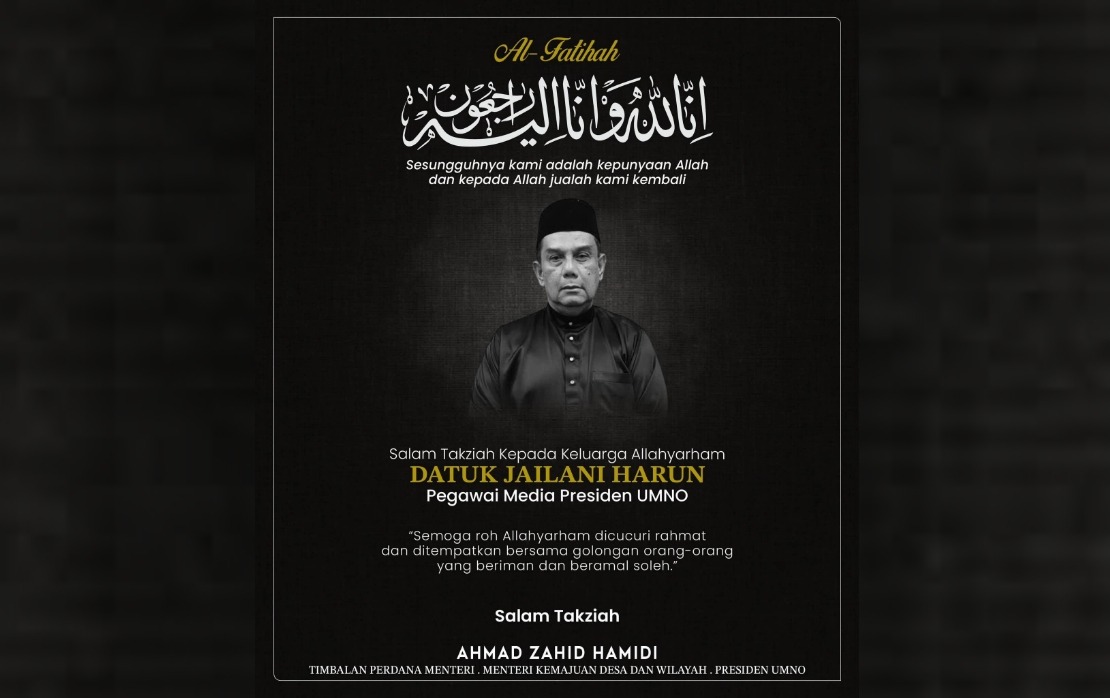
Deputy Prime Minister Datuk Seri Dr Ahmad Zahid Hamidi has conveyed his heartfelt sympathies to the loved ones of Datuk Jailani Harun, a veteran journalist and former media officer at the UMNO President's Office, who died on July 7 at the age of 66. The UMNO president visited Jailani at Serdang Hospital earlier that morning, an encounter that left a lasting impression on him as he witnessed the deterioration of his longtime associate.
In a Facebook statement released following the death, Ahmad Zahid reflected on his personal recollection of Jailani, emphasising the qualities that had earned him widespread regard within political and media circles. He characterised the deceased as possessing a gentle disposition, unpretentious demeanour, and commanding respect from those who crossed his path. These attributes, accumulated over decades of service, had made Jailani a notable figure in the machinery of Malaysia's ruling party and its communications apparatus.
Ahmad Zahid revealed the emotional toll of witnessing Jailani's final hours, noting that he had entertained hopes for a recovery even as the situation appeared dire. The deputy premier acknowledged, however, that divine will had ultimately determined otherwise, accepting the outcome with the Islamic perspective that Allah's plan supersedes human wishes. This reflection underscores the personal bonds that often transcend the formal hierarchies within political organisations, particularly among those who have worked closely for extended periods.
The condolence message extended beyond mere sympathy, with Ahmad Zahid invoking religious sentiments appropriate to the Muslim faith observed by the Jailani family. He prayed that the Almighty would grant forgiveness for any transgressions, extend His infinite mercy upon the departed soul, and grant Jailani a place among the righteous and faithful in the hereafter. Such expressions reflect the deeply rooted religious and cultural values that inform Malaysian public life, particularly within establishment circles.
Jailani's professional journey spanned the intersection of journalism and political communication, roles that have historically positioned individuals as bridge-builders between elected officials and the media landscape. His tenure at the UMNO President's Office would have exposed him to the inner workings of party strategy, media relations, and the complex dynamics of Malaysian politics during several significant periods. The respect accorded to him by senior leadership suggests he navigated these challenging territories with discretion and competence.
The funeral arrangements reflect Islamic protocols and the social standing of the deceased within his community. Following asar prayers on the day of his death, Jailani was laid to rest at the Alam Damai Muslim cemetery in Cheras, an established burial ground in the Kuala Lumpur metropolitan area. The timing and location of his funeral would have permitted colleagues, associates, and family members to pay their final respects according to Islamic tradition and Malaysian custom.
Jailani's passing at 66 marks the end of a career that spanned periods of significant transformation in Malaysian media and politics. Those who worked with him during his tenure at the UMNO President's Office would have witnessed the evolution of political communication from traditional media dominance to the emergence of digital platforms. His role in that transition, though perhaps not widely publicised, would have contributed to how the party engaged with journalists and shaped its public messaging.
For Malaysia's political establishment, the loss of figures like Jailani represents the passing of institutional memory and personal networks that have sustained party machinery across decades. His background in journalism would have afforded him unique insights into how political messages are received, interpreted, and disseminated by the fourth estate. Such individuals often serve as cultural interpreters, helping bridge potential misunderstandings between political leadership and media practitioners.
The public acknowledgment of Jailani's death by a sitting deputy prime minister, communicated through social media, reflects contemporary Malaysian political culture where senior officials increasingly communicate directly with citizens rather than solely through formal press releases. Ahmad Zahid's personal account of visiting Jailani in hospital and his emotional response humanises political leadership in ways that resonate with ordinary Malaysians who understand the bonds of friendship and professional collegiality that transcend partisan considerations.
Jailani's career trajectory, from journalism to the communications apparatus of UMNO's highest office, exemplifies a pathway common among Malaysian professionals who leverage media expertise to serve political interests. The reverence with which Ahmad Zahid spoke of him suggests he had earned trust and respect through consistent, reliable service rather than through political manoeuvring. In Malaysian political culture, such reputations prove durable and are frequently cited when senior figures eulogise their colleagues.
The condolence extended to the Jailani family by the deputy prime minister, combined with the arrangement of funeral rites within a prominent Muslim cemetery, underscores the integration of personal relationships, professional networks, and cultural-religious values that characterises Malaysian leadership circles. The loss of someone who occupied the intersection of journalism and political communication removes a voice that could have provided valuable perspective on contemporary Malaysian media and political relations.

