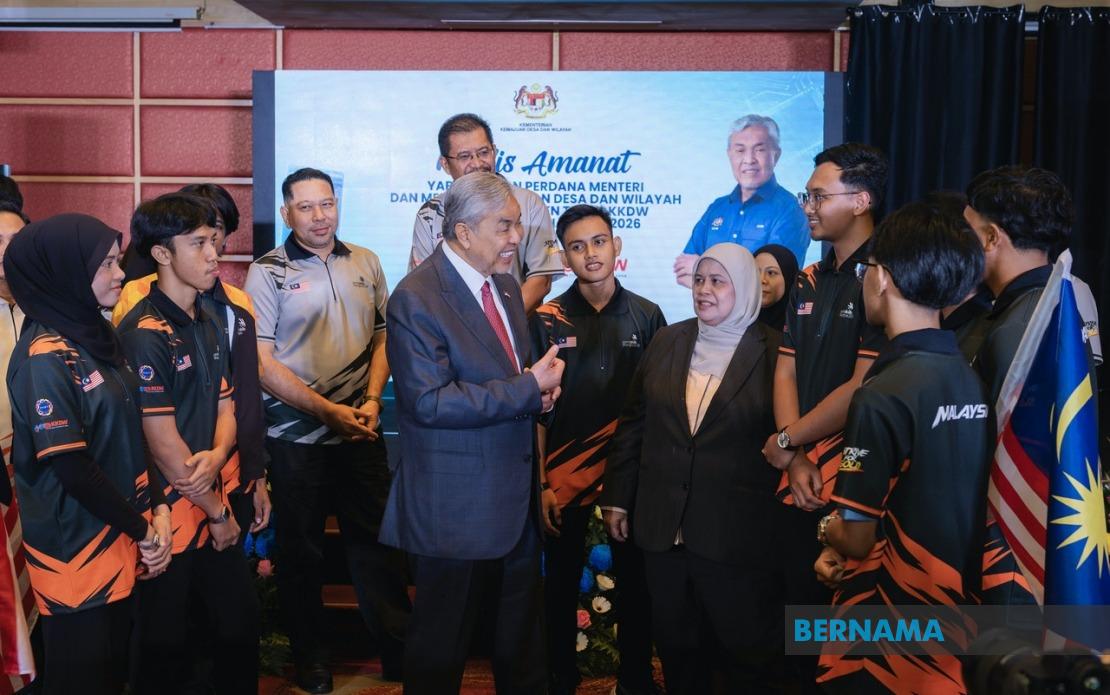
Deputy Prime Minister Datuk Seri Dr Ahmad Zahid Hamidi has made an unprecedented personal pledge to fund umrah pilgrimages for Malaysian vocational students who capture gold medals at the upcoming WorldSkills Competition in Shanghai, signalling the government's commitment to recognising excellence in technical skills development.
The commitment covers participants from Technical and Vocational Education and Training institutions operating under the Ministry of Rural and Regional Development, which Ahmad Zahid oversees alongside his deputy prime ministerial duties. Speaking at an official send-off event for Malaysia's contingent, he announced that the sponsorship would extend not only to medal-winning participants but also to their parents, treating the recognition as a spiritual reward for their dedication and hard work. This approach reflects a distinctly Malaysian perspective on honouring achievement, integrating professional recognition with religious and familial values.
Ahmad Zahid emphasised the personal nature of the undertaking, drawing funds exclusively from his own resources rather than government allocations. By framing the umrah sponsorship as a personal gesture of gratitude, he distinguished this initiative from routine government incentive schemes, signalling the significance he attaches to WorldSkills performance. The promise carries particular weight given that it applies to all nine participants in Malaysia's contingent, meaning the financial commitment could extend to eighteen people—the nine competitors plus their parents—should the entire delegation secure gold medals.
Malaysia's nine-strong team competing across nine skill categories represents carefully selected talent from the TVET sector. The contingent includes Nadratulliyana Ab Malek in Fashion Technology, Haziq Syahmi Nazri in Automobile Painting, and Amirul Sharif Sharifudin competing in Electronics. Additional participants include Mohammad Ezaly Iman Ramli for Cyber Security and Wan Hamiz Ozai Wan Hamidzi representing Malaysia in Rail Vehicle Technology, indicating broad coverage across both traditional trades and emerging digital sectors.
The remaining members of the delegation showcase the diversity of Malaysia's technical talent pipeline. Khairul Idham Bahari will compete in Cabinetmaking, while Muhamad Nashrul Zulkifli takes on Digital Construction. Muhammad Haziq Lailla Zamri brings his expertise to Electrical Installations, and Muhammad Huzairy Mohamad Thes competes in Mechanical Engineering CAD. This mix of established crafts and contemporary technical disciplines reflects the evolving nature of vocational training in Southeast Asia, where traditional skills coexist with cutting-edge technological competencies.
WorldSkills Competition represents one of the globe's largest international skills showcases, attracting participants from numerous countries to demonstrate technical proficiency across dozens of trade and technology categories. The Shanghai 2026 iteration, scheduled for September 22 to 27, will provide Malaysian participants with an international platform to demonstrate the calibre of the country's vocational education system. Success at such competitions typically generates significant national attention and can reshape perceptions of technical careers within Malaysia's education landscape.
The Deputy Prime Minister's personal investment in this initiative addresses a persistent challenge within Malaysian education discourse: the perceived status hierarchy that traditionally elevates academic pathways over vocational training. By attaching substantial personal recognition to WorldSkills success, Ahmad Zahid signals that technical excellence merits consideration equal to conventional academic achievements. This repositioning carries implications for Malaysia's long-term workforce development, particularly as regional economies increasingly require skilled technicians across manufacturing, construction, digital services, and emerging green technology sectors.
For Malaysian readers, the pledge underscores growing government interest in strengthening the vocational education ecosystem. International competitions like WorldSkills serve as quality benchmarks, allowing Malaysian institutions to assess their training standards against global peers. Success in Shanghai could validate the TVET@KKDW programme's approach and potentially attract greater investment and student interest in technical careers. Conversely, modest performance might prompt policy review and curriculum refinement within Malaysia's vocational institutions.
The timing of this commitment reflects broader Southeast Asian trends toward skills-based development. Across the region, governments increasingly recognise that manufacturing competitiveness and emerging sectors depend on consistently high-quality vocational training. Malaysia, as a middle-income economy seeking to avoid the middle-income trap, particularly depends on maintaining technical excellence. The Deputy PM's pledge demonstrates political awareness that such competitive advantage requires sustained cultivation at the grassroots training level.
Deputy Rural and Regional Development Minister Datuk Rubiah Wang's presence at the announcement signals institutional support extending beyond the Deputy PM's personal initiative. This suggests the Ministry recognises the strategic importance of WorldSkills participation and has mobilised resources to prepare the contingent adequately. The combination of personal incentive and ministerial backing creates a comprehensive support framework intended to maximise the delegation's competitive prospects.
For the nine participants themselves, the umrah sponsorship pledge introduces a powerful personal motivation layer beyond conventional competition dynamics. The religious and spiritual dimension adds psychological significance, particularly for Muslim competitors who may view pilgrimage as a profound personal achievement. This integration of professional recognition with spiritual reward reflects Malaysian cultural and religious contexts that mainstream secular competitions might overlook.
Looking beyond Shanghai, Malaysian success at WorldSkills 2026 could generate cascading effects through the domestic education system. Strong medal performances typically inspire increased TVET enrolment, attract teacher recruitment to vocational schools, and influence industry-education partnerships. Ahmad Zahid's visible personal commitment may amplify these outcomes by demonstrating that excellence in technical fields receives recognition at the highest political levels, potentially shifting societal perceptions of vocational pathways that Malaysian families traditionally viewed as secondary educational options.
The success of Malaysia's contingent will ultimately depend on preparation quality, international competition standards, and the skill level of individual participants. However, Ahmad Zahid's pledge ensures that Malaysian participation in WorldSkills 2026 carries heightened national significance, transforming what might otherwise be a routine international skills exhibition into a showcase moment for the country's vocational education capacity and government commitment to technical excellence.

