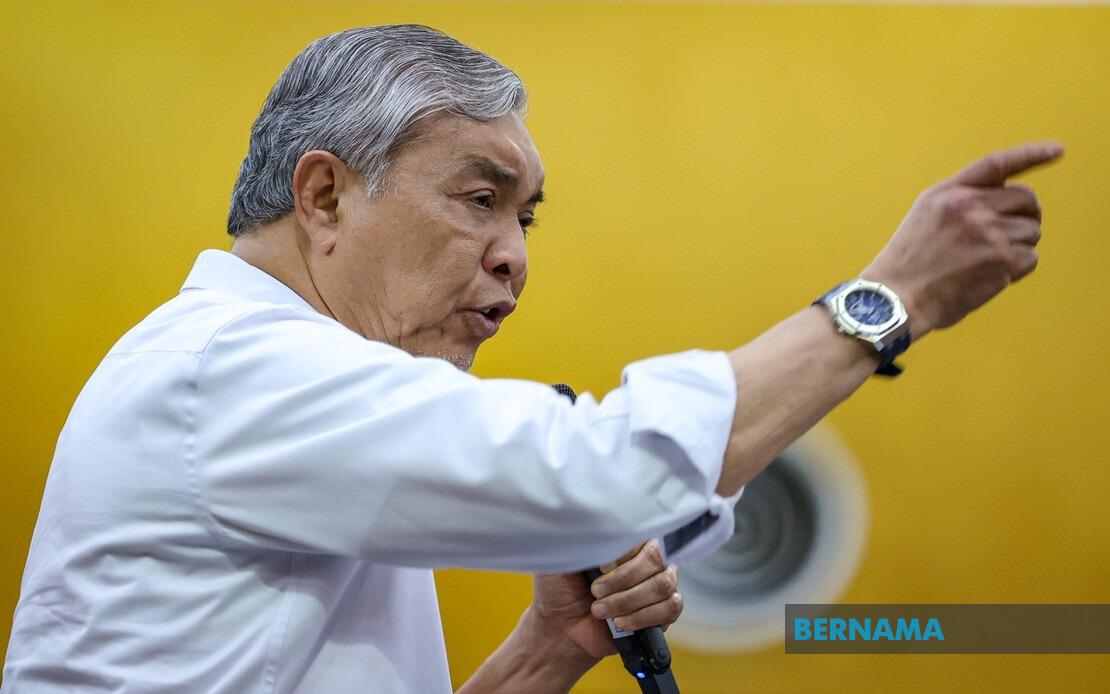
Deputy Prime Minister Datuk Seri Dr Ahmad Zahid Hamidi has unveiled an ambitious proposal to strengthen political literacy among Malaysia's campus leaders through structured educational programmes. Speaking in Johor Bahru on July 9, he called for Student Representative Councils (MPP) at institutions of higher learning to participate in specialised courses designed to broaden their grasp of democratic principles and the country's evolving political landscape. The initiative reflects growing concern among senior government figures about ensuring the next generation of civic leaders enters the political arena with sufficient knowledge and maturity to navigate complex national issues.
The timing of Ahmad Zahid's announcement carries particular significance given Johor's looming state election, scheduled for Saturday, which will determine representation across 56 contested seats. By positioning the proposal as part of broader efforts to strengthen democratic engagement, the Deputy Prime Minister seeks to underscore the government's commitment to nurturing informed citizenship among young voters and campus activists who will shape Malaysia's political future.
Central to Ahmad Zahid's vision is the government's willingness to shoulder the financial burden of these programmes. He indicated that Putrajaya stands ready to fund the leadership and political courses nationwide, contingent upon requests from interested MPPs and subject to endorsement by Higher Education Minister Datuk Seri Dr Zambry Abd Kadir. This financial commitment suggests the government views the initiative not merely as an optional enrichment activity but as a strategic investment in civic development with implications for long-term political stability and governance quality.
The content of these proposed courses would extend beyond conventional leadership training to encompass substantive exposure to Malaysia's political framework and contemporary policy challenges. Ahmad Zahid emphasised that participants should gain practical understanding of how political decisions are made, who influences those decisions, and how voting patterns translate into policy outcomes. Such knowledge, he argues, would equip student leaders to serve as more effective advocates within their campus communities and better prepare them for roles in shaping national direction.
Ahmad Zahid, who simultaneously holds the position of Barisan Nasional chairman, articulated a nuanced position on youth political engagement that merits examination. He acknowledged that not every young person need pursue active politics, yet stressed the importance of political awareness regardless of personal involvement levels. Drawing on his own trajectory, he noted that he became politically active as a student leader at Universiti Malaya, suggesting this pathway remains a valid option for interested youth while recognising that alternative forms of civic contribution exist.
This distinction between political engagement and political literacy reflects evolving debates within Malaysian civil society about how to foster responsible citizenship. Rather than demanding universal activism, Ahmad Zahid's formulation permits voluntary participation while insisting that informed decision-making requires baseline knowledge of how political systems function. For first-time voters and those newly eligible at eighteen, this represents a practical challenge: how to ensure meaningful exposure to political information without appearing to instrumentalise education for partisan purposes.
The Deputy Prime Minister placed particular emphasis on the consequence of voting behaviour, arguing that young people should understand the weight carried by their ballot choices. He stressed that votes determine not only individual political leaders but also the broader direction parties will pursue, highlighting that electoral choices have cascading effects throughout government and society. This framing seeks to counter potential apathy among younger voters while motivating them to approach election day with deliberation rather than indifference.
For Malaysian higher education institutions, the proposal raises important considerations about curriculum scope and institutional autonomy. Universities already navigate tension between academic independence and political pragmatism; introducing government-sponsored political education could either strengthen democratic participation or create perception of state influence over student thinking, depending on programme design and delivery. How these courses would balance impartial civic education against partisan messaging remains an open question that will require careful attention from Education Ministry officials and university leadership.
The implications extend beyond campus boundaries to encompass broader questions about political participation in Southeast Asia. Malaysia's experience with youth political engagement differs from regional neighbours yet shares common concerns about voter turnout, political polarisation, and ensuring younger generations understand institutional processes. Should Ahmad Zahid's proposal gain traction and demonstrate measurable outcomes, neighbouring countries confronting similar demographic and political challenges may examine the Malaysian model for adaptable elements.
Implementing such a programme would require coordination across multiple agencies and institutions, from the Education Ministry to individual university administrations to the Barisan Nasional party machinery overseeing implementation. Questions about curriculum content, instructor qualifications, assessment mechanisms, and accessibility across diverse campus environments will demand resolution before the initiative moves from proposal to reality. The success or failure of this initiative may well influence how Malaysian policymakers approach civic education more broadly in coming years.

