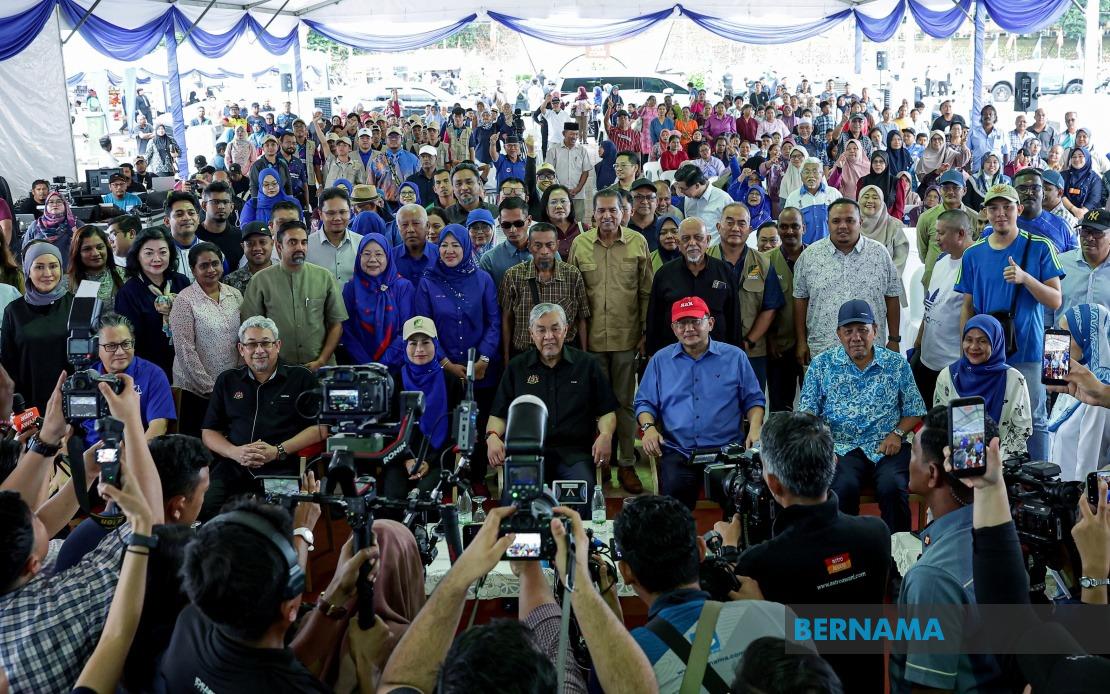
Deputy Prime Minister Datuk Seri Dr Ahmad Zahid Hamidi has made a public appeal to all political parties involved in the 16th Negeri Sembilan State Election to exclude matters concerning race, religion, cultural heritage and societal background from their campaign strategies. Speaking in Kuala Pilah on July 25, the Barisan Nasional chairman stressed that political figures at both national and state levels must demonstrate ethical leadership and maintain professional decorum throughout the electoral process. His call underscores growing concerns about the tone of political discourse in Malaysia, particularly as state-level contests increasingly mirror national political divisions.
The Deputy Prime Minister emphasized that substantive debate on policies and programmes directly impacting citizens should form the backbone of campaign messaging. Rather than engaging in personal attacks or character assassination, political leaders should focus their efforts on articulating clear visions for development and governance. Ahmad Zahid noted that while political parties inevitably hold differing opinions on various matters, there exist appropriate channels and mechanisms for expressing these disagreements without resorting to inflammatory rhetoric that exploits identity-based sensitivities. This position reflects broader efforts within the federal government to establish clearer boundaries around acceptable political conduct.
Ahmad Zahid, who concurrently serves as Minister of Rural and Regional Development, made these remarks during his official opening of the Salam Agrikomoditi MADANI programme at Dataran Melang. The occasion provided a platform to reinforce what he characterized as the government's commitment to maintaining unity across the federal coalition while allowing healthy competition at the state level. The presence of Plantation and Commodities Minister Datuk Seri Dr Noraini Ahmad at the event reflected the administration's intention to present a cohesive message across different portfolios and constituencies.
In a related statement, Ahmad Zahid reiterated the Barisan Nasional coalition's unwavering support for Prime Minister Datuk Seri Anwar Ibrahim's administration through the duration of the current federal government's term. He categorically dismissed suggestions that BN harbored intentions to undermine the MADANI Government through backdoor political maneuvers or coalitional realignments. This clarification addresses persistent speculation within opposition circles and among political analysts regarding the stability of the federal coalition and potential shifting allegiances ahead of anticipated national elections.
Meanwhile, in Johor, UMNO vice-president Datuk Seri Mohamed Khaled Nordin provided further elaboration on the nature of cooperation between Barisan Nasional and Perikatan Nasional in the Negeri Sembilan state contest. He characterized their arrangement as a limited political understanding designed specifically to prevent multi-cornered contests in certain constituencies where both coalitions might otherwise field competing candidates. Mohamed Khaled stressed emphatically that this cooperation should not be interpreted as a substantive merger or broader realignment between the two major coalitions. His comments seek to address confusion among party members and the public regarding the implications of the electoral arrangement.
The UMNO leader's clarification proves particularly important given the historical animosity between Barisan Nasional and Perikatan Nasional at both state and national levels. The two coalitions represent distinct political visions and have competed fiercely in recent electoral contests, including the 2022 general election and various state contests. An agreement to avoid contesting the same seats necessarily raises questions about the stability of Malaysia's bipolar political structure and whether such arrangements might portend a broader rapprochement between these two major political groupings. For Malaysian voters and observers, understanding the precise contours of this arrangement remains crucial for interpreting the electoral dynamics.
The 16th Negeri Sembilan State Election represents a significant test of the MADANI Government's political standing and the unity coalition's ability to govern effectively at the state level. Negeri Sembilan, a relatively smaller state by population and economic output compared to larger states like Selangor or Johor, nonetheless holds symbolic importance within Malaysia's federalist structure. The election outcomes could provide valuable insights into voter sentiment regarding the federal government's performance and the broader acceptability of the Anwar Ibrahim administration's policy direction. Early voting for the contest is scheduled for July 28, with the main polling date set for August 1.
The timing of Ahmad Zahid's appeal to maintain campaign ethics assumes particular significance given Malaysia's recent history of acrimonious electoral contests characterized by identity-based appeals and inflammatory rhetoric. The 2020 Sabah state election and the 2022 general election both witnessed instances where political parties deployed sensitive cultural and religious messaging to mobilize voter support. Such campaigns, while effective in certain contexts, contribute to societal polarization and can undermine the cohesiveness necessary for national development and inclusive governance. Ahmad Zahid's intervention suggests that senior government figures recognize the need for establishing clearer norms around acceptable political behavior.
From a Southeast Asian perspective, Malaysia's approach to managing political competition while maintaining societal harmony merits attention. The region contains multiple states where managing religious and ethnic diversity represents an ongoing governance challenge. Singapore, Indonesia, and other regional neighbors have each developed distinct mechanisms for regulating political discourse and maintaining social peace amid plural societies. Malaysia's evolution in this regard, particularly through efforts to establish ethical frameworks for political conduct, contributes to the broader regional conversation about balancing democratic competition with social stability. The Negeri Sembilan election offers a practical test case for implementing these principles.
The implications of Ahmad Zahid's statement extend beyond the immediate state contest. If political parties generally respect the call to maintain ethical boundaries and focus on substantive policy issues, it could establish a precedent for more constructive electoral campaigns in subsequent state contests and the eventual general election. Conversely, if parties ignore these appeals and continue deploying divisive messaging around race and religion, it would signal that normative efforts to regulate political conduct lack sufficient force or incentive structures to overcome competitive pressures. The outcome of the Negeri Sembilan contest may indicate which trajectory Malaysia's political discourse is likely to follow.
Both Ahmad Zahid's remarks and Mohamed Khaled's clarifications reveal the complex interplay between maintaining coalition stability, managing party competition, and establishing shared standards for political conduct. The Negeri Sembilan contest occurs within this multifaceted context, where the federal government seeks to consolidate its position while respecting legitimate competitive dynamics at the state level. For Malaysian voters, the campaign period ahead offers an opportunity to evaluate whether political parties will heed the call for ethical conduct or whether the imperatives of electoral competition will overwhelm such appeals. The broader implications for Malaysia's democratic culture and social cohesion may depend substantially on the choices political leaders make during this critical campaign period.

