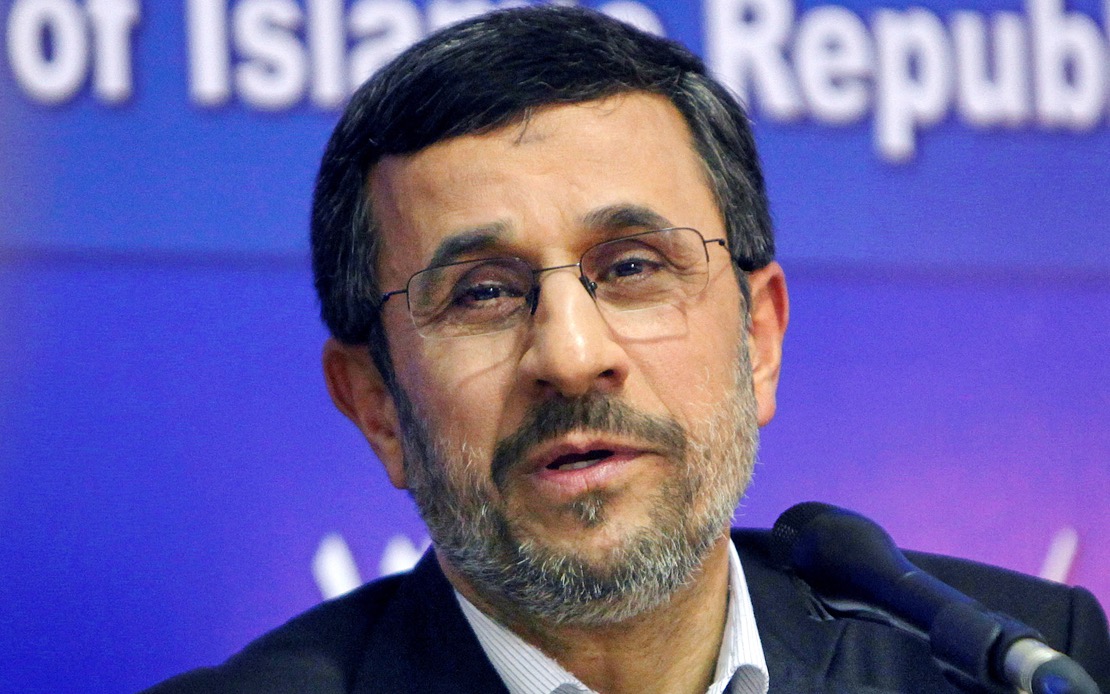
Former Iranian President Mahmoud Ahmadinejad has categorically rejected allegations published by The New York Times suggesting that Israel's Mossad intelligence agency attempted to recruit him and that he is currently confined to his residence. Speaking through his office on Tuesday, Ahmadinejad characterised the report as entirely fabricated, part of what he described as a coordinated effort by the newspaper to sow discord within Iran and manipulate international public opinion.
The statement from Ahmadinejad's office went beyond simple denial, directly attacking the credibility of The New York Times itself. His team accused the publication of deliberately inventing false narratives designed to undermine Iran's political stability and create the impression of internal vulnerability within the Islamic Republic. This defensive posture reflects the sensitive nature of the allegations, which touch on questions of national security, regime legitimacy, and the extent of foreign intelligence penetration within Iran's highest circles.
According to The New York Times' Monday report, Mossad had allegedly pursued Ahmadinejad in recent years as part of a covert operation that officials described as both recruitment and cultivation for potential future leadership of Iran. The intelligence agency, the newspaper claimed, had secretly financed aspects of his lifestyle, including housing and travel expenses, whilst Israeli operatives maintained contact with him during various meetings held outside Iranian territory, particularly in Budapest. These allegations, if verified, would represent a remarkable counterintelligence failure on the part of Iran's security apparatus.
The scope of the alleged operation extended beyond simple intelligence gathering or propaganda recruitment. According to the Times' sources, which included American and Iranian officials with knowledge of the operation, the effort was part of a broader Israeli strategy aimed at engineering regime change in Tehran following initial Israeli military operations against senior Iranian officials. This contextualisation suggests the recruitment attempt was not an isolated intelligence operation but rather a component of a comprehensive destabilisation campaign.
The report became particularly dramatic when it alleged that the operation reached a critical juncture in late February, during the early stages of the US-Israeli military campaign against Iran. According to the account, Israeli intelligence mounted what amounted to an extraction operation targeting Ahmadinejad, with the stated objective of removing him from Tehran so that he could potentially be positioned as a puppet leader of a post-conflict Iranian government. Ahmadinejad's office flatly rejects this characterisation of events.
The Times cited a specific military incident to support its narrative. On February 28, an Israeli airstrike allegedly targeted Ahmadinejad's residential compound, striking a building housing his security detail as well as his armoured vehicle. Following this strike, according to four senior Iranian officials quoted in the report, a black Peugeot vehicle arrived at the scene and transported the former president to an undisclosed safe location within Iran. The newspaper identified the vehicle's operators as Mossad personnel, though Ahmadinejad's team has provided no alternative explanation for these events.
The denial issued by Ahmadinejad's office carries particular weight given the former leader's recent high-profile public appearance. Just last week, Ahmadinejad attended the funeral of Supreme Leader Ali Khamenei, marking his first significant public engagement since the commencement of hostilities between the US, Israel, and Iran. For observers tracking his movements and status, this appearance contradicted at least one element of the Times' allegations—that he remains under house arrest. However, a single funeral attendance does not definitively settle the broader question of whether his movements remain significantly restricted.
For Malaysia and other Southeast Asian nations, this controversy highlights the persistent opacity surrounding Iranian internal politics and the ongoing competition between regional and global powers seeking influence within Iran's institutional structures. The allegations, whether true or false, underscore how vulnerable even senior Iranian officials remain to foreign intelligence operations, a concern that resonates across the region where neighbouring states and distant powers maintain active intelligence services.
The conflict between the Times' reporting and Ahmadinejad's denials cannot be easily resolved without access to classified intelligence materials or official Iranian government acknowledgment of events. Both Mossad and Iran's security services routinely deny operational details, and the involvement of American officials as sources adds a layer of geopolitical complexity—such information may reflect genuine intelligence assessments or deliberate leaks designed to influence regional perception and policy.
Ahmadinejad's political position within Iran remains ambiguous and contested. His presidency from 2005 to 2013 was marked by international controversy, particularly regarding Iran's nuclear programme and his provocative rhetoric toward Israel and Western powers. Since leaving office, he has maintained a public profile whilst occupying no formal governmental position, making him a potentially vulnerable figure without institutional protection or the security apparatus available to sitting leaders.
The allegations also raise questions about the effectiveness of Iran's counter-intelligence apparatus during a period when the nation faces genuine external military threats. If Mossad operatives maintained regular contact with a former president and provided financial support over an extended period, this would represent a significant intelligence breach. Conversely, if the Times' reporting contains inaccuracies or misinterpretations of events, this itself raises questions about intelligence sourcing and journalistic verification standards when reporting on such sensitive matters.
Looking forward, the credibility of both parties in this dispute remains at stake. For The New York Times, publishing such extraordinary allegations requires correspondingly extraordinary corroboration, particularly when sources are American and Iranian officials whose own institutional interests may favour particular narratives. For Ahmadinejad and the Iranian government, blanket denials without substantive response to specific allegations risk appearing evasive to international observers already sceptical of official Iranian statements regarding security matters.

