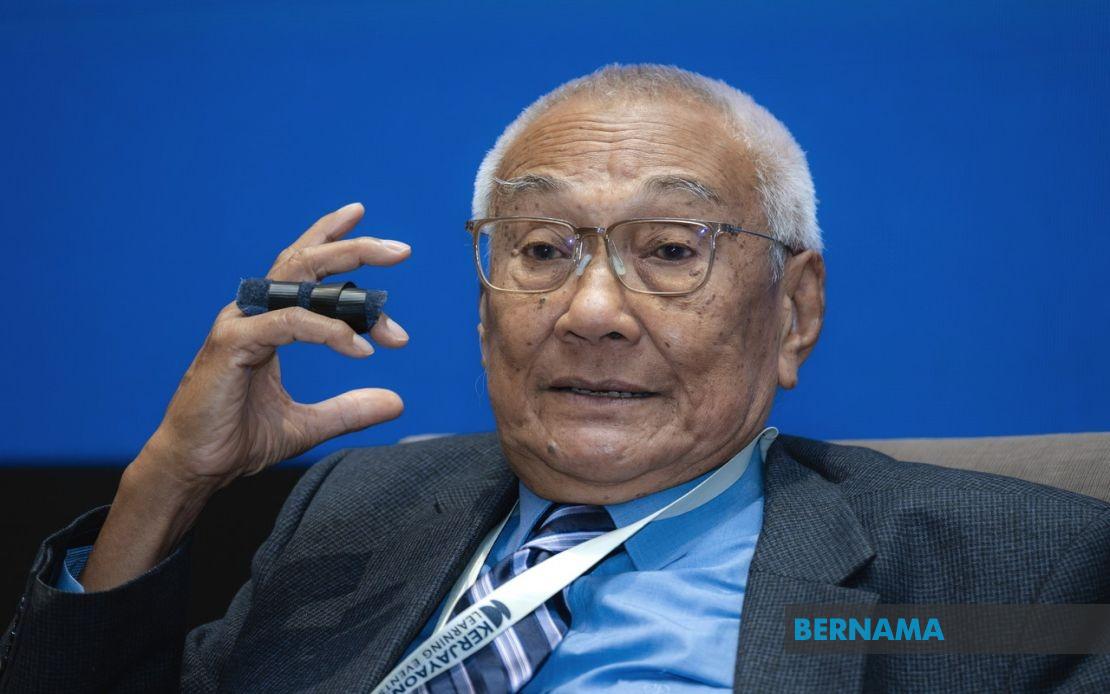
Artificial intelligence may streamline workflows and illuminate new analytical pathways, but it cannot and should not displace the human intellect that underpins legal judgment, according to Tun Zaki Azmi, the former Chief Justice who now chairs Pertama Digital Berhad. Speaking at the Wisdom Malaysia 2026 Conference here on August 5, Zaki drew a crucial distinction between AI as a supportive instrument and AI as a decision-maker, cautioning that courts must never surrender their interpretive authority to algorithmic systems, however sophisticated those systems might appear.
The fundamental vulnerability lies in what researchers term "hallucinations"—instances where AI systems generate plausible-sounding but factually incorrect information. Judges cannot afford such errors. The law requires not merely the appearance of reasoned judgment but genuine intellectual engagement with statutes, precedent, and evidence. Zaki emphasized that judicial officers must personally read and grapple with legal texts themselves. This direct engagement forms the bedrock of judicial legitimacy and accountability. When a judgment is rendered, it carries the weight of a human mind's responsibility—something no algorithm can authentically assume.
Zaki's perspective is grounded in practical experience. During his tenure as Chief Justice of the Dubai International Financial Centre Courts, he witnessed the institution navigate the integration of AI tools within the legal profession. The DIFC responded by implementing a mandatory disclosure directive: any lawyer or legal researcher employing AI in document preparation or case analysis must explicitly notify the court. This transparency requirement serves a critical function. It alerts judicial officers to exercise heightened scrutiny over AI-assisted work and enables them to evaluate whether algorithmic recommendations have adequately considered the specific context and nuance of a particular case.
The disclosure protocol reflects a sophisticated understanding of institutional risk. AI tools excel at pattern recognition and data processing across vast repositories of case law and legislation. They can flag potentially relevant precedents and identify structural similarities between cases. Yet the weight these precedents should carry, their proper application to novel circumstances, and the credibility assessments necessary for witness testimony remain domains where human judgment prevails. A machine cannot truly weigh whether a witness is credible; it can only pattern-match against linguistic markers associated with truthfulness. But credibility emerges from the lived experience of humans observing human behaviour.
During his keynote address, Zaki articulated why the existence of disagreement among qualified judges itself proves that human reasoning cannot be mechanically replicated. Appellate courts routinely feature panels of three, five, seven, or nine judges precisely because experienced jurists reach different conclusions when interpreting the same legal text or evaluating identical evidence. This variation is not a design flaw but a feature of the system. Multiple minds bring multiple perspectives; the majority view carries legitimacy because it has survived scrutiny from diverse judicial temperaments and analytical approaches. No single algorithm, however well-trained, can replicate this dialogical dimension of appellate reasoning.
The implications resonate throughout Malaysia's legal infrastructure. As courts and law firms increasingly adopt AI tools for legal research, document review, and preliminary analysis, the institutional clarity that Zaki advocates becomes essential. Malaysian courts would benefit from adopting similar disclosure requirements to those implemented in Dubai. This transparency mechanism protects judicial integrity while allowing beneficial uses of technology. It acknowledges that AI has genuine utility—reducing the drudgery of document review, accelerating the identification of relevant case law, and freeing judicial and legal talent to focus on the interpretation and reasoning that machines cannot perform.
KerjayaOne PLT chairman Datuk Seri Abdul Mutalib Razak framed the broader context for the Wisdom Malaysia 2026 Conference, which brought together senior leaders from corporate and institutional domains. The conference theme, "Learning from the Past, Looking to the Future," explicitly addressed the generational transfer of institutional knowledge. Wisdom accumulates through difficult decision-making, crisis management, and learning from both triumph and failure. This wisdom cannot be encoded into algorithms. It resides in the judgment of experienced minds who have navigated complex situations and reflected upon their choices.
The conference roster illustrated this principle. It featured Tan Sri Che Khalib Mohamad Noh, former president of Tenaga Nasional Berhad; Tan Sri Abdul Wahid Omar, chairman of Cypark Resources Berhad and IOI Corporation Berhad; and Datuk Dr Mohd Khalis Abdul Rahim, former chief human capital officer of Malaysia Aviation Group. These leaders represent decades of institutional stewardship across energy, resources, and aviation sectors. Their participation underscores that institutional memory and experiential knowledge merit deliberate preservation and transmission. Technology should facilitate this process, not substitute for it.
For Malaysia's judiciary specifically, Zaki's counsel arrives at a moment when courts face mounting pressure to adopt technological solutions for efficiency. The temptation is understandable: AI could potentially accelerate case processing, reduce backlogs, and lower judicial workload. Yet courts exist to dispense justice, not merely to process cases expeditiously. Justice requires reasoned judgment, which demands human intellectual engagement. Efficiency gains purchased at the cost of legitimacy represent a poor exchange.
The path forward requires institutional frameworks that enable beneficial technology integration while maintaining human oversight and responsibility. Mandatory disclosure of AI use in legal documents, as Zaki witnessed in Dubai, provides one such framework. Regular training for judicial officers on AI's capabilities and limitations offers another. Malaysian courts and the legal profession would serve the public interest by adopting explicit guidelines governing AI deployment in legal practice and adjudication. These guidelines should presume that human judgment remains the seat of authority.
Zaki's position also addresses anxieties about technological displacement that pervade contemporary discourse. In legal professions across Malaysia and Southeast Asia, practitioners reasonably worry that AI will render their expertise redundant. Yet Zaki's framing suggests a different trajectory: technology becomes an amplifier of human capability rather than a replacement for it. Lawyers equipped with AI tools but grounded in genuine legal reasoning will outperform both lawyers lacking technological support and systems relying on AI without human judgment. This complementarity, properly managed through transparent practices and clear institutional guidelines, offers the most sustainable path for legal systems navigating the AI era.
The deeper message resonates beyond courts and law firms. As Malaysian institutions across government, education, healthcare, and commerce encounter AI, Zaki's warnings about the limits of algorithmic decision-making merit serious consideration. Human institutions depend fundamentally on human judgment, ethical reasoning, and accountability. Technology can enhance these capacities, but only when humans retain ultimate authority and responsibility.

