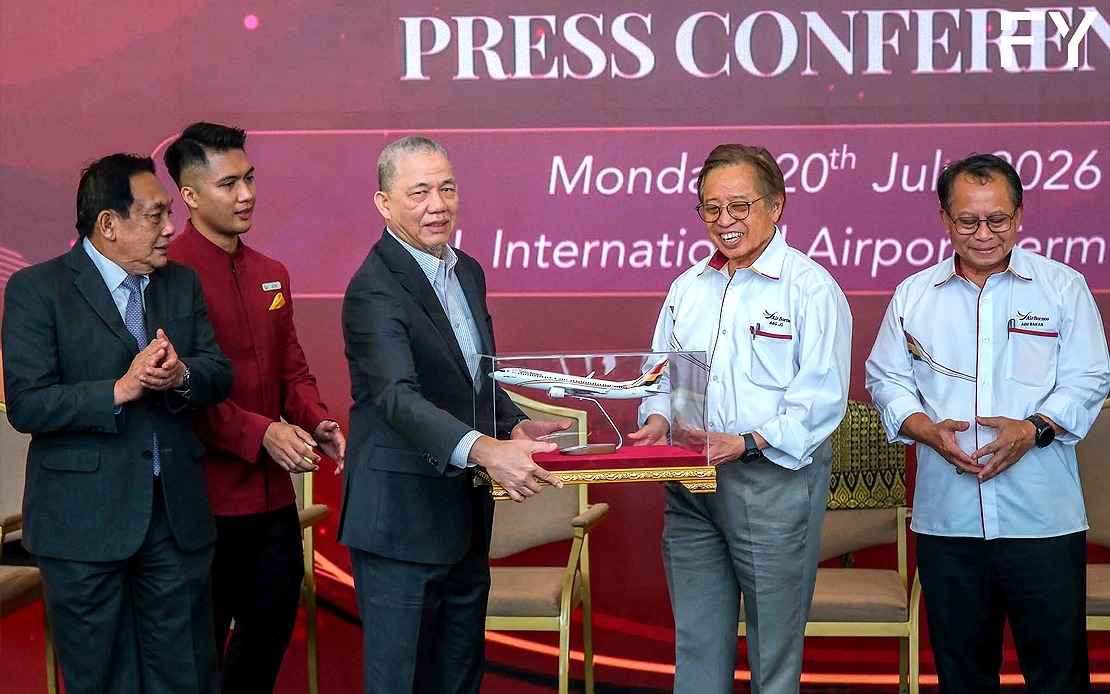
Sarawak has taken a significant step towards addressing one of its most persistent economic challenges with the launch of AirBorneo Airways, a state government-owned carrier that flew its first commercial service from Kuching to Kuala Lumpur International Airport on July 20. The initiative represents an ambitious attempt to reshape air transport economics in the state, where connectivity costs have historically constrained tourism development, business investment, and regional trade flows.
Deputy Prime Minister Datuk Seri Fadillah Yusof framed the airline's establishment as a watershed moment for Sarawak's economic autonomy and regional ambitions. Speaking after welcoming the inaugural flight MY5005 at KLIA's Terminal 1, Fadillah articulated a vision extending far beyond simple competition with incumbent carriers. The airline, he emphasised, would deliver air services characterised by affordability, operational transparency, and passenger-centric policies without sacrificing safety or service standards—a delicate balance few regional carriers have successfully achieved.
The timing of AirBorneo's launch carries symbolic weight within Sarawak's political calendar. Arriving just two days before Sarawak Day celebrations on July 22, the maiden flight positioned the new airline as emblematic of the state's growing capacity for self-determination in critical infrastructure sectors. This strategic timing underscores how East Malaysian states increasingly view direct control over transport networks as foundational to their development trajectories, particularly as competition for regional investment intensifies across Southeast Asia.
Sarawak Premier Tan Sri Abang Johari Tun Openg characterised AirBorneo as a strategic economic investment rather than a conventional commercial venture, signalling that profitability calculations would be balanced against broader development objectives. This framing distinguishes the airline from purely market-driven operators and suggests the state government views it as an instrument for reshaping regional economic geography. By improving air accessibility, AirBorneo potentially unlocks latent demand in tourism, manufacturing relocation, and foreign direct investment that high fares previously suppressed.
The airline addresses a genuine structural challenge facing Sarawak's economy. Historically, limited competition on trunk routes and the geographic dispersion of population across a large territory have created pricing environments where consumers bear substantial transport premiums. These elevated costs have consequences rippling through multiple economic sectors. Tourism operators struggle to compete with regional destinations offering cheaper access, while businesses contemplating relocation weigh high connectivity costs as a significant operational liability. AirBorneo's entry into the market creates potential for downward pressure on fares across the network.
Beyond commercial route profitability, Fadillah highlighted AirBorneo's particular importance in maintaining air service accessibility across Sarawak's rural interior regions. Many remote areas depend on aviation for basic connectivity, yet commercial realities often make these routes financially unviable for private operators. A state-owned carrier can sustain rural routes through cross-subsidisation, ensuring that economic development and essential services reach communities that market forces alone might underserve. This public utility dimension distinguishes AirBorneo from purely profit-maximising airlines and aligns with regional development objectives.
The airline launch signals intensifying competition within Malaysia's domestic aviation market, where incumbent carriers have dominated trunk routes for decades. AirBorneo's entry introduces genuine competitive pressure on the Kuching-Kuala Lumpur corridor, one of Malaysia's busier domestic routes. Sustained competition typically benefits consumers through fare compression, increased frequency, and service quality improvements. How aggressively AirBorneo prices its offerings will substantially influence whether it achieves its stated mission of affordability or merely carves out market share through conventional competitive dynamics.
For Malaysian travel markets more broadly, AirBorneo's emergence reflects broader regional trends toward state-backed carriers as instruments of economic policy. Similar models have proliferated across Southeast Asia, where governments view aviation infrastructure as critical to competitiveness in tourism, business services, and supply chain positioning. The airline joins a growing cohort of regionally-focused carriers attempting to reshape connectivity patterns and economic trajectories within their respective jurisdictions.
The airline's success will depend substantially on execution capabilities often challenging for government-backed ventures. Operational efficiency, crew training, aircraft maintenance standards, and revenue management competencies determine whether AirBorneo can translate policy objectives into sustainable commercial operations. Regional examples demonstrate that state ownership alone cannot overcome fundamental market dynamics or operational complexity, and government carriers frequently struggle with cost structures, labour management, and route profitability that private operators navigate more flexibly.
Sarawak's timing in launching AirBorneo also reflects post-pandemic recovery dynamics reshaping Southeast Asian aviation. Domestic markets are rebounding strongly, creating windows for new entrants to establish market presence before consolidated competition re-stabilises. This cyclical opportunity allows AirBorneo to build customer bases and operational networks during a relatively permissive competitive environment, potentially securing sustainable positions before market consolidation resumes.
Looking forward, AirBorneo's trajectory will illuminate whether state-owned carriers can durably reshape regional air transport economics in ways benefiting consumers and development objectives. The airline carries symbolic importance for Sarawak's political economy, representing tangible manifestation of state capacity for autonomous economic decision-making. However, sustained success requires navigating complex operational, commercial, and strategic challenges that transcend governance structures and require sophisticated management capabilities in intensely competitive markets.

