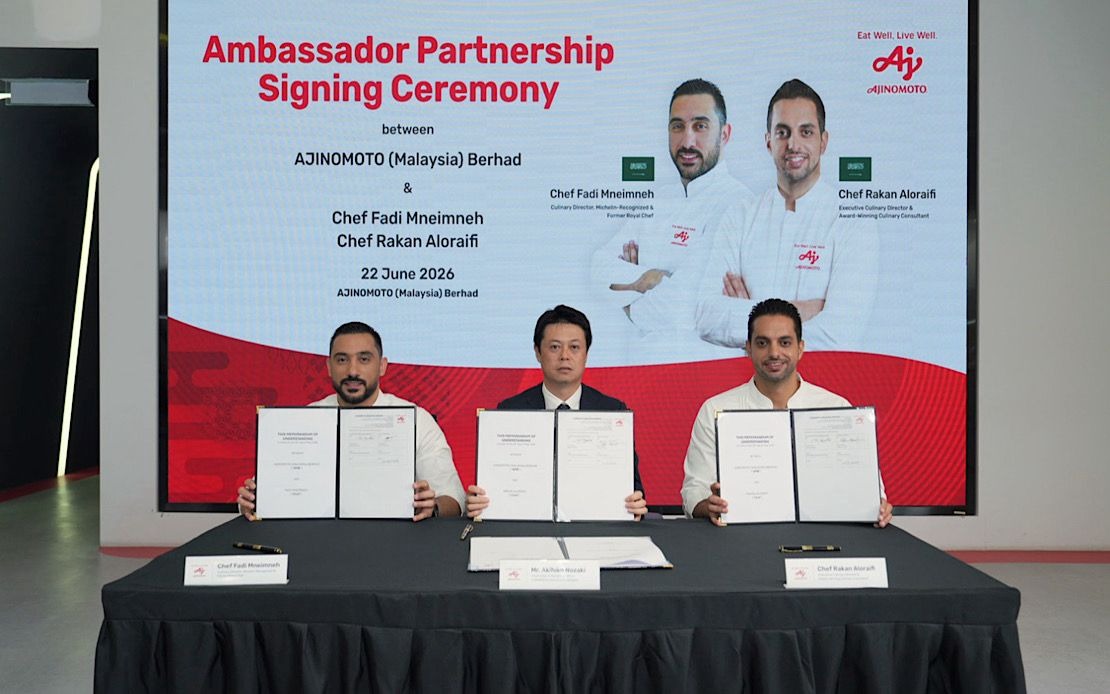
Ajinomoto (Malaysia) Berhad (AMB) is making calculated moves to entrench its position in the Middle Eastern food market by partnering with two of Saudi Arabia's most respected chefs, signalling the company's intent to leverage culinary influence as a cornerstone of its regional growth strategy. The collaboration with Chef Fadi Mneimneh and Chef Rakan Aloraifi represents more than a simple endorsement arrangement; it reflects AMB's recognition that penetrating affluent Gulf markets requires credibility within elite culinary circles where consumer preferences are shaped by respected gastronomic voices.
Chef Fadi brings formidable credentials to the partnership as a Michelin-starred culinary director with experience serving at the highest echelons of Arab royal households. Chef Rakan, meanwhile, has established himself as an influential executive director and culinary consultant whose perspectives carry substantial weight in shaping food industry trends across the region. Together, these figures command respect among hospitality decision-makers, procurement professionals, and restaurant owners whose purchasing decisions directly influence ingredient sourcing across the Middle East. For AMB, access to this network represents invaluable penetration into markets where traditional marketing approaches often prove less effective than word-of-mouth endorsement from culinary authorities.
The strategic significance of this partnership becomes clearer when examined against the backdrop of the halal food sector's explosive growth. The global halal market has expanded dramatically over the past decade, with the Middle East representing perhaps the most quality-conscious and discerning segment. Saudi Arabia and the broader Gulf Cooperation Council region increasingly demand not merely halal-compliant products but premium ingredients that deliver measurable flavour enhancement without compromising religious or cultural authenticity. This presents both an opportunity and a challenge for international food companies seeking to establish themselves in markets where local producers have deep historical roots and established relationships.
AMB's decision to host the two chefs at its manufacturing facility in Bandar Enstek, Negeri Sembilan, served a dual purpose. On one hand, it demonstrated transparency regarding production standards and halal certification processes—critical for building confidence among Middle Eastern importers and end consumers. On the other hand, it positioned Malaysia's food manufacturing capabilities as a reliable, modern alternative to other regional producers, reinforcing the country's positioning as a hub for quality halal food production. This factory visit underscored an important narrative: that rigorous Japanese food science, when combined with authentic halal manufacturing protocols, creates a competitive advantage that resonates particularly well in quality-conscious markets.
Central to AMB's messaging is the concept of umami—the much-discussed fifth taste dimension that has gained mainstream acceptance among sophisticated international chefs. The company recognises that educating Middle Eastern culinary professionals about how umami principles can enhance traditional Arabian and Persian cuisines without altering their fundamental character is essential to driving adoption. During live culinary demonstrations, the two chefs prepared authentic Middle Eastern dishes infused with selected Ajinomoto products, illustrating how umami deepens flavour complexity and enriches palatability. This approach cleverly positions AMB's seasonings not as foreign additives but as tools enabling chefs to elevate their craft while remaining rooted in regional culinary traditions.
The inclusion of AMB's Brunei distributor representative in these proceedings signals a broader Southeast Asian strategy, suggesting the company views its Gulf expansion as interconnected with strengthening distribution networks throughout the Islamic world. Brunei, as a wealthy Islamic nation with sophisticated food service sectors and deep cultural ties to the Middle East, often serves as a testing ground for products destined for larger Arab markets. By facilitating networking between Saudi chefs and Southeast Asian distributors, AMB is methodically constructing a web of commercial relationships that transcends traditional bilateral arrangements.
Looking ahead, the planned participation in HORECA events scheduled for October 2026 in Riyadh and Jeddah represents the natural progression of this partnership. These trade shows attract purchasing decision-makers from hotels, restaurants, catering companies, and institutional food service providers—precisely the market segments where chef endorsements carry significant weight. By positioning Chef Fadi and Chef Rakan as the face of culinary demonstrations at these prestigious events, AMB transforms them from passive brand ambassadors into active architects of professional adoption. The HORECA platform allows the company to move beyond retail consumer awareness into the hospitality and food service sectors where large-volume purchasing decisions are made.
For Malaysian stakeholders, this expansion reinforces the country's reputation as a reliable exporter of halal-certified food products. AMB's success in the Middle East contributes to Malaysia's broader positioning as the world's leading halal hub, enhancing the commercial value of local certification standards and manufacturing expertise. The partnership also demonstrates how Malaysian companies can compete effectively in premium international markets by combining rigorous quality standards with culturally intelligent marketing strategies that respect local preferences and culinary identities.
The halal food sector represents one of Southeast Asia's most promising growth areas, with analysts projating continued expansion driven by rising Muslim populations globally and increasing purchasing power across Islamic nations. AMB's strategic approach—combining product excellence, transparent manufacturing practices, and influencer partnerships—provides a replicable template for other Malaysian food exporters seeking to expand in similarly demanding markets. The company's willingness to invest in relationship-building through factory visits, culinary collaborations, and trade show participation suggests a sophisticated understanding that Middle Eastern buyers increasingly demand more than products; they seek partners who demonstrate respect for their culinary traditions and commitment to genuine partnership rather than transactional commerce.

