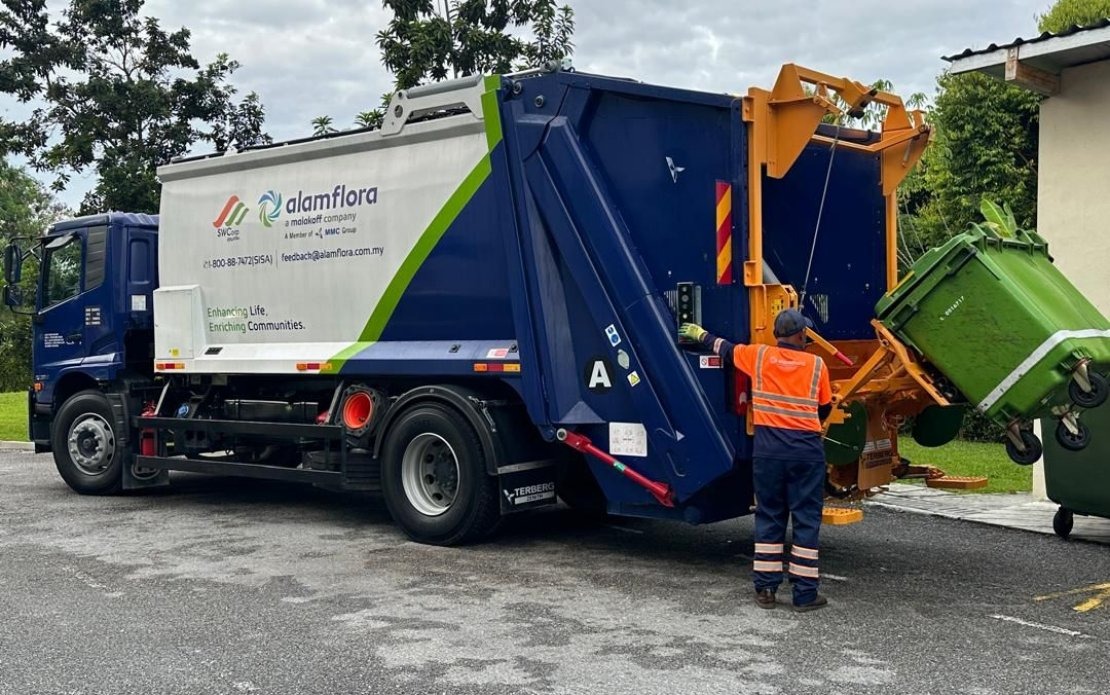
Alam Flora, Malaysia's largest waste management company, has assured full cooperation with authorities investigating a serious incident involving one of its compactor garbage lorries along Jalan Pantai Murni 1 in the Pantai Hillpark area of Kuala Lumpur. The commitment comes as investigations into the accident continue, with the company signalling its readiness to work transparently with relevant authorities to establish the circumstances that led to the collision.
The incident, which occurred in the early morning hours, has been categorized as a potential mechanical failure case, with preliminary evidence suggesting that brake problems may have played a role in the vehicle losing control. The lorry subsequently crashed into the perimeter wall of a nearby residential condominium, prompting immediate notification to the Kuala Lumpur Traffic Police Station. The swift reporting mechanism demonstrates that standard protocols were followed in the immediate aftermath of the accident.
In its official statement released the day following the incident, Alam Flora emphasized that vehicle safety and occupant welfare form the cornerstone of its operational philosophy. The company indicated that the damaged compactor lorry would be transported to the Computerised Vehicle Inspection Centre, commonly referred to as Puspakom, for comprehensive technical examination. This facility conducts in-depth diagnostics to identify mechanical defects and determine whether equipment failure contributed to the accident.
The driver of the vehicle underwent a breathalyser test administered by police officers at the scene, with results confirming that alcohol consumption was not a factor in the incident. This finding clears the operator from suspicion of driving under the influence and redirects investigative focus toward mechanical and maintenance-related causes. The driver's immediate report to authorities also demonstrates compliance with accident reporting requirements and cooperation with law enforcement.
The investigation is proceeding under Section 43(1) of the Road Transport Act 1987, a legal provision that addresses vehicle-related incidents on public roads. This statutory framework governs how such cases are examined, what evidence is collected, and what corrective measures may be recommended following findings. The involvement of specialized traffic police investigators ensures that the probe follows established procedures and maintains evidentiary standards required for potential prosecution or regulatory action.
Alam Flora's statement addressed the broader implications of the accident for the surrounding community. The company acknowledged the concern and inconvenience caused to residents of the affected condominium and expressed regret over the incident's impact. This acknowledgment reflects growing corporate awareness that such accidents, even those occurring during routine waste collection operations, can create anxiety among residents and raise questions about public safety standards in urban areas.
The garbage collection sector remains critical infrastructure in Malaysian cities, with millions of tonnes of waste managed annually through mechanized collection systems. Accidents involving compactor lorries, though relatively rare, attract public attention because these vehicles operate in residential neighborhoods where they interact closely with civilian populations. Brake failures and mechanical malfunctions in such heavy equipment represent significant safety hazards that can result in property damage and potential injuries to nearby people.
Aalam Flora's emphasis on safety standards and operational protocols reflects industry expectations and regulatory requirements established by transportation authorities. Regular maintenance schedules, vehicle inspections, and driver training programs form the foundation of fleet safety management. The upcoming Puspakom examination will provide objective technical evidence about whether the vehicle's maintenance records align with actual mechanical condition and whether any deferred maintenance issues contributed to the accident.
The company's commitment to take necessary follow-up actions based on investigation findings signals readiness to implement remedial measures if systemic issues are identified. This may include enhanced preventive maintenance schedules, improved inspection protocols, equipment upgrades, or additional driver training. Such measures, if implemented across the fleet, could prevent similar incidents in future operations and demonstrate corporate responsibility beyond minimum legal compliance.
For residents and businesses in urban areas served by Alam Flora, the investigation's outcome carries implications for service reliability and operational safety. Confidence in waste management systems depends partly on public perception that companies maintain rigorous safety standards and respond appropriately to incidents when they occur. Transparent investigation processes and demonstrable corrective actions help rebuild trust following accidents and reinforce the importance of safety in essential urban services.
The case also underscores broader challenges facing the waste management sector as it operates increasingly sophisticated mechanized systems in congested urban environments. Balancing operational efficiency with stringent safety protocols requires ongoing investment in equipment maintenance, staff training, and monitoring systems. Companies operating in this space face pressure to deliver cost-effective services while maintaining safety standards that protect both their workers and the public.
Investigation timelines and findings will likely influence how Alam Flora's approach to fleet management is perceived by regulators and the public. A thorough investigation that clearly identifies root causes and demonstrates corrective action can ultimately strengthen the company's safety record and operational credibility. Conversely, findings that suggest inadequate maintenance or safety oversight could prompt regulatory scrutiny or operational restrictions by authorities responsible for waste management oversight in Kuala Lumpur.

