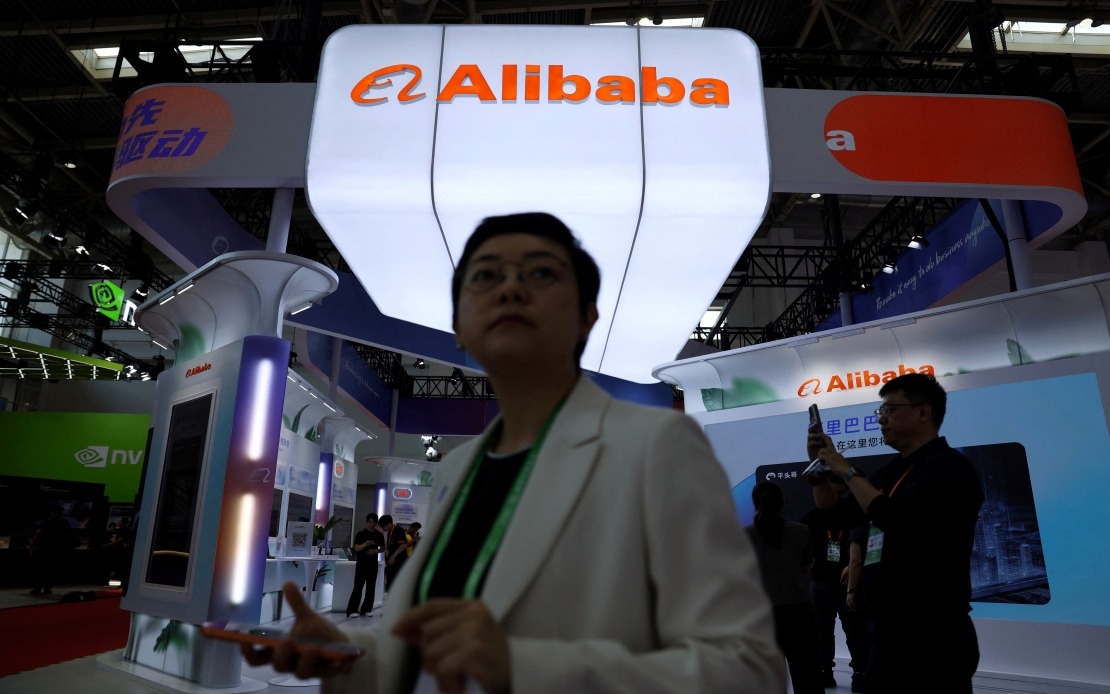
Chinese e-commerce and technology powerhouse Alibaba has escalated its dispute with the United States government by filing a lawsuit against the Department of Defense, challenging its recent classification as a company linked to China's military establishment. The legal action, revealed through court documents released on Tuesday, represents a significant pushback against Washington's expanding efforts to restrict American investment and technology relationships with firms deemed to have defence connections.
Alibaba's complaint argues that the Pentagon's determination to list it among entities associated with China's military-industrial complex is fundamentally flawed and unsupported by evidence or law. In its filing, the company emphasised that its governance structure explicitly separates it from any military involvement, with an independent board whose members have no military affiliations whatsoever. This governance argument appears central to Alibaba's strategy, framing the designation as incompatible with basic corporate facts about its leadership and structure.
The company has further argued that its entire business model is predicated on civilian applications across three distinct sectors: retail commerce, logistics operations, and enterprise information technology services. Alibaba stressed that none of its products or services are designed with military use cases in mind, and that its customer contracts and internal compliance frameworks actively prohibit military applications. The company also noted that it holds no military certifications or relevant defence industry licences, suggesting that its operations remain purely within civilian-sector parameters.
Alibaba's legal challenge arrives weeks after the Pentagon announced a sweeping expansion of its military-company designation list in early June, adding 188 additional entities to entities it believes are connected to China's defence capabilities. The latest expansion demonstrates Washington's increasingly aggressive approach to identifying and restricting business relationships with Chinese firms suspected of military ties or defence-related activities. Alongside Alibaba, the Pentagon simultaneously flagged technology giant Tencent and automotive manufacturer BYD, indicating that the military designation campaign targets major players across multiple sectors of the Chinese economy.
The designation carries substantial practical consequences for targeted companies. Inclusion on the Pentagon's military-company list typically triggers restrictions on American institutional investment, particularly affecting pension funds and major asset managers that follow US government guidance on defence-related restrictions. For multinational companies like Alibaba that derive significant revenue from global markets and international partnerships, such designations can complicate supply chain relationships, restrict access to certain technologies, and create complications for existing American shareholders. The reputational impact compounds these financial concerns, as some Western investors and business partners may distance themselves from firms explicitly flagged by US defence authorities.
For Southeast Asian readers and investors, Alibaba's legal battle carries regional significance. The company operates extensively across the region through its e-commerce platforms, logistics networks, and cloud computing services. Many Malaysian, Singaporean, and other regional businesses depend on Alibaba's platforms for cross-border trade and digital infrastructure. Any sustained restrictions on Alibaba's operations could ripple through regional supply chains and digital commerce ecosystems that have become increasingly reliant on the Chinese tech giant's services.
The broader context of this dispute reflects mounting US-China technological and economic tensions. The Biden administration has systematically expanded the scope and stringency of restrictions targeting Chinese technology firms and defence-related companies, viewing such measures as critical to national security. From the American perspective, identifying military links represents an essential safeguard against inadvertently strengthening Chinese defence capabilities through commercial investment channels. However, Chinese companies argue that such designations are often overly broad, capturing firms with no genuine military operations or intent.
Alibaba's decision to pursue judicial recourse rather than purely diplomatic channels suggests the company views the designation as sufficiently damaging to justify sustained legal combat. The case will likely hinge on whether courts accept Alibaba's arguments about its civilian governance and operations, or whether the Pentagon's national security assessments receive substantial judicial deference. Precedent in such cases has generally favoured government determinations regarding national security matters, though specific factual challenges to designations have occasionally succeeded when companies can demonstrate clear errors or overreach.
The timeline for judicial resolution remains uncertain, with such administrative and national security cases typically proceeding slowly through the American court system. Meanwhile, Alibaba and other designated companies face immediate operational challenges and investor uncertainty. The case represents a critical juncture for how Chinese tech companies will navigate American regulatory hostility going forward, and whether legal challenge represents a viable strategy or a largely symbolic gesture against entrenched government policy.

