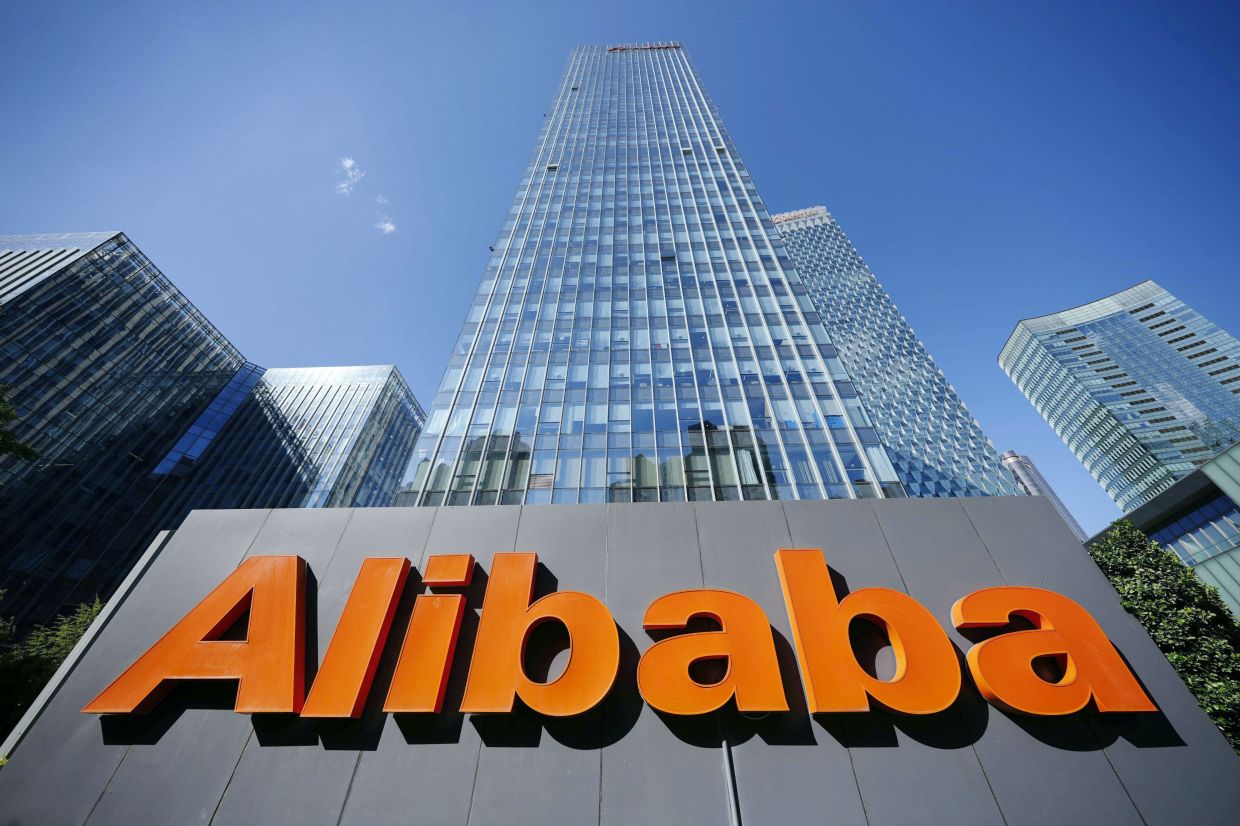
Alibaba Group Holding, one of China's most influential technology and e-commerce conglomerates, has escalated its dispute with American authorities by initiating legal proceedings against the US Department of Defence. The Hangzhou-based company filed a lawsuit in San Jose federal district court on Tuesday, demanding removal from a Pentagon list that categorizes it as a company supporting China's military operations. The action represents a significant pushback from one of Asia's largest corporate entities against what it characterizes as an unjustified and unconstitutional designation.
The Pentagon's decision to classify Alibaba came on June 9, when it added the company alongside electric vehicle manufacturers BYD and Nio, search engine provider Baidu, robotics firm Unitree Robotics, and networking equipment maker TP-Link to an official roster of "Chinese military companies". This list encompasses organizations across cutting-edge sectors including artificial intelligence, biotechnology, and solar energy—precisely the domains where Washington and Beijing are engaged in fierce technological competition. The designation was enacted under Section 1260H of the National Defence Authorisation Act, a legislative instrument that provides the Pentagon with broad discretionary power to classify foreign enterprises.
While the blacklist designation itself does not automatically impose sanctions, the implications for affected companies are substantial. Placement on the list can severely constrain access to American capital markets, complicate relationships with US institutional investors, and eliminate opportunities to secure government contracts. For a globally-oriented company like Alibaba, which has international shareholding structures and commercial ambitions across multiple continents, such restrictions carry significant economic consequences. The designation effectively signals to American financial institutions and federal agencies that engagement with the company carries heightened regulatory risk.
In its legal filing, Alibaba categorically rejected the Pentagon's central claims. The company contested the allegation that it maintains indirect affiliation with China's State-owned Assets Supervision and Administration Commission (SASAC), a massive holding company overseeing numerous state enterprises. Alibaba further disputed Pentagon assertions that it contributes to China's military-civil fusion strategy through alleged connections to the Ministry of Industry and Information Technology (MIIT). The company maintained that its interactions with MIIT are confined to standard regulatory compliance obligations that all technology firms operating within China must satisfy.
The legal strategy deployed by Alibaba also highlights procedural grievances regarding how the determination was made. The company documented that it had engaged with Pentagon officials in January to discuss the potential listing, subsequently submitting a written response in March that apparently failed to address the department's concerns. Despite this engagement, the Pentagon proceeded with the designation in June without, according to Alibaba, providing adequate substantive responses to the company's rebuttals. This sequence of events forms the foundation of Alibaba's constitutional arguments regarding violation of due process rights and alleged infringement of free speech protections.
An Alibaba spokesperson articulated the company's position with clarity, stating that Alibaba "is not a Chinese military company nor part of any military-civil fusion strategy". The company characterized the Pentagon's decision as "arbitrary and capricious", the precise legal terminology used in administrative law challenges to government actions perceived as lacking rational basis or proper justification. This framing suggests that Alibaba's legal team is constructing arguments suitable for judicial review of what they contend is an abuse of administrative discretion.
The Pentagon maintained institutional distance from the escalating dispute, declining substantive comment on the litigation through an email statement. The department's reticence reflects standard legal practice when government actions face active court challenges, yet the silence also underscores the gravity of having a corporation of Alibaba's scale and influence directly contest federal security designations in federal court. This lawsuit may establish important legal precedents regarding the scope of Pentagon authority under Section 1260H and the procedural safeguards applicable to companies targeted for military-nexus classifications.
Alibaba's legal action arrives within a broader context of intensifying bilateral technological and economic tensions. Several fellow Chinese companies on the Pentagon list, including Baidu and BYD, have similarly objected strenuously to their designations, indicating that this is not an isolated corporate grievance but rather a coordinated pushback against American security classification decisions. The Chinese embassy in Washington has formally registered opposition to what it characterizes as an overextension of national security doctrine and discriminatory listing practices that it views as economically retaliatory rather than genuine security measures.
The timing of Alibaba's lawsuit coincides with Chinese retaliatory measures announced by Beijing's Ministry of Commerce on the preceding day. China placed ten American companies on its own export control list, including drone manufacturers Red Cat Holdings and Teal Drones, aerospace suppliers Ball Aerospace & Technologies and L3Harris Maritime Services, and advanced materials producer MP Materials. Simultaneously, China's Ministry of Finance announced restrictions on government procurement from 46 American firms, including major defense contractors such as Lockheed Martin, Raytheon Missiles & Defense, General Dynamics, and Boeing's defense division.
These parallel actions illustrate how the Alibaba dispute extends beyond a single corporate complaint to reflect fundamental friction in the US-China technological rivalry. The Pentagon's blacklisting strategy and China's counter-restrictions targeting American technology and defense companies represent tit-for-tat escalation in what has become a sustained effort by each nation to constrain the other's technological advancement and military capability development. For Malaysian and Southeast Asian readers, this escalating conflict has significant implications, as regional companies and economies increasingly find themselves navigating pressures from both superpowers seeking to control supply chains and technological partnerships within the region.
The lawsuit's outcome will carry consequences extending beyond Alibaba's corporate interests. A court ruling favoring the company could substantially curtail Pentagon authority to unilaterally designate foreign corporations as military-affiliated entities without rigorous procedural safeguards and demonstrable evidence. Conversely, judicial deference to Pentagon determinations would reinforce the department's discretionary power and likely encourage more aggressive use of the classification mechanism. Either outcome will reshape how American security authorities approach technology company designations and may influence how other nations design their own foreign investment security reviews. For Southeast Asia, where numerous Chinese and American technology firms operate and compete, the precedent set by this litigation could fundamentally alter the regulatory environment for international corporate activity.

