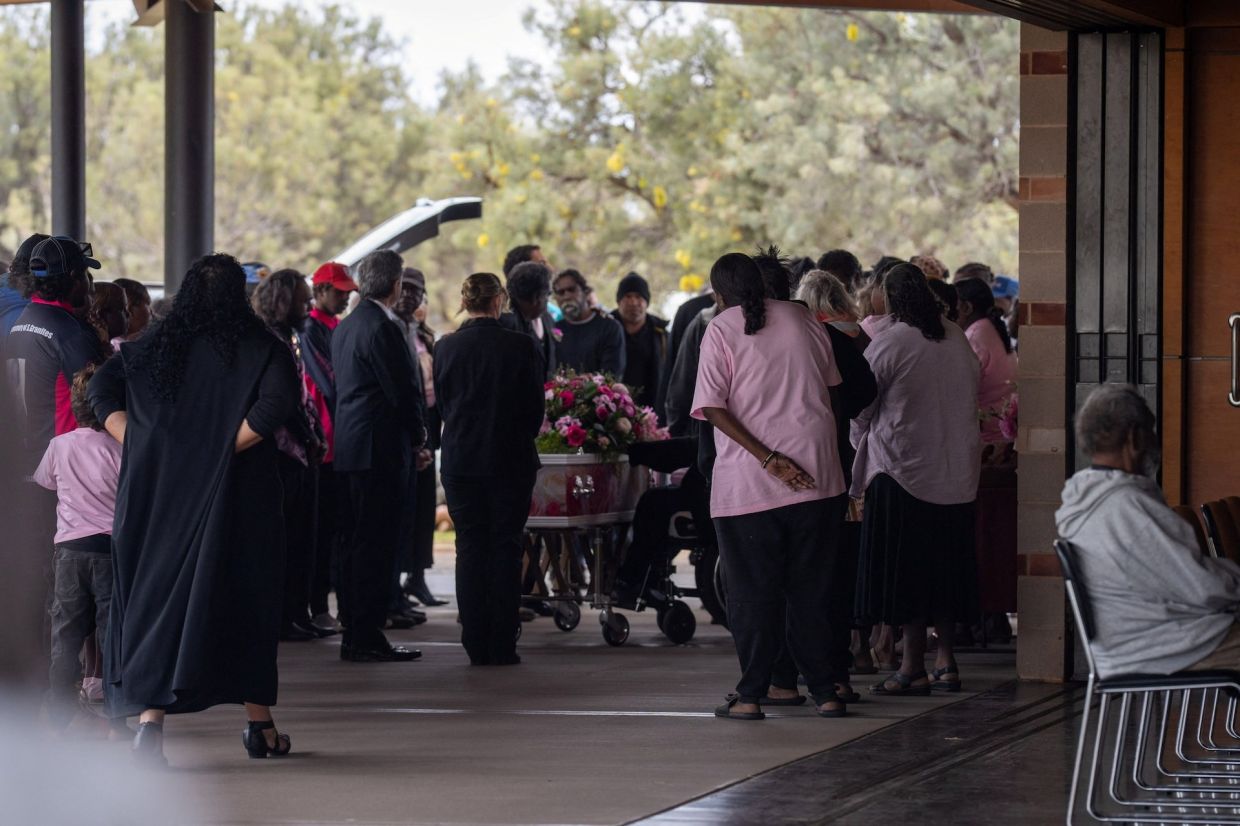
Hundreds of people converged on Alice Springs' Garden Cemetery on Saturday to pay their final respects to Kumanjayi Little Baby, a five-year-old Indigenous child whose death in April became a catalyst for widespread violence and soul-searching across Australia's remote outback communities. The funeral service, held in the Northern Territory capital located approximately 1,250 kilometres south of Darwin, brought together family members, community leaders, and supporters united in grief over a tragedy that exposed deep fractures in how vulnerable Indigenous Australians are protected and supported.
The circumstances surrounding the child's death and its aftermath revealed troubling patterns of desperation and systemic neglect within Alice Springs itself. When the suspect was apprehended following her death, local residents responded with violent confrontations, transforming the town of 25,000 into a flashpoint for accumulated frustrations about poverty, inadequate services, and a pervasive sense of abandonment felt by Indigenous populations in remote areas. The unrest that followed demonstrated how individual tragedies can crystallise broader community grievances into visible, unavoidable crisis.
Mourners arriving at the cemetery on Saturday wore pink, the deceased girl's favourite colour, creating a visible display of remembrance and connection to the lost child. Footage from the Australian Broadcasting Corporation showed families and community members gathering at the burial site, their attendance reflecting both personal sorrow and collective determination to acknowledge a young life cut short. The funeral service itself became a moment of cultural significance, bringing together people from across the territory to participate in rituals and practices central to Indigenous mourning traditions.
The casket, adorned with flowers and transported in a black hearse, symbolised the dignity the community sought to restore to a child whose short existence had been marked by vulnerability and, ultimately, loss. The scale of attendance—described as running into the hundreds—underscored how the death had resonated beyond immediate family circles to touch the broader Alice Springs community, including both Indigenous and non-Indigenous residents affected by the tragedy and its violent aftermath.
Following an Indigenous person's death, communities traditionally enter a period known as "sorry business," during which specific mourning protocols and cultural practices are observed. This extended grieving process serves multiple purposes within Indigenous Australian cultures: it honours the deceased, provides a structured framework for collective healing, and reinforces community bonds through shared ritual and memory. For Alice Springs' Indigenous population, this period has necessarily extended beyond the immediate funeral to address the deeper wounds exposed by the incident and subsequent violence.
The geographical and social realities of Alice Springs illustrate why this tragedy struck such a powerful nerve across Australia. Approximately one-fifth of the town's population identifies as Indigenous, with thousands living in camp communities on the periphery where housing remains chronically inadequate and essential services—healthcare, education, employment opportunities—are severely limited. These enclaves represent some of Australia's most challenged living environments, where poverty, substance abuse, and social breakdown create conditions of profound vulnerability, particularly for children unable to advocate for themselves.
Prime Minister Anthony Albanese acknowledged these systemic failures in statements following the killing, calling upon Northern Territory authorities to prioritise improvements to living conditions in the camp communities. His intervention reflected recognition at the national political level that the tragedy was not merely a criminal matter but symptomatic of governance failures and resource allocation gaps that have persisted for decades. The political pressure generated by the unrest created momentary opportunity for policy attention to these chronic issues, though questions remain about whether such attention translates into sustained, meaningful reform.
Jefferson Lewis, aged 47, has been formally charged with murder in connection with the child's death, alongside two additional offences that courts have restricted from public disclosure due to legal confidentiality rules surrounding the case. His prosecution will proceed through Australia's justice system, but for the Alice Springs community and Indigenous Australians more broadly, the legal proceedings represent only one dimension of accountability. The deeper accountability involves systemic examination of how a five-year-old child could be placed in circumstances where such violence became possible.
The funeral on Saturday marked a formal conclusion to the initial mourning phase while simultaneously representing a threshold moment for the community's ongoing reckoning with what enabled this death. As Indigenous and non-Indigenous Australians grapple with the implications of events in Alice Springs, attention turns toward whether political commitment will translate into substantive changes to funding, services, and living conditions for remote Indigenous communities. The gathering at the cemetery, while focused on farewell and remembrance, carried within it an implicit question about whether Australia's systems will finally deliver the protections and resources that might prevent future tragedies of this magnitude.

