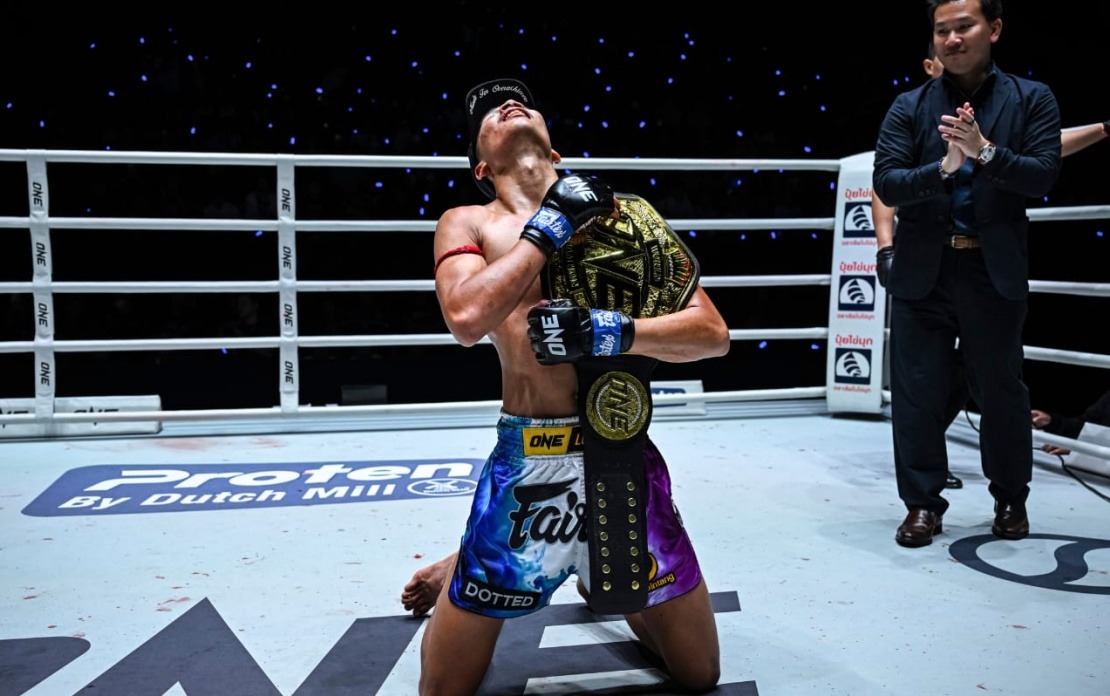
Ahmad Nor Iman Aliff Rakib, known professionally as Alif Rakib, has scripted a remarkable chapter in Malaysian sports by becoming the nation's first combat athlete to win a ONE Championship title. The 22-year-old delivered a dominant performance against Thailand's Sam-A Gaiyanghadao at the prestigious Lumpinee Stadium in Bangkok, clinching the ONE Interim Strawweight Muay Thai World Championship through a fifth-round knockout victory that underscored his technical prowess and fighting acumen.
The triumph carries profound significance for Malaysian combat sports, a sector that has long aspired to produce world-class champions capable of competing at the highest international levels. Lumpinee Stadium stands as the spiritual home of muay thai, a venue synonymous with legendary fighters and historic encounters. For Alif Rakib to prevail in this arena against an established Thai opponent signals the emergence of genuine talent from Malaysia's growing fight community. The victory transcends individual achievement, projecting Malaysian capability onto a global sporting stage where the nation has historically struggled to establish dominance.
Immediate recognition followed swiftly, with Prime Minister Datuk Seri Anwar Ibrahim publicly endorsing Alif Rakib's championship bid the day before the contest. Such political backing reflects broader governmental commitment to elevating Malaysia's profile in combat sports disciplines. The Premier's intervention underscored national pride in the fighter's accomplishments and signalled political support for developing athletic talent across non-traditional sporting domains. This pattern of high-level encouragement has become increasingly common as Malaysia seeks to diversify its medal portfolio beyond conventional sports like badminton and table tennis.
Alif Rakib's own reflection on his achievement illuminated the personal dimension beneath the sporting headlines. Standing in Lumpinee Stadium with his newly won belt, the fighter publicly thanked Malaysian supporters present at the venue and reiterated his commitment to bringing the title home—a pledge he honoured immediately through his victory. He dedicated the triumph to his father, acknowledging the familial support system that underpinned his training regimen and psychological preparation. Such moments reveal how international competition transforms into personal narrative, binding together family sacrifice, national representation, and individual aspiration.
The financial rewards accompanying the championship victory further underscore the professional trajectory available to Malaysian fighters within premium global franchises. Alif Rakib secured a USD50,000 victory bonus alongside the championship belt—a substantial purse that elevates the economic viability of combat sports careers for Malaysian athletes. This remuneration structure contrasts markedly with compensation available through purely domestic competition, providing tangible incentive for fighters to pursue international exposure and develop their capabilities against international opposition.
One Championship's international franchise model has progressively expanded across Southeast Asia, establishing Bangkok as a consistent venue and investing heavily in regional talent development. The organization's decision to place Alif Rakib in interim championship contention suggests strategic confidence in his marketability and fighting credentials. For Malaysian combat sports, this represents validation that the nation possesses athletes capable of featuring prominently in premium international competition rather than remaining perpetually peripheral participants.
The strawweight muay thai division occupies a particular niche within professional combat sports, requiring exceptional technical refinement and precise weight management. This category emphasizes skill and speed over raw power, disciplines where younger athletes often flourish. Alif Rakib's knockout victory in the fifth round demonstrates not merely technical competence but the capacity to impose physical dominance—particularly against an opponent with established credentials like Sam-A Gaiyanghadao, a fighter with considerable professional experience across Thailand's domestic circuit.
Southeast Asian combat sports have experienced remarkable expansion over the past decade, with regional athletes securing major international titles across multiple disciplines. Malaysia has lagged somewhat behind Thailand, Indonesia, and the Philippines in establishing truly elite combat sports talent pipelines. Alif Rakib's breakthrough potentially catalyzes broader institutional investment in Malaysian muay thai development, creating pathways for younger fighters to pursue professional careers and generating role models within the regional combat sports ecosystem.
The implications for Malaysian sports governance extend beyond muay thai specifically. Success in unexpected domains encourages institutional entities and government ministries to reassess funding allocation priorities and talent identification methodologies. Alif Rakib's achievement suggests untapped potential within Malaysian sporting populations that conventional talent pathways may have overlooked. This realization prompts questions about how effectively existing sports development structures identify and nurture emerging athletes competing in international niche disciplines where premium competition and financial opportunity increasingly concentrate.
Looking forward, Alif Rakib's interim championship status implies future promotional obligations and mandatory title defences within One Championship's framework. Maintaining this elevated status will require sustained training intensity and continued improvement against increasingly formidable opposition. The championship represents not culmination but rather a platform from which Malaysian combat sports can build sustained institutional presence and develop competing talent across multiple weight divisions and competing formats.

