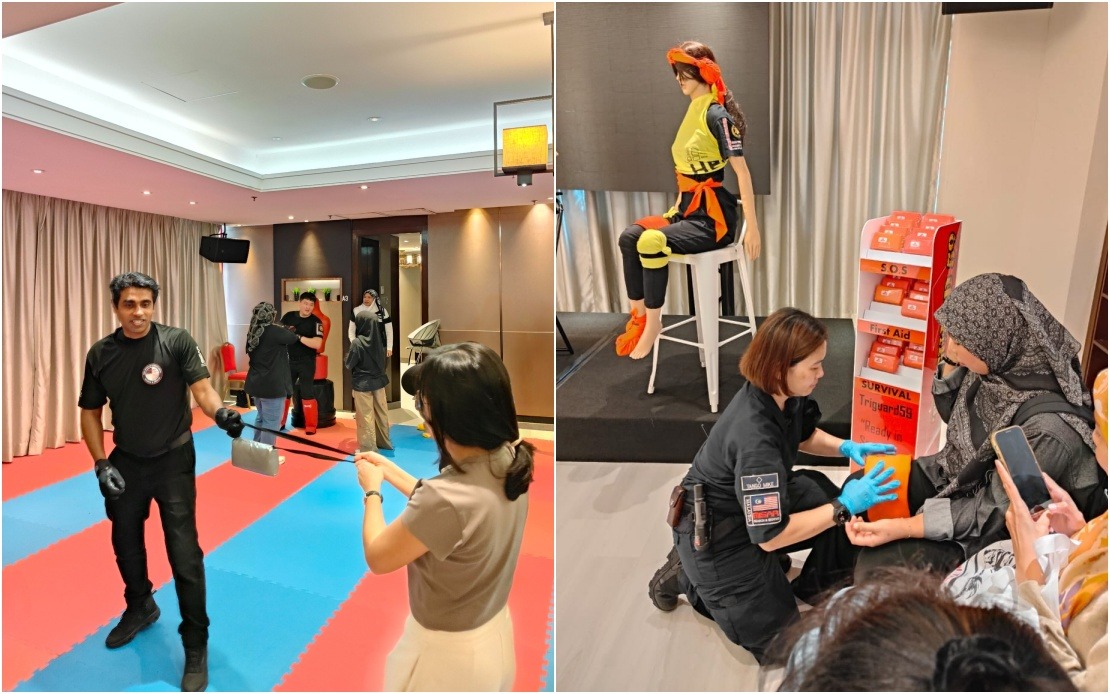
Allianz Malaysia has marked another milestone in its community safety partnership with the Kelab Marshal Keselamatan Jalan Raya Kuala Lumpur (RSMC) by delivering the ninth iteration of its Women's Street Crime Awareness Campaign. The initiative, held at Wisma Huazong YTL Hall in Seri Kembangan, Selangor, reached 200 female participants spanning ages 16 and above, providing them with actionable knowledge to protect themselves and their communities from common urban safety threats.
The programme represents a maturing approach to personal security in Malaysia's urban landscape, where property crimes and street-level harassment remain persistent concerns affecting women's daily mobility and confidence. Rather than adopting a purely defensive stance, the campaign frameworks participants as potential multipliers of safety awareness, tasking them with disseminating knowledge within their family networks and neighbourhoods. This cascading model of community engagement extends the campaign's reach far beyond the single event venue and participant count.
The training curriculum addressed multiple threat categories relevant to Malaysian women navigating cities like Kuala Lumpur. Participants learned to identify and respond to scenarios involving residential break-ins, bag snatching incidents, vehicle-related fraud schemes, unwanted surveillance or stalking behaviours, carjacking tactics, and post-accident procedures. Complementing these awareness components were practical self-defence demonstrations and structured emergency response training, equipping attendees with both mental preparedness and physical techniques to deploy during threatening situations.
A notable enhancement in this year's delivery was the introduction of interactive dialogue sessions alongside traditional lecture and demonstration formats. These structured conversations enabled participants to surface real concerns from their lived experiences and receive tailored guidance from RSMC specialists. This two-way exchange model acknowledges that generic safety advice often fails to address the specific contextual risks women face in their particular neighbourhoods, workplaces, and travel routines. By creating space for bespoke problem-solving, the campaign moved beyond one-size-fits-all messaging toward applicable solutions.
Allianz Malaysia's chief executive officer Sean Wang characterised the campaign's success not merely by attendance figures but by the tangible interest community leaders demonstrated in replicating the programme within their own residential areas and associations. This grassroots enthusiasm suggests the initiative addresses genuine demand for safety training and reflects growing recognition among local influencers that crime prevention requires proactive community mobilisation rather than passive reliance on law enforcement alone. Wang's framing reveals strategic thinking about impact measurement—viewing the event as a catalyst for longer-term structural change in community safety culture.
RSMC founder and president Captain K. Balasupramaniam positioned street crime awareness as fundamentally about agency and informed decision-making rather than fear management. His characterisation emphasised empowerment over vulnerability, suggesting the training aims to build women's confidence to navigate potential threats with composure and tactical awareness. This distinction carries psychological importance; awareness campaigns that inadvertently amplify anxiety without providing viable response options can paradoxically diminish rather than enhance participants' sense of personal efficacy and public space access.
The partnership between Allianz Malaysia and RSMC exemplifies how corporate social responsibility programmes can address substantive public safety gaps when aligned with community-based organisations possessing genuine expertise and grassroots trust. Allianz Malaysia's insurance sector positioning makes this engagement strategically logical—reducing preventable crimes and accidents ultimately aligns with the company's risk management imperatives while generating measurable social value. The nine-year continuity of the campaign suggests both parties have found sustainable collaboration models and demonstrated sufficient impact to justify sustained resource commitment.
For Malaysian women, particularly those in urban centres where street crime remains a documented concern affecting freedom of movement, such training initiatives address practical vulnerabilities often underemphasised in formal safety education. Secondary school curricula rarely incorporate situational awareness, threat recognition, or practical self-defence components tailored for women, creating a knowledge gap that community programmes must fill. The 200-person reach from a single event, while respectable, underscores the challenge of scaling such initiatives to meet demand across Malaysia's multiple metropolitan areas.
The campaign's emphasis on creating community safety advocates reflects broader recognition that sustainable crime reduction requires cultural shifts, not merely individual skill acquisition. Women trained as advocates can influence household behaviours, establish neighbourhood watch mechanisms, and create peer accountability around personal safety practices. This multiplier effect positions the campaign as seed investment in grassroots safety culture change rather than standalone training provision.
Moving forward, the demonstrated community leader interest in bringing similar programmes to their neighbourhoods presents opportunities for expansion beyond current geographic concentrations. Allianz Malaysia and RSMC could develop scalable training-of-trainers models, creating locally-based facilitators capable of delivering certified safety programmes without requiring expert presence at every event. Such approaches have proven effective in similar community health and safety campaigns globally, enabling rapid scaling while maintaining quality and local relevance.
The campaign also reveals important data about Malaysian women's safety concerns and preferred learning formats. Systematic documentation of participant feedback and crime scenarios discussed during dialogue sessions could inform policy discussions about resource allocation for crime prevention, community policing strategies, and urban design features that enhance safety perception. Positioning such campaigns as data collection instruments for evidence-based policy development could strengthen their institutional credibility and attract additional stakeholder support.

