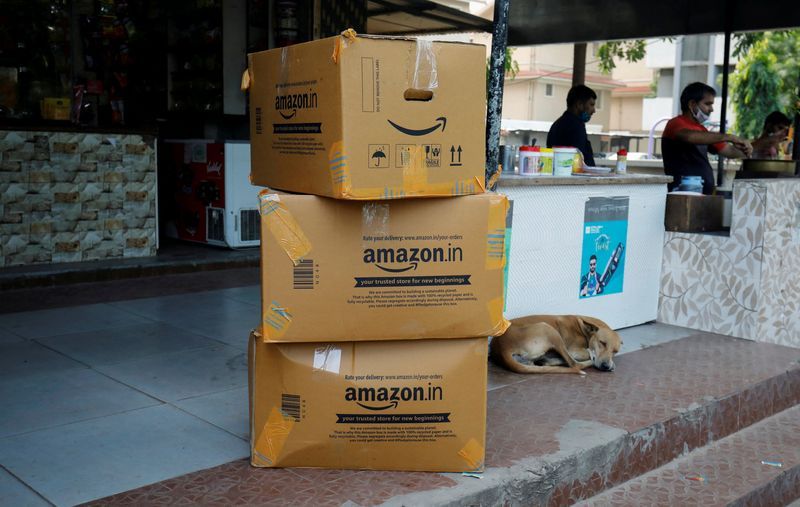
Amazon has declared its intention to pursue appropriate disciplinary measures against M&M Logistics Solutions, one of its major delivery partners in India, once authorities conclude their investigation into a catastrophic warehouse fire that claimed two lives in the northern state of Uttarakhand. The e-commerce giant announced the step on Thursday, signalling its commitment to accountability while the police probe remains ongoing. Beyond the public commitment, sources with knowledge of the situation revealed that Amazon has simultaneously initiated its own internal investigation into the circumstances surrounding the June 5 incident, though details about the scope and timeline of that review remain undisclosed.
The fire at the M&M Logistics Solutions facility exposed severe lapses in workplace safety standards that raise troubling questions about regulatory oversight and corporate responsibility in India's rapidly expanding logistics sector. According to documents reviewed by local authorities, the warehouse operated without essential safety infrastructure including a valid fire safety clearance from competent authorities, functional fire alarm systems, smoke detection equipment, and clearly marked emergency exits. These deficiencies suggest a systemic failure to meet even basic occupational safety requirements, let alone the more stringent standards that might be expected at facilities handling high-volume commercial operations.
M&M Logistics Solutions operates an extensive network across northern India, managing 45 Amazon delivery centres spread across 21 cities according to data from a 2023 Amazon announcement. This sprawling infrastructure positions the company as a critical logistics partner for Amazon's operations in one of the retailer's most important regional markets. The scale of the operation underscores why the incident carries broader implications beyond a single facility—questions naturally arise about whether similar safety vulnerabilities might exist elsewhere within the partner's network or across Amazon's third-party logistics ecosystem more broadly.
Amazon's own supplier code of conduct explicitly prohibits working environments that present uncontrolled fire hazards or other serious safety threats to personnel. The framework provides clear mechanisms for enforcement, allowing the company to suspend or terminate vendor relationships in cases of non-compliance. However, critics are questioning why such standards, ostensibly well-established within Amazon's governance structures, failed to prevent conditions at M&M Logistics that left workers exposed to deadly fire risk. The existence of policies proves insufficient if implementation and monitoring are inadequate.
This incident arrives at a moment when Amazon faces intensifying scrutiny from Indian authorities regarding labour practices and worker protection. Earlier in 2024, India's National Human Rights Commission examined allegations that Amazon warehouses near New Delhi subjected workers to dangerous conditions during an extreme heatwave, representing violations of foundational labour law protections. Though authorities subsequently informed the commission that the state government had initiated legal proceedings under India's labour statutes, the pattern of incidents suggests recurring gaps between Amazon's stated commitment to worker welfare and actual conditions at facilities—whether directly operated or managed through third-party partners.
The Amazon India Workers Union has seized upon the tragedy to demand a judicial inquiry into the deaths, framing the incident as emblematic of deeper structural failures in workplace safety culture. Their call for independent investigation reflects broader anxieties within India's labour movement about the adequacy of existing accountability mechanisms and the tendency for corporate entities to manage incidents through internal processes that may lack transparency or rigour. For Malaysian observers, the situation illuminates how regional supply chains increasingly depend on logistics partners operating under intense cost pressures that can compromise safety investments.
India's e-commerce sector has expanded dramatically over the past decade, with major players including Amazon competing aggressively for market share through aggressive delivery timelines and network expansion. This growth trajectory has created intense pressure on third-party logistics operators to scale operations rapidly, sometimes at the expense of foundational safety infrastructure. The economics of the third-party model—where companies like Amazon engage independent contractors rather than maintaining fully integrated logistics—creates structural incentives to minimise overhead costs, potentially at workers' expense. When regulatory enforcement remains weak, those incentives can produce conditions like those documented at M&M Logistics.
For Southeast Asian markets watching Amazon's expansion into the region, the Indian experience offers cautionary lessons about the importance of proactive regulatory frameworks governing third-party logistics operations. Malaysia, with its own growing e-commerce sector, should consider whether existing occupational safety standards and enforcement mechanisms adequately address the unique risks posed by high-volume distribution facilities operating under commercial time pressures. The question extends beyond Amazon to encompass all major logistics operators expanding rapidly across the region.
Amazon's commitment to take action remains conditional on police investigation completion, leaving an undefined timeline for enforcement. Whether the company's eventual response will constitute genuine accountability or limited gesture-making remains uncertain. The incident demonstrates that corporate pledges to prioritise worker safety require continuous verification through transparent monitoring, robust independent oversight, and meaningful consequences for violations. For workers across Amazon's supply chain in India and beyond, the adequacy of these eventual actions will signal whether third-party partnership structures can genuinely protect labour interests, or whether growth-driven pressure inevitably subordinates safety considerations.

