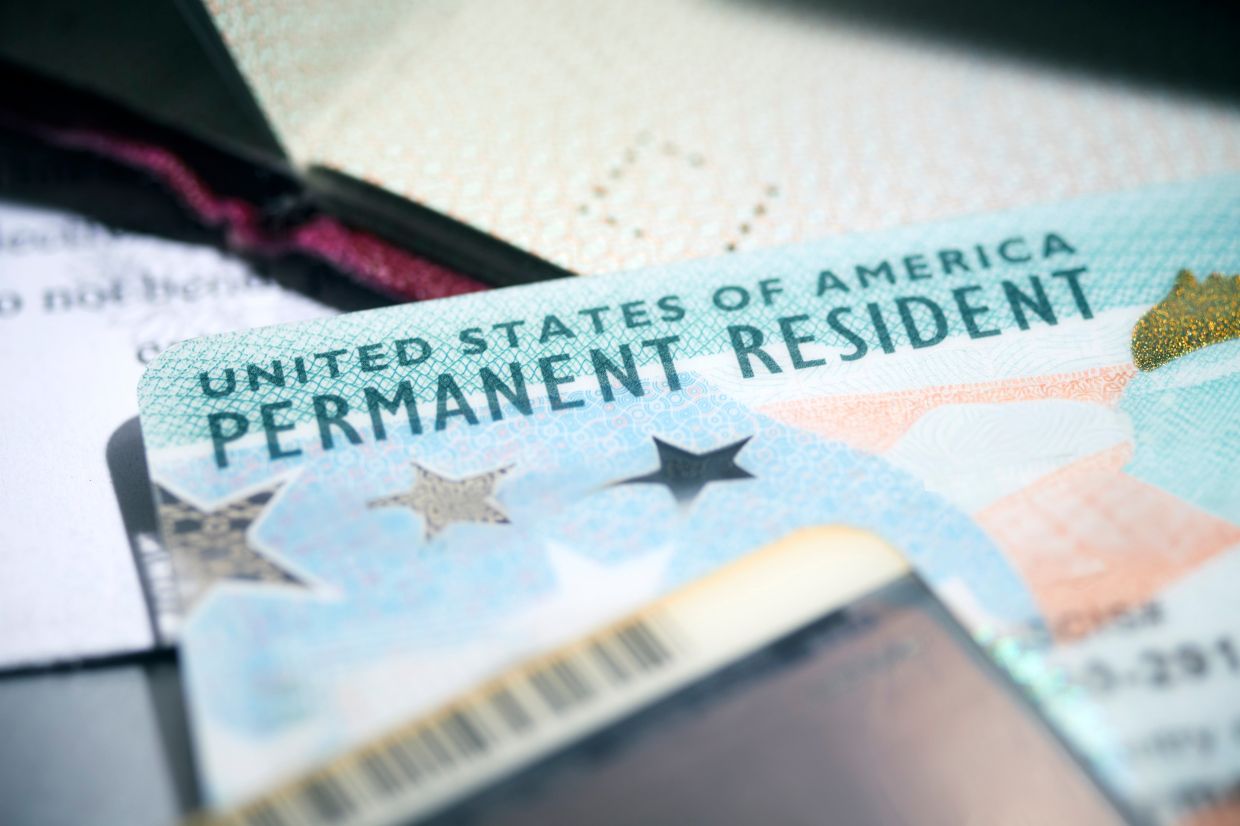
Across American embassies and consulates globally, staff are undergoing intensive training on a more rigorous interpretation of the "public charge" test—a legal standard that determines whether visa applicants might become dependent on government assistance. This nationwide recalibration has triggered a freeze on immigrant visa interviews, effectively pausing the processing of family-based green card applications at a critical moment. The timing is significant: the policy overhaul arrives mere days after a federal court invalidated a separate restriction targeting 75 countries, highlighting the administration's determination to reshape immigration gatekeeping despite legal challenges.
The concept of assessing an applicant's likelihood of becoming a public charge is hardly novel. Immigration authorities have long evaluated age, health, family composition, financial resources, educational attainment, professional skills and employment prospects when adjudicating visa cases. What represents the genuine shift is not the factors themselves but the intensity and consistency with which officers are now directed to apply them. Crucially, the revised guidance explicitly authorises consular officials to require "public charge bonds"—financial guarantees—in certain circumstances, a tool that significantly raises the bar for approval. This represents a meaningful departure from past practice, where a properly executed affidavit of support from a sponsoring family member was typically sufficient unless extraordinary concerns emerged.
Experience from within immigration law circles reveals concern about implementation dynamics. Sarah Pierce, director of social policy at the Washington-based Third Way think tank and a former analyst at USCIS, characterised the Trump administration's approach as "the most disruptive possible way to roll this out." Her assessment reflects a tension between policy intent and administrative reality: while the factors themselves remain grounded in statute, the training emphasises aggressive application rather than balanced evaluation. Immigration practitioners working in the field report that officers are being specifically trained on how to deny cases under the public charge framework, suggesting a pronounced shift in adjudicatory philosophy rather than merely technical clarification.
The practical consequences for family-based immigration are substantial. Charles Kuck, an Atlanta-based immigration lawyer who represented over 100 individuals in disputes with the administration last year, warns that family applicants will encounter significantly greater difficulty obtaining visas. The restrictive approach will also disproportionately affect diversity lottery winners, whose cases lack the sponsorship relationships that accompany employment-based or family petitions. Beyond these specific categories, the broader implications are concerning: the absence of detailed statutory guidance means individual officers possess considerable discretion in determining what constitutes public charge risk, creating what Kuck describes as an opening for "a great deal of mischief" in case-by-case application.
Interviewed applicants whose appointments were cancelled should understand that postponement does not necessarily invalidate underlying approvals. Pierce clarifies that State Department postponement differs from revocation: approved petitions and priority dates typically remain intact. However, the real cost manifests in delay and disruption. Individuals who have already purchased airline tickets, sold homes, or completed medical examinations now face indefinite postponement with no announced timeline for rescheduling. For diversity visa holders especially, the uncertainty is acute: these visas must be issued before the end of the US fiscal year (September 30), creating a genuine time constraint that postponement threatens to breach.
The freeze targets only immigrant visa processing abroad—that is, applications for permanent residency considered at consulates and embassies. H-1B temporary worker visas, student visas, and tourist visas remain unaffected by the interview suspension. However, Kuck notes that the public charge standard could theoretically extend to temporary visa categories, though current implementation appears limited to immigrant visa holders. For those holding approved H-1B petitions, the proposed fee increase to US$103,000 has not yet taken effect, and recently selected lottery winners face no immediate crisis. The most vulnerable population comprises those who must travel abroad for a consular visa stamp while their green card petition remains in processing—typically a necessary step for family-based applicants.
Pierce's assessment of the practical test is instructive: officers weigh the same factors as before, but the threshold for concern has demonstrably lowered. Previously, consular officials accepted a legitimate affidavit of support in family cases absent "unusually significant concerns." Now, officers apply the standard more comprehensively, meaning family relationships alone no longer provide the presumption of approval they once did. Pierce cautiously avoids labelling the new approach "a legal blanket ban," yet warns that aggressive implementation by individual officers could function "like one for certain populations"—a distinction that offers little comfort to applicants facing denials.
For those currently outside the United States awaiting interviews, practical guidance from immigration counsel is unambiguous. Kuck advises applicants to remain in their home country rather than risk travel complications. Most recipients of cancellation notices lack valid US work authorisation permitting re-entry, placing them in legal limbo if they depart. Applicants should ensure the National Visa Centre holds current contact information and remain vigilant for rescheduled appointments. If an interview does proceed and an officer discovers fraud, substantial factual changes, or clear administrative error, the officer may return the petition to USCIS for reconsideration. Notably, the consular officer cannot unilaterally overrule USCIS's initial approval; USCIS retains ultimate authority on whether returned petitions warrant continued processing. Many applicants who faced petition returns in past administrations ultimately secured reapproval, though employment-based cases face greater scrutiny than straightforward family relationships.
Applicants with existing lawful status confront distinct risks. Those holding green cards or valid temporary visas should avoid international travel unless absolutely necessary, as returning depends on consular stamp approval under the tightened standard. Carrying documentation—green card, I-94 arrival-departure record, I-797 approval notice, or employer letter—becomes essential. Workers crossing borders should carry recent pay stubs and current employment letters. Anyone lacking lawful status, including those on H-1B grace periods or holding only pending asylum or green card applications, should not travel at all. Pierce's counsel is stark: "Think harder before international travel if returning depends on a new visa." Approved petitions for temporary visas like the O-1 should not trigger international travel that necessitates re-entry.
Another administrative change compounds these concerns. Newly arriving non-immigrants previously received open-ended duration of status; they now receive fixed dates, typically up to four years, plus a 30-day grace period instead of the previous 60-day window. These modifications, though less visible than the public charge freeze, further constrain flexibility for international workers and students. Together, the interview postponement, aggressive public charge application, and reduced grace periods represent a coordinated tightening of legal immigration pathways. For Malaysian and Southeast Asian applicants—historically significant populations in US family-based and employment-based immigration—the implications are clear: the pathway to permanent American residence has narrowed considerably, and navigating the tightened requirements demands meticulous attention to documentation, careful strategic timing of international travel, and informed legal counsel familiar with current adjudicatory practices.

