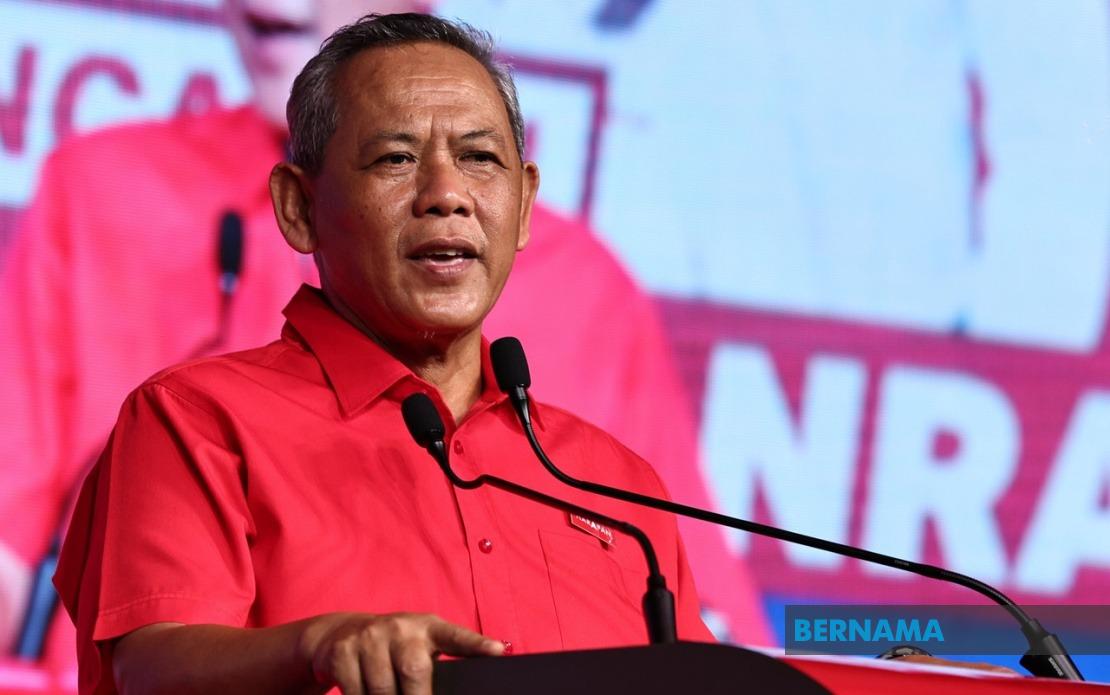
Negeri Sembilan Menteri Besar Datuk Seri Aminuddin Harun has called on voters in the Linggi state seat to judge the government based on its tangible efforts to address the region's persistent flooding challenges, rather than permit the issue to become fodder for political opportunism as the state heads toward its 16th general election. Speaking after Friday prayers in Seremban on July 17, Aminuddin, who stands as the Pakatan Harapan candidate for the seat, emphasised that the state administration takes the Linggi flooding problem seriously and has moved beyond rhetoric to concrete action.
The timing of Aminuddin's remarks reflects growing concern that the perennial flooding in Linggi, which has become increasingly visible on social media with complaints surfacing whenever heavy rainfall strikes the Seremban district, risks becoming a rallying point for opposition parties seeking to capitalise on public frustration. Rather than allow this narrative to dominate the campaign, the Menteri Besar sought to refocus the conversation on what his administration argues represents genuine progress. He pointed to two flood mitigation projects that have received official approval and are currently in active implementation, developed through collaborative efforts between Negeri Sembilan's state government and federal authorities.
Understanding the scale of Linggi's flooding problem requires acknowledging its deep historical roots in the district. The area has wrestled with inundation issues for years, stemming from a combination of geographic, drainage, and infrastructure factors that cannot be rapidly resolved through announcements alone. Aminuddin's emphasis that "these projects take time to complete and cannot be resolved within a day or two" reflects a realistic assessment that flood mitigation demands sustained engineering effort and substantial capital investment. For Malaysian voters accustomed to politicians making grandiose promises during election campaigns, this more measured tone signals an attempt to manage expectations while maintaining that progress is genuinely underway.
The two approved projects represent the culmination of planning processes that typically span months or years. By highlighting their current implementation status, Aminuddin sought to demonstrate that his government has moved past the planning phase into execution, a crucial distinction that often escapes public attention during contentious electoral periods. The state-federal collaboration he mentioned is particularly significant given that flood management frequently requires resources and expertise that exceed any single administrative tier's capacity. This intergovernmental coordination, while less dramatic than a single announcement, often proves essential to delivering functional solutions.
Aminuddin's broader argument advanced a vision of governance rooted in systematic problem-solving rather than sentiment-driven politics. He contrasted the Pakatan Harapan approach—emphasising proper planning, infrastructure development, and the track record of administration—with what he characterised as opposition strategies that exploit public grievances without presenting viable alternatives. This framing attempts to shift the election discourse from emotional appeals about flooding toward more substantive discussions about capability and delivery. Whether voters respond to this appeal depends significantly on whether they perceive the two projects as genuine solutions or view them as insufficient responses to a long-standing crisis.
The emergence of viral social media claims about Linggi's flooding pattern suggests that public perception of the issue has crystallised into a political vulnerability for the incumbent administration. In the social media age, a single dramatic image of flooded streets can generate more political impact than months of behind-the-scenes project implementation. Aminuddin's explicit call for voters not to allow the matter to become "an issue" inadvertently highlights how challenging this perception battle has become. The fact that he felt compelled to address this suggests the opposition or civil society groups have successfully framed flooding as an emblem of governmental failure, making Aminuddin's task one of narrative reclamation rather than introducing new policy.
For Malaysian voters in Negeri Sembilan more broadly, Aminuddin's appeal speaks to a broader tension in state-level politics between holding governments accountable for persistent problems and recognising the genuine constraints—budgetary, technical, legal—that govern infrastructure development. The Linggi case exemplifies how issues rooted in physical geography and decades of accumulated drainage challenges cannot be wished away through political will alone, yet politicians remain vulnerable to criticism when solutions appear delayed. Aminuddin's strategy of asking voters to evaluate Pakatan Harapan's overall governance record rather than fixate on a single unresolved problem represents a calculated gamble that his coalition's broader achievements will outweigh frustration over flooding.
The Electoral Commission's scheduling of nomination day for July 18, early voting for July 28, and polling day for August 1 compressed the campaign timeline substantially. Within this narrow window, messages about infrastructure projects competing against dramatic imagery of flooded neighbourhoods face an uphill battle for attention. Aminuddin's invocation of voter wisdom and maturity, in suggesting that residents would assess both his government's record and opposition strategies fairly, carries an implicit acknowledgement that the election outcome depends on whether Negeri Sembilan voters prioritise accountability for persistent infrastructure failures or credit for the broader administration.
The Pakatan Harapan coalition's explicit reliance on its governance track record as its electoral offering reflects confidence that administrative performance—rather than populist promises—will resonate with voters. This approach assumes a certain level of political maturity among the electorate and represents a departure from Malaysian electoral traditions where appeals to emotion often dominate. Whether this strategy succeeds will provide important signals about voter preferences heading into future peninsular elections. For observers beyond Negeri Sembilan, the Linggi case illustrates how infrastructure deficiencies, particularly those affecting quality of life through recurring flooding, increasingly drive electoral behaviour and force governing coalitions to defend their records on concrete delivery rather than ideological positioning.

