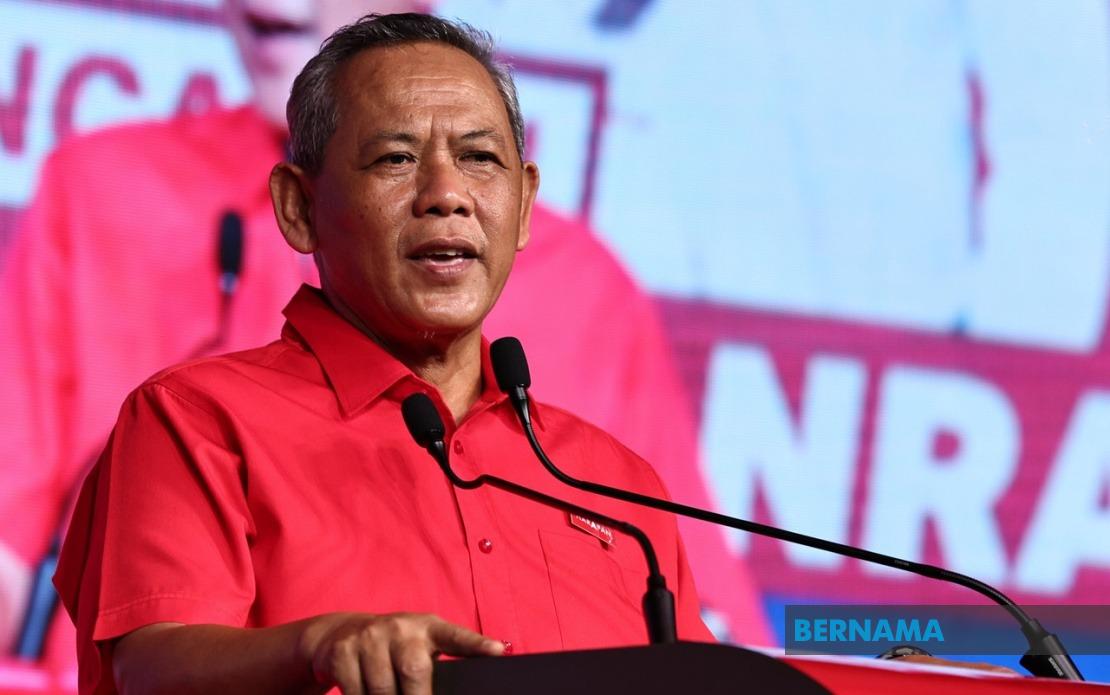
Negeri Sembilan's Menteri Besar Datuk Seri Aminuddin Harun has firmly pushed back against speculation that his decision to stand in the Linggi state seat during the imminent Negeri Sembilan state election amounts to a strategic retreat from his long-held Sikamat constituency. Speaking in Seremban on July 16, the Pakatan Harapan chairman categorically stated that the move reflects his own volition rather than an evasion tactic, signalling confidence in his ability to expand his political reach within the state assembly.
The transition marks a significant moment in the political trajectory of the Menteri Besar, who has represented Sikamat across four consecutive electoral cycles. His decision to relocate to Linggi, where he will face Barisan Nasional incumbent Datuk Mohd Faizal Ramli, has generated considerable discussion among political observers and constituent networks. Rather than allowing this narrative to dictate the conversation, Aminuddin has moved to reclaim control of the story by emphasizing his agency and forward-looking vision for service delivery.
In his public statement, Aminuddin expressed determination to bring the same calibre of dedication to Linggi residents that he has demonstrated throughout his tenure in Sikamat. He articulated a commitment to intensifying his efforts should voters grant him their mandate, framing the constituency shift as an opportunity to extend proven governance capabilities rather than abandon an existing portfolio. This messaging strategy positions the move as an expansion of his influence rather than a withdrawal from established political ground.
The Menteri Besar's reflection on his Sikamat journey provides important context for understanding the emotional and practical dimensions of his political career. He recalled the modest beginnings of his constituency operations, working from a cramped office space above a commercial shoplot whilst operating under opposition constraints with minimal resource allocations. These early years, characterized by grassroots fundraising efforts and community-centred programming, apparently shaped his political philosophy and constituency engagement methodology.
Aminuddin's nostalgic recounting serves multiple purposes within the political narrative. It establishes his credentials as a dedicated public servant who built relationships with constituents through sustained engagement despite structural disadvantages, while simultaneously demonstrating the progress achieved through PH's subsequent electoral success. This framing suggests that his movement to Linggi stems from confidence in his methods and desire for broader application rather than flight from challenging circumstances.
The decision to nominate Nor Azman Mohamad as his successor in Sikamat indicates planning and continuity within the broader PH strategy for Negeri Sembilan. By publicly endorsing his replacement and expressing confidence in Nor Azman's capacity to serve the constituency with comparable dedication, Aminuddin has attempted to neutralize potential criticisms that his departure leaves Sikamat without adequate representation or commitment. This succession arrangement underscores a party-wide transition rather than an individual retreat.
The Negeri Sembilan state election represents a critical juncture for both Aminuddin personally and the broader Pakatan Harapan coalition within the state. With Linggi representing an incumbent BN stronghold through Datuk Mohd Faizal Ramli's tenure, Aminuddin's candidacy signals an aggressive expansion strategy rather than defensive consolidation. Contesting against a sitting assemblyman inherently carries greater risk than defending an established seat, making the decision appear strategically bold rather than cautiously protective.
From a regional perspective, leadership transitions in key Malaysian states carry implications for federal-level coalition dynamics. Aminuddin's positioning as Negeri Sembilan Menteri Besar reflects broader PH consolidation efforts across peninsular Malaysia. How effectively he manages the perception of his constituency shift—whether as reinvigoration or relocation—will influence voter confidence in both his personal leadership and the coalition's stability within the state framework.
The electoral calendar itself adds pressure to Aminuddin's messaging strategy. With nominations scheduled for Saturday, early voting on July 28, and polling on August 1, the window for narrative control remains narrow. The Menteri Besar's preemptive strike through his Facebook statement demonstrates awareness that allowing opposition narratives to develop unchallenged could prove damaging, particularly among Sikamat voters potentially feeling abandoned or among Linggi residents uncertain about a leader transitioning from another constituency.
For Malaysian observers monitoring state-level politics and leadership stability, Aminuddin's articulation of his reasoning provides insight into how regional politicians reconcile constituency loyalty with broader political ambitions. The tension between defending established electoral territory and pursuing expanded influence manifests differently across Malaysia's political landscape, yet remains consistently significant for voter perceptions of leader commitment and consistency.
The practical implications for Linggi voters merit consideration beyond the political positioning. An incumbent Menteri Besar contesting a state assembly seat potentially brings amplified access to state-level resources and decision-making authority compared to a backbench representative. Conversely, Sikamat residents must assess whether a successor can replicate years of accumulated relationships and institutional knowledge. These practical calculations, beyond political theatre, ultimately shape electoral outcomes and governance effectiveness across Malaysian constituencies.

