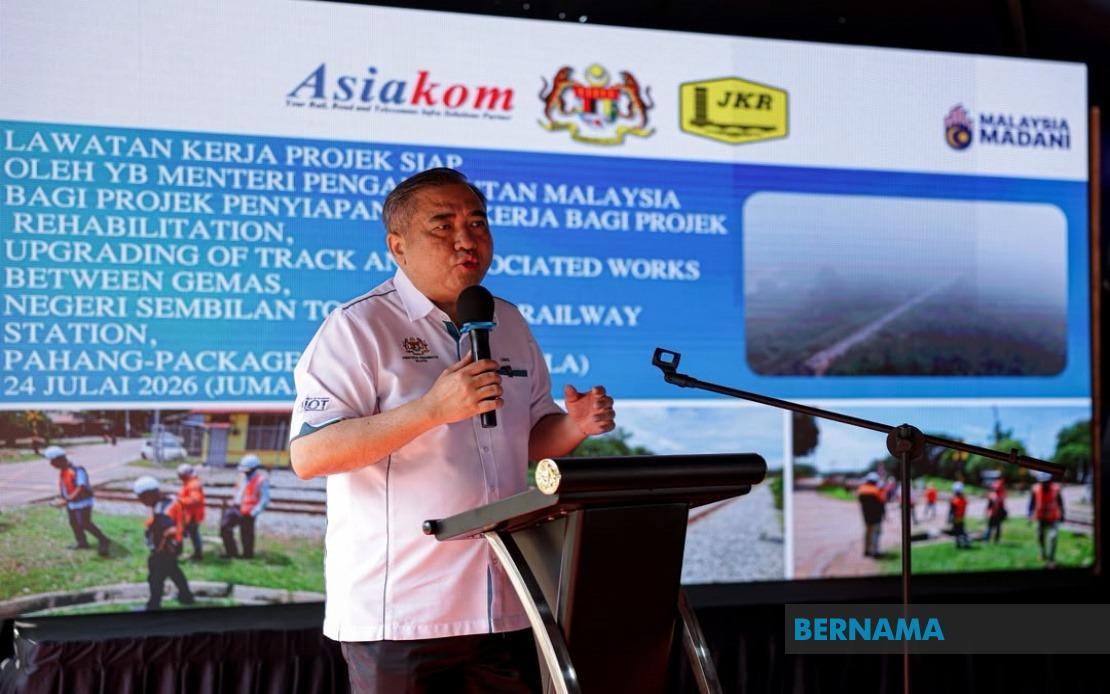
The Pakatan Harapan coalition has moved to extinguish speculation about its Menteri Besar candidate for the forthcoming Negeri Sembilan state election, with DAP secretary-general Anthony Loke reaffirming that Datuk Seri Aminuddin Harun remains the coalition's single, undisputed choice for the chief minister's role. Speaking at a campaign event in Bahau on July 24, Loke dismissed recurring rumours that alternative candidates were being evaluated, characterising such talk as fabricated opposition propaganda designed to sow discord within the ruling coalition.
The statement carried particular weight given that Loke himself had been the subject of speculation in political circles about a potential leadership transition. His explicit disavowal of personal interest was anchored in constitutional reality: Negeri Sembilan's state constitution mandates that the Menteri Besar must be a Malay Muslim member of the state legislative assembly, a requirement Loke acknowledged he does not satisfy. This constitutional provision has long formed the bedrock of the state's power-sharing arrangements and substantially narrows the field of eligible candidates within any ruling coalition.
Aminuddin Harun, the incumbent Menteri Besar since 2018, holds additional standing as the current chair of Negeri Sembilan's PH machinery, a dual role that positions him as both the administrative and political leader of the coalition's state operations. His entrenchment reflects the coalition's assessment that the status quo remains PH's strongest footing as the election approaches. The timing of Loke's clarification signals that PH leadership is keen to present unified messaging ahead of the electoral contest, particularly after UMNO figures began testing alternative narratives.
The impetus for Loke's public statement came from remarks by UMNO secretary-general Datuk Dr Asyraf Wajdi Dusuki, who had earlier challenged PH to identify a backup Menteri Besar candidate should Aminuddin fail to retain his Linggi state seat. The suggestion, while framed as a prudent contingency, represented a transparent effort to destabilise PH's campaign narrative by implying vulnerability in the incumbent's standing within his own constituency. Opposition parties frequently deploy such tactics to amplify doubts about ruling coalition stability and suggest internal fractures that may not actually exist.
The Linggi seat assumption embedded in Asyraf's challenge deserves scrutiny, as it reflects the high-stakes nature of this particular contest. Aminuddin's personal electoral viability is not merely symbolic; under Malaysia's state government formation rules, the Menteri Besar's physical presence in the legislature is essential to the position. A loss in Linggi would force a constitutional succession regardless of broader PH performance across the 36 state assembly seats. This structural reality gives additional weight to the dynamics within the Linggi constituency battle.
Neither the ruling coalition nor opposition appear confident in clean-cut victory. The deployment of contingency rhetoric by UMNO suggests uncertainty about the election's likely outcome, while PH's emphatic reaffirmation of unified leadership signals determination to prevent defection narratives from taking root. Negeri Sembilan has traditionally exhibited competitive two-way contests between the major blocs, and the August 1 polling date approaches amid what appears to be a closely contested campaign.
The electoral schedule provides limited runway for campaign finalisation. Early voting takes place on July 28, with general polling following three days later on August 1. This compressed timeframe means that messaging discipline becomes particularly valuable; errant signals about leadership instability or factional division can crystallise voter doubts rapidly. Loke's intervention appears designed precisely to lock down internal messaging ahead of the critical final fortnight of campaigning.
For Malaysian observers and regional analysts, the Negeri Sembilan contest carries significance beyond the state itself. As one of PH's anchor states since the coalition's 2018 breakthrough, electoral performance in Negeri Sembilan provides important data about the coalition's capacity to retain heartland support amid evolving national political dynamics. The apparent confidence of PH leadership in reconfirming Aminuddin suggests internal polling may be showing sufficient strength to sustain the incumbent administration, though such assessments remain inherently subject to error.
The constitutional framework governing the Menteri Besar position—requiring Malay Muslim status—reflects historical settlement patterns within Peninsular Malaysia's state political systems. This provision has historically concentrated power within UMNO and, latterly, within PH's Malay-Muslim majority components. The constraint effectively renders non-Muslim political figures in peninsular states as supportive players rather than chief executives, a structural reality that shapes coalition dynamics and succession planning across Malaysia's federal system.
As the campaign enters its final phase, PH's unified positioning on its leadership represents a calculated choice to project stability and continuity. Whether voters reward or penalise this approach will emerge only on August 1, but the coalition's evident determination to prevent alternative-candidate narratives from gaining traction underscores how closely leadership questions remain entwined with electoral messaging even in what might appear to be routine state-level contests.

