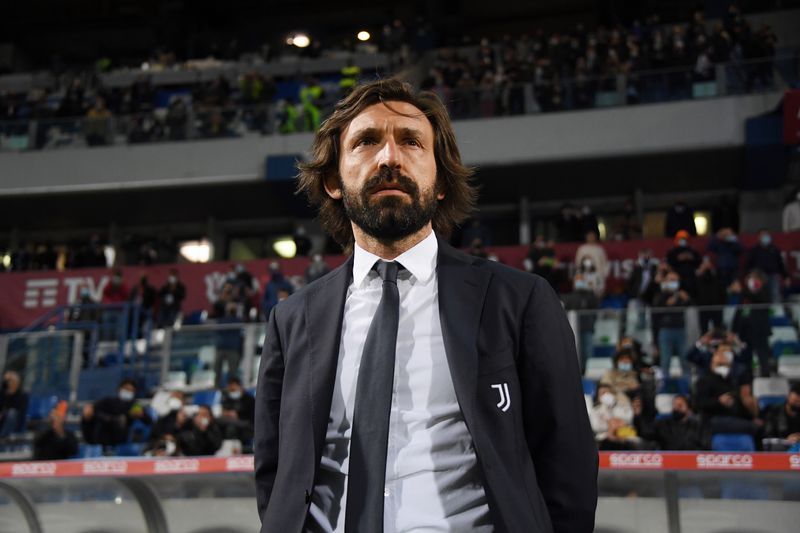
Andrea Pirlo's emerging candidacy to lead the Italian national football team faces a formidable political obstacle: his commercial relationship with a Russian bookmaker has triggered widespread resistance from both federation officials and lawmakers in Rome. The 47-year-old former midfielder, a World Cup winner in 2006, had positioned himself as the frontrunner to succeed Gennaro Gattuso, particularly after Pep Guardiola declined the opportunity. Yet this pathway to one of football's most prestigious roles now faces an uncertain future as key stakeholders grapple with the reputational and diplomatic implications of his ambassadorship with Fonbet, a Moscow-based gambling operator.
Pirlo inked the ambassador deal with Fonbet in October, a move that drew limited attention initially. However, the controversy intensified when he appeared alongside his former teammate Marco Materazzi at Moscow's Luzhniki Stadium during a promotional event organised by the bookmaker. The timing proved particularly fraught: the event coincided with ongoing aerial bombardments targeting Ukrainian cities, immediately framing the footballer's participation within a contentious geopolitical context. This convergence of sport, commerce, and international conflict has transformed what might ordinarily be dismissed as a routine endorsement into a matter of genuine political consequence in Italy.
The Italian Football Federation has maintained a cautious public stance, declining to issue formal statements while internally evaluating the diplomatic ramifications. A source familiar with the situation indicated that Pirlo's Russian connections remain under active review and that the matter is far from settled. This administrative silence masks genuine deliberation within the FIGC's leadership as officials weigh competing pressures: the appeal of Pirlo's appointment against mounting political costs. The timing compounds the difficulty, arriving during Giovanni Malago's early weeks as FIGC president, a position he assumed following the federation's election to oversee its restructuring after Italy's third consecutive failure to qualify for the World Cup—a catastrophic result that has left Italian football searching for both credibility and direction.
Despite possessing the explicit backing of Paolo Maldini, the newly appointed FIGC technical director, Pirlo has encountered a wall of political objection that transcends typical football administration. Italian politicians from multiple parties and parliamentary positions have articulated their concerns, framing the issue not as a sporting question but as a matter of national ethics and geopolitical alignment. Their resistance reflects broader European tensions around Russia and the ongoing conflict in Ukraine, positioning Italian football's coaching selection as a barometer of the country's values and commitments.
Pina Picierno, a vice-president of the European Parliament, articulated the broader criticism with particular force, declaring on social media that Pirlo's selection would constitute a retreat from the ethical reckoning Italian football requires following its World Cup disasters. She characterised the decision as moving in the exact opposite direction of necessary cultural and managerial reform, suggesting that the controversy goes beyond personalities to reflect fundamental questions about institutional integrity. This framing resonates across Italy's political spectrum, where officials have begun invoking principles of national ethics in response to what they perceive as incompatible commercial entanglements.
Ignazio La Russa, the Senate president and a member of Prime Minister Giorgia Meloni's party, expressed particular hesitation when questioned by the ANSA news agency. While acknowledging respect for Malago and Maldini, La Russa characterised Pirlo's coaching credentials as untested and uncertain, describing the appointment as a leap in the dark. His measured but doubtful response carries significant weight given his institutional position and proximity to government, suggesting that potential resistance extends beyond individual critics to include figures with genuine political leverage. La Russa's reluctance, framed through the lens of sporting competence rather than explicit political condemnation, carries subtle but unmistakable implications for Pirlo's prospects.
Carlo Calenda, leader of the centrist Azione party, dispensed with diplomatic circumspection and articulated a harder line, declaring that individuals promoting Russia since 2022 should be disqualified from holding national office. His statement transforms the discussion from questions about ambassadorial relationships into a categorical assertion about eligibility for public service, elevating the stakes considerably. This framework suggests that some Italian politicians view Pirlo's Fonbet connection not merely as embarrassing but as potentially disqualifying, a position that could gain traction if other voices coalesce around similar arguments.
Pirlo himself has attempted to defuse the controversy by characterising his Moscow visit as strictly non-political, a distinction that carries diminishing weight as the narrative has solidified around geopolitical implications rather than the footballer's stated intentions. This defensive posture reflects the challenge of separating commercial activity from political context in contemporary Europe, where Russia-related business connections carry heightened scrutiny regardless of personal disclaimers. His ambassadorial role, undertaken for financial compensation, has become inextricable from the broader narrative of European solidarity regarding Ukraine, complicating his positioning as a football technician above political fray.
For Malaysian and Southeast Asian observers, the Pirlo controversy illuminates the intersection of international sport, geopolitical alignment, and domestic governance that increasingly characterises major football appointments across the globe. While Europe grapples explicitly with Russia-related business relationships, similar questions about commercial ties, national security considerations, and ethical compatibility with public roles emerge across Asia-Pacific contexts. The pattern suggests that football's elite positions are becoming venues where nations assert broader political values and international alignments, a development with implications for how sporting institutions manage their leadership selections.
The unresolved nature of Pirlo's candidacy also reflects the institutional complexity within the FIGC, where technical football expertise, political pressure, federation authority, and government interest intersect without clear hierarchical resolution. Malago and Maldini's backing carries weight among football professionals, yet their support cannot override the political objections now on record. This tension between sporting meritocracy and political accountability remains unresolved as Italian officials navigate between preserving football's administrative independence and acknowledging broader national interests. The ultimate outcome will signal how significantly geopolitical considerations can influence even the most localised sporting decisions when institutional pressure reaches sufficient intensity.
Pending resolution of the Pirlo matter, Italian football remains in a state of managerial limbo, having failed to identify an uncontroversial successor to Gattuso despite the urgency surrounding the national team's competitive revival. The appointment process that should have restored momentum to Italian football has instead become ensnared in questions about values, geopolitical alignment, and the relationship between commercial activity and public service—complications that extend far beyond the technical question of whether Pirlo possesses the coaching capabilities to rehabilitate the Azzurri's World Cup prospects.

