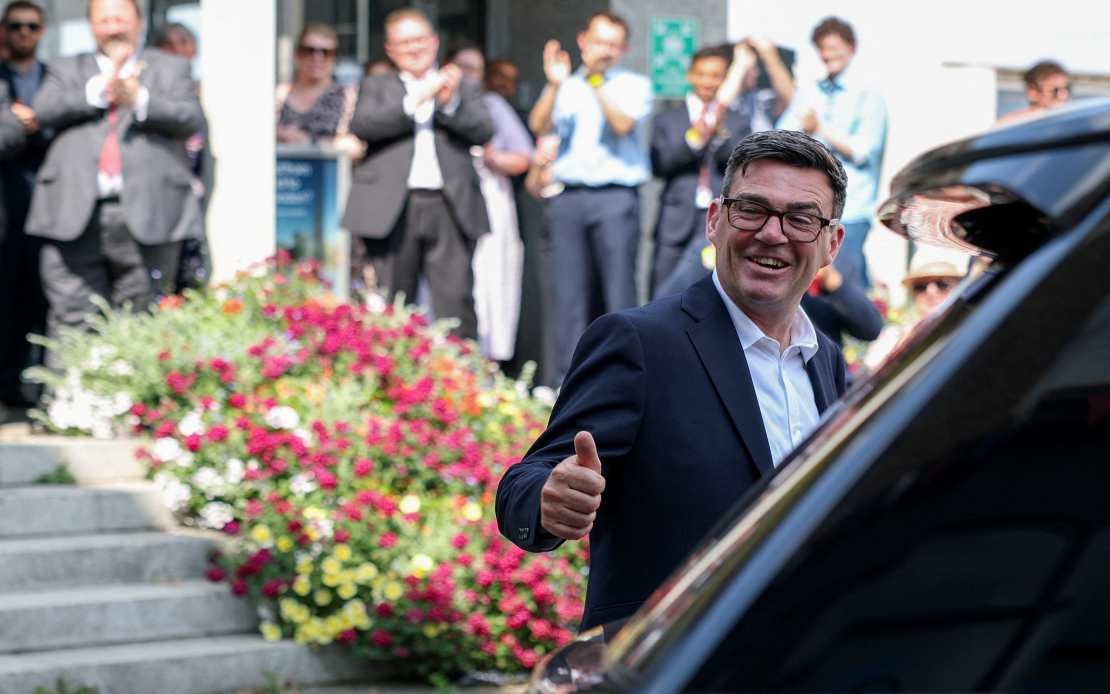
Andy Burnham has become Britain's Prime Minister following a formal audience with King Charles III, inheriting the top job after an unusually swift Labour transition. The former mayor of Greater Manchester, who returned to Parliament just weeks before his unexpected elevation to the party leadership, will use his maiden address from Downing Street to frame his administration as a departure from the political instability that has defined the previous decade. His emphasis on delivering "breathing room" for struggling households signals an early pivot toward immediate cost-of-living interventions rather than longer-term structural reforms.
The timing of Burnham's accession reflects Labour's internal calculation that a change of leadership could reinvigorate the government's standing with voters and parliamentary colleagues. His unopposed selection to the party leadership underscores his standing among MPs and reflects broad agreement that a reset was urgently needed. Unlike incoming premiers who typically inherit established policy platforms from their predecessors, Burnham enters office without a comprehensive pre-articulated agenda, giving him considerable latitude to reshape priorities and messaging. This blank canvas presents both opportunity and risk, as his government must quickly translate broad aspirations into concrete policies that demonstrably improve people's circumstances.
Burnham's repeated invocation of political stability directly confronts a defining weakness of the previous decade of British governance. Seven prime ministers in ten years has corroded public trust in the machinery of government itself, suggesting perpetual crisis rather than purposeful leadership. By framing his premiership as one of "reflection and resolution," Burnham attempts to position Labour as the party capable of drawing a line under this turbulent era and tackling challenges with sustained focus. For Southeast Asian observers, Britain's political churn offers a cautionary tale about the costs of leadership instability and the premium voters increasingly place on continuity.
Central to Burnham's early agenda is devolving power from Westminster to the regions, a priority that reflects both his background as a devolution advocate and potential broader political calculation. This approach could gradually redistribute authority and resources to cities and regions outside London, addressing long-standing grievances about regional neglect. However, implementing meaningful devolution while maintaining coherent national economic policy presents substantial complexity, particularly amid cost-of-living pressures that demand coordinated national responses. The tension between local empowerment and centralised problem-solving will test Burnham's ability to balance competing priorities.
One of Burnham's earliest decisions involves scrapping Keir Starmer's digital ID initiative, a recognition that voter anxieties about personal data and state surveillance outweigh the administrative efficiency gains such systems might deliver. By redirecting resources toward immediate cost-of-living support, Burnham signals that his government will prioritise visible improvements in household finances over technocratic modernisation. This choice also reflects changing political calculus around identity documentation and digital governance, matters where public scepticism has intensified globally following years of surveillance debates and cybersecurity concerns.
The question of North Sea oil and gas licensing presents Burnham with an early test of his willingness to challenge environmental commitments when economic pressures mount. Labour's 2024 manifesto explicitly opposed issuing new North Sea drilling licences, but reports suggest the new Prime Minister may reverse this position to address energy bill pressures. Environmental organisations have firmly cautioned against this reversal, arguing that expanded drilling will not meaningfully reduce consumer bills while undermining Labour's climate credentials. This decision ultimately reflects the fundamental tension between short-term economic relief and longer-term environmental sustainability that dominates climate policy globally.
Thames Water represents another early decision point requiring Burnham's attention. The utility company's £20 billion debt burden, accumulated through decades of dividend extraction and underinvestment, has positioned it on the brink of financial collapse. Burnham's previously expressed openness to greater public ownership of essential services suggests he may be sympathetic to temporary public takeover, though such a move would prove expensive and politically contentious. The company's creditors have indicated willingness to discuss restructuring arrangements with the new government, suggesting negotiations may produce alternative solutions short of nationalisation.
The composition of Burnham's cabinet will signal much about his approach to governing and his tolerance for internal diversity of opinion. Speculation centres particularly on the chancellor position, with Energy Secretary Ed Miliband and Home Secretary Shabana Mahmood emerging as leading contenders. Both represent different policy orientations and personal styles, with Miliband bringing decades of ministerial experience and Mahmood offering a fresh perspective on fiscal management. The chancellor appointment will substantially shape the government's economic direction and its capacity to implement cost-of-living measures without compromising overall fiscal discipline.
For Malaysian and regional observers, Burnham's transition offers insights into how established democracies manage leadership succession and legitimacy during periods of public disaffection. Unlike transitions in many Asian democracies involving dramatic electoral contests or contested power transfers, Britain's internal Labour party process unfolded smoothly, though the absence of a membership election represents a departure from recent practice. The incoming Prime Minister must now translate the peace dividend of orderly succession into tangible policy achievements that rebuild public confidence in Labour's competence and commitment to ordinary households' material wellbeing.
The broader political context remains uncertain. Burnham inherits a government commanding a substantial House of Commons majority but facing declining public approval ratings and significant economic headwinds. His promises of stability and breathing room resonate with voter frustrations about both political turbulence and household financial pressures, yet translating these aspirations into reality requires navigating genuinely constrained fiscal circumstances and deep-rooted economic challenges. His first weeks in office will establish whether his administration can credibly claim to represent a genuine departure from recent political dysfunction or merely embodies another chapter in Britain's continuing governance instability.

