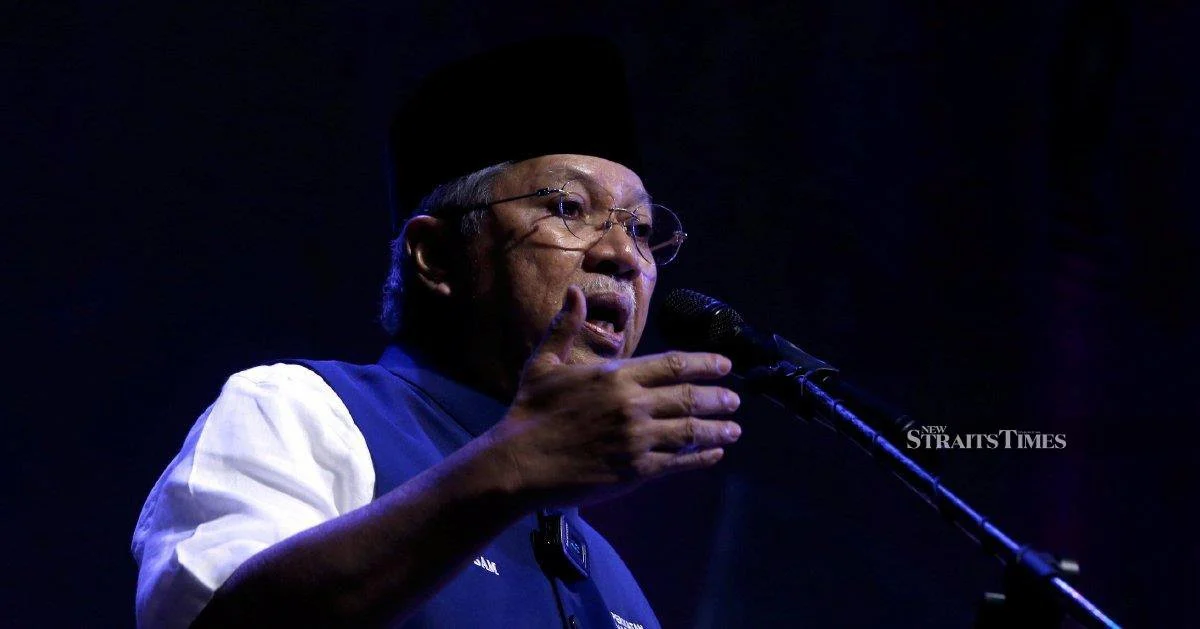
Perikatan Nasional's fragile unity faces mounting pressure as Finance Minister Annuar Muse has publicly urged Bersatu, the largest component party within the opposition coalition, to exercise measured restraint and avoid issuing inflammatory statements at a moment when internal disputes threaten the bloc's cohesion.
The appeal comes during a particularly volatile period for PN, an alliance that has struggled to maintain a unified political front since its formation. Bersatu, led by former Prime Minister Mahathir Mohamad, represents a crucial pillar of the coalition's parliamentary representation and electoral prospects across key constituencies, particularly in Peninsular Malaysia. The tensions now surfacing suggest deeper fractures within PN's leadership structure that extend beyond routine political disagreement.
Annuar's intervention signals that senior political figures within the coalition recognise the danger posed by public squabbling, which invariably erodes voter confidence and provides ammunition to rival coalitions seeking to portray PN as an unstable alternative government. The Finance Minister's position as a prominent Bersatu figure himself lends particular weight to his counsel, suggesting that party leadership is concerned about how recent developments might be perceived by ordinary Malaysians watching political manoeuvres from their homes.
The specific nature of the latest friction within PN remains fluid, but the coalition has previously grappled with disagreements regarding seat allocations, policy direction, and the political positioning of member parties ahead of elections. These recurring disputes reflect the inherent difficulty of maintaining unity among parties with distinct ideological moorings and regional power bases. Unlike the Barisan Nasional, which evolved over decades with entrenched power-sharing arrangements, PN remains relatively young and without comparable institutional mechanisms for resolving inter-party conflicts.
For Malaysian observers, the stability of Perikatan Nasional carries significance beyond mere factional politics. As the primary opposition coalition challenging Pakatan Harapan's control of federal government, PN's internal health directly affects the political competition that shapes national policy direction. A fractious opposition weakens the system of checks and balances crucial to Malaysian democracy, leaving the ruling coalition with less pressure to address governance concerns or account for policy missteps.
Bersatu's particular role in these dynamics warrants examination. The party commands considerable grassroots organisation in several states and maintains significant parliamentary representation despite losing federal power. However, its relationship with other PN components—particularly PAS and smaller Malay-based parties—has never been entirely frictionless. Mahathir's mercurial political style and Bersatu's positioning as both a Malay-Muslim and development-focused party sometimes creates tension with partners pursuing narrower ideological agendas.
Annuar's public appeal for calm represents an attempt to prevent escalation through informal pressure rather than formal coalition mechanisms. This approach suggests that PN's leadership council may lack either the authority or the legitimacy to impose discipline through institutional channels. The reliance on respected individual figures to soothe tensions indicates a coalition built more on temporary political convenience than deep structural alignment.
For the broader Southeast Asian context, PN's travails reflect patterns visible across the region where opposition coalitions struggle with sustainability. Similar tensions have destabilised opposition blocs in Thailand, Indonesia, and the Philippines, where multi-party alliances frequently splinter once immediate electoral threats subside or when partners disagree on fundamental strategic questions. Malaysia's PN follows this trajectory, suggesting that while coalitions can mobilise voters against incumbent governments, translating that opposition consensus into sustainable governance requires institutional maturity many younger alliances lack.
The timing of this latest friction also matters strategically. With speculation about the timing of federal elections increasing, divisions within PN undermine its capacity to present cohesive campaign messaging or coordinate ground operations effectively. Voters naturally question the viability of opposition alternatives when their component parties cannot resolve internal disagreements without public drama. This dynamic typically benefits ruling coalitions, as instability in opposition ranks can suppress anti-incumbent voting while reassuring marginal supporters that the status quo remains preferable to untested alternatives.
Looking forward, whether Annuar's appeal for restraint proves effective will depend substantially on whether underlying substantive issues dividing PN partners can be addressed through quiet negotiation. If tensions reflect genuine policy disagreements or institutional design problems, mere calls for composure offer only temporary respite. Conversely, if recent friction stems primarily from personality conflicts or manoeuvring for position, measured voices might succeed in containing the damage.
The coming weeks will prove instructive for Malaysian political observers monitoring whether PN can consolidate itself as a serious governing alternative or whether internal contradictions continue limiting its credibility. Annuar's intervention acknowledges the problem exists while suggesting that PN's leadership recognises the stakes involved in how the coalition manages its internal disputes. How effectively that recognition translates into sustained unity remains an open question with implications extending well beyond factional politics.