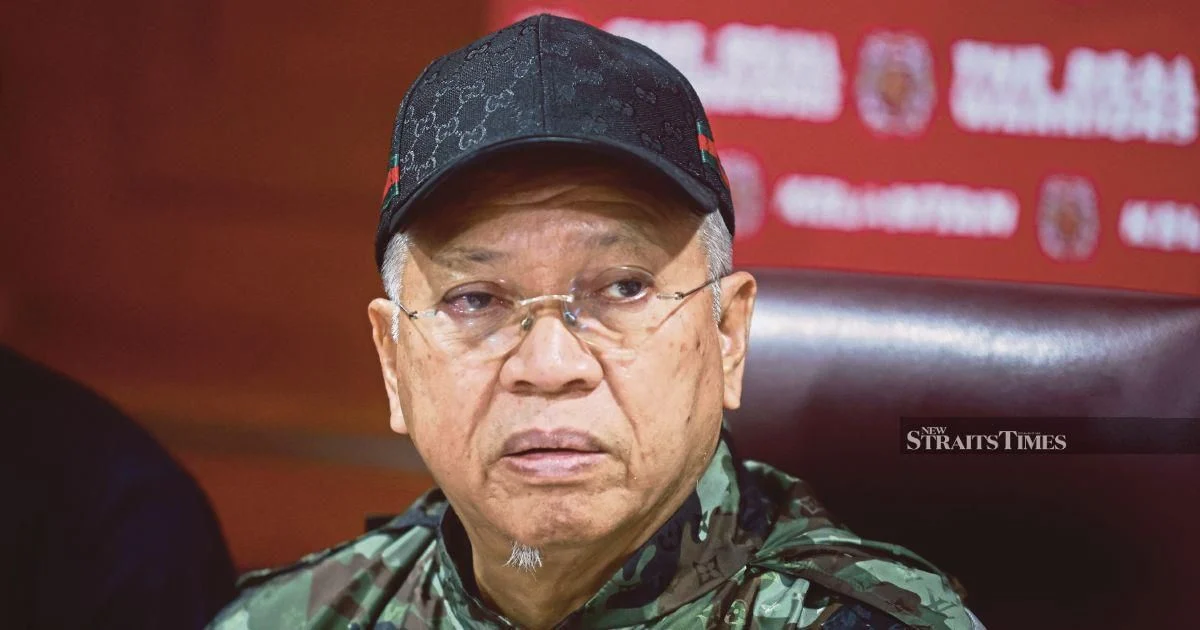
Tan Sri Annuar Musa acknowledged on Wednesday in Kota Baru that his personal interventions to mend the fractured relationship between PAS and competing factions within Bersatu have ultimately yielded no tangible results. The seasoned politician's candid admission underscores the severity of the schism threatening to destabilise the Perikatan Nasional coalition, which has served as a crucial political bulwark in Malaysian politics.
Annuar's disclosure of his failed mediation attempts reveals the extent to which interpersonal and ideological tensions have hardened within the bloc. Rather than a temporary disagreement amenable to negotiation, the divisions appear to have calcified into positions that resist conventional reconciliation efforts. His willingness to acknowledge these failed attempts publicly suggests both the gravity of the situation and the recognition that continued denial would only compound the coalition's credibility problems among its political allies and the broader electorate.
The tensions between PAS, which has emerged as the Islamic bloc's ideological anchor, and the competing factions within Bersatu reflect deeper structural problems within Perikatan Nasional. Bersatu, which has fractured into competing camps with divergent political ambitions and strategic visions, presents a more complex challenge than a simple two-party dispute. The existence of multiple factions within a single party creates mathematical and organisational complications that traditional mediation struggles to address, as reconciling one faction may inevitably alienate another.
For Malaysian observers, the significance of Annuar's failure extends beyond mere coalition management. Perikatan Nasional's stability has material implications for the broader political landscape, influencing not only parliamentary mathematics but also the capacity of government to function effectively. A coalition suffering from internal haemorrhage loses the cohesion necessary to implement legislative agendas and maintain ministerial discipline, creating governance risks that ultimately affect policy implementation and public service delivery.
The backdrop to these tensions involves competing visions for Bersatu's future direction and PAS's role within the coalition. While both parties theoretically share Islamist principles and conservative political platforms, disputes over seat allocation, ministerial positions, and strategic decision-making have created practical conflicts that ideology alone cannot resolve. These material disputes often prove more intractable than philosophical differences, as they involve tangible zero-sum distributions of power and resources.
Annuar's position as a senior UMNO figure attempting to broker peace between these rivals also illustrates the broader challenge facing Barisan Nasional parties within Perikatan Nasional. UMNO's traditional dominance within Malaysian politics has been substantially diminished, yet it remains instrumental in holding the coalition together through personalities like Annuar who command respect across factional lines. The reliance on individual mediators rather than institutional mechanisms suggests fragility in the coalition's structural foundations.
The failure of these reconciliation efforts raises strategic questions about Perikatan Nasional's long-term viability. Political coalitions function through ongoing reciprocal compromises and mutual benefit. When internal disputes persist despite high-level mediation, it signals that parties perceive greater advantage in pursuing independent paths than in maintaining unity. For PAS and the Bersatu factions, this calculation may reflect calculations about electoral viability, ministerial prospects, or ideological differentiation in an increasingly crowded political marketplace.
Regional implications also warrant consideration. Southeast Asia's political dynamics increasingly depend on stable coalition-building and institutional coherence. Malaysia's internal coalition struggles can influence the country's capacity to engage effectively in regional diplomacy and regional security matters. A government preoccupied with internal management struggles finds less bandwidth for strategic external engagement, potentially affecting ASEAN dynamics and bilateral relationships across Southeast Asia.
The practical consequences of these divisions manifest in parliamentary proceedings, where coalition discipline weakens when parties cannot present unified positions. Legislation moves more slowly, opposition motions gain unexpected traction, and government backbenchers become less reliable. These operational difficulties accumulate and ultimately erode public confidence in governmental effectiveness, creating space for alternative political narratives and opposition consolidation.
Annuar's candid acknowledgment that reconciliation has proven impossible suggests a potential recalibration of expectations within Perikatan Nasional itself. Rather than pursuing reunification, the parties may increasingly focus on damage control and coexistence despite their differences. This represents a significant downgrade from the coalition's aspirations but reflects political realism about what remains achievable given current configurations of interest and ideology.
Looking forward, the unresolved PAS-Bersatu divisions will likely shape Malaysian politics through the remainder of the current parliamentary term. Other coalitions, particularly Pakatan Harapan and independent politicians, will monitor these tensions carefully, seeking opportunities to exploit fractures through targeted poaching of dissatisfied members or coalition partners. The political marketplace remains fluid, and Perikatan Nasional's internal weaknesses create openings for repositioning and realignment that competing blocs will certainly pursue.
For ordinary Malaysians, the broader lesson involves recognising that coalition politics, while essential for governing, remains inherently unstable when underlying interests diverge too sharply. The failure of Annuar's mediation efforts demonstrates that personality and goodwill alone cannot bridge fundamental disagreements about power distribution and strategic direction. Malaysian politics will continue operating within coalition frameworks, but maintaining such arrangements requires continuous negotiation, compromise, and occasional acceptance that perfect reconciliation may prove permanently elusive.

