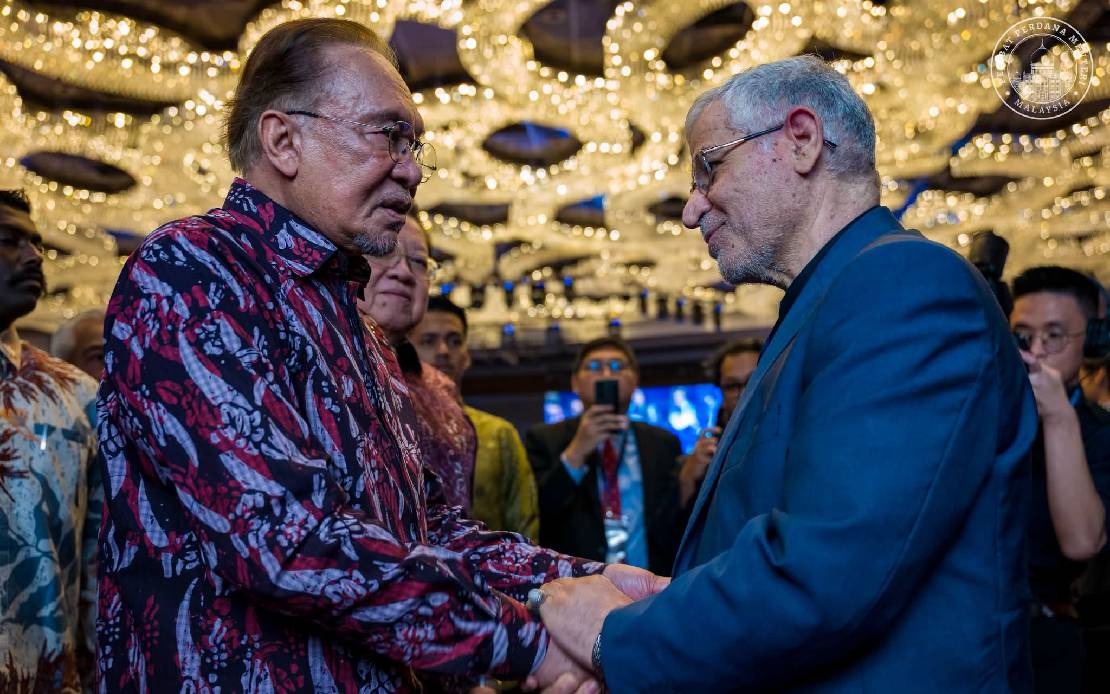
Prime Minister Datuk Seri Anwar Ibrahim has formally expressed his regret to the Iranian Government for his absence from the state funeral and farewell ceremonies honouring the country's late Supreme Leader, Ayatollah Ali Khamenei. The apology was communicated during a bilateral meeting with Iranian Ambassador to Malaysia Valiollah Mohammadi on the sidelines of the 39th Asia-Pacific Roundtable conference in Kuala Lumpur on July 2, with Anwar subsequently announcing the matter through a Facebook statement.
The Prime Minister's inability to attend the multi-day funeral rites, scheduled to commence on July 4 and conclude with Khamenei's burial at the Imam Reza Shrine in Mashhad on July 9, stems from unavoidable official engagements that could not be rescheduled. Rather than leave the position unrepresented, Anwar ensured that Malaysia's diplomatic presence at the ceremonies would be maintained through a senior government delegation, designating Agriculture and Food Security Minister Mohamad Sabu to lead Malaysia's representation at the proceedings.
Khamenei, who was 86 years old at the time of his death, passed away on February 28 at his residence in central Tehran. Iranian officials attributed the Supreme Leader's death to injuries sustained during a joint military strike attributed to the United States and Israel, an incident that had drawn significant international attention and regional concern. The circumstances surrounding his death underscored the heightened tensions in the Middle East and the broader geopolitical complexities that shape international relations in that strategic region.
The funeral arrangements represent one of the most significant state ceremonies in Iran's recent history. The commemorative events will unfold across the country's major centres over six days, beginning with extensive funeral processions through Tehran and Qom, the two cities most closely associated with Khamenei's political and spiritual legacy. The extended timeframe and geographical scope of the ceremonies underscore the importance placed on honouring the late Supreme Leader and allowing the Iranian public to pay their respects at multiple locations.
Anwar's gesture of sending a senior ministerial representative, rather than declining participation altogether, reflects Malaysia's commitment to maintaining robust bilateral relations with Iran despite the Prime Minister's scheduling constraints. This diplomatic approach is consistent with Malaysia's policy of engaging meaningfully with nations across the Islamic world and demonstrating solidarity during significant national occasions. The decision to depute Mohamad Sabu, a respected figure within Malaysia's political establishment, signals the seriousness with which the Malaysian Government views its relationship with Iran.
The state funeral of a Supreme Leader holds profound significance within Iran's political structure and Islamic theological framework. As the highest religious and political authority in the Islamic Republic, Khamenei's death triggered an extended period of national mourning and necessitated elaborate ceremonial observances. The multi-city funeral processions reflect the considerable influence Khamenei wielded and the widespread recognition of his role in shaping Iran's direction since he assumed the position in 1989.
From a regional perspective, the passing of such a consequential figure in Middle Eastern politics carries implications that extend well beyond Iran's borders. His death occurred amid existing tensions between Iran and various Western powers, as well as complex relationships within the broader Muslim-majority world. Malaysia's participation in the funeral proceedings, through its official delegation, demonstrates the country's recognition of Iran's importance as a major regional player and its respect for the Islamic world's internal affairs and commemorative practices.
The timing of Anwar's apology, delivered during the Asia-Pacific Roundtable—a significant regional forum addressing geopolitical and economic issues—highlights the intersection of Malaysia's domestic political calendar with international engagement obligations. Such scheduling conflicts are common at the highest levels of government, where prime ministers must balance multiple competing demands for their presence and attention. Anwar's transparent communication about these constraints and his proactive arrangement of alternative representation demonstrates diplomatic maturity and respect for the Iranian Government.
The Imam Reza Shrine in Mashhad, where Khamenei will be laid to rest, is one of Islam's most sacred sites and has historically served as the burial place for significant religious and political figures in Persian history. The selection of this location for Khamenei's final resting place underscores his position within Iran's religious hierarchy and the reverence accorded to him by state authorities and many Iranians. The week-long funeral process leading to this burial will serve as a period of national reflection and institutional continuity as Iran navigates the succession process.
For Malaysian observers and policymakers, Khamenei's death and the subsequent state ceremonies present an opportunity to reassess Malaysia's diplomatic relationship with Iran and the broader strategic partnership between the two nations. While Malaysia maintains diverse international relationships across different ideological and geopolitical alignments, its engagement with Iran reflects recognition of Iran's role as a significant Islamic nation and an important player in regional security dynamics. The respectful manner in which Anwar has handled his absence from the funeral ceremonies, coupled with the high-level representation sent in his place, reinforces Malaysia's commitment to this important relationship.
Moving forward, the succession process in Iran and the formation of its new leadership will likely shape the trajectory of Iran-Malaysia relations for the coming years. Malaysia's measured diplomatic response to Khamenei's death—balancing acknowledgment of scheduling constraints with substantive representation—positions the country well for continued constructive engagement with whoever assumes the mantle of Supreme Leader. Such gestures of respect and solidarity, particularly during moments of national transition and mourning, contribute to the foundation of stable bilateral relationships.

