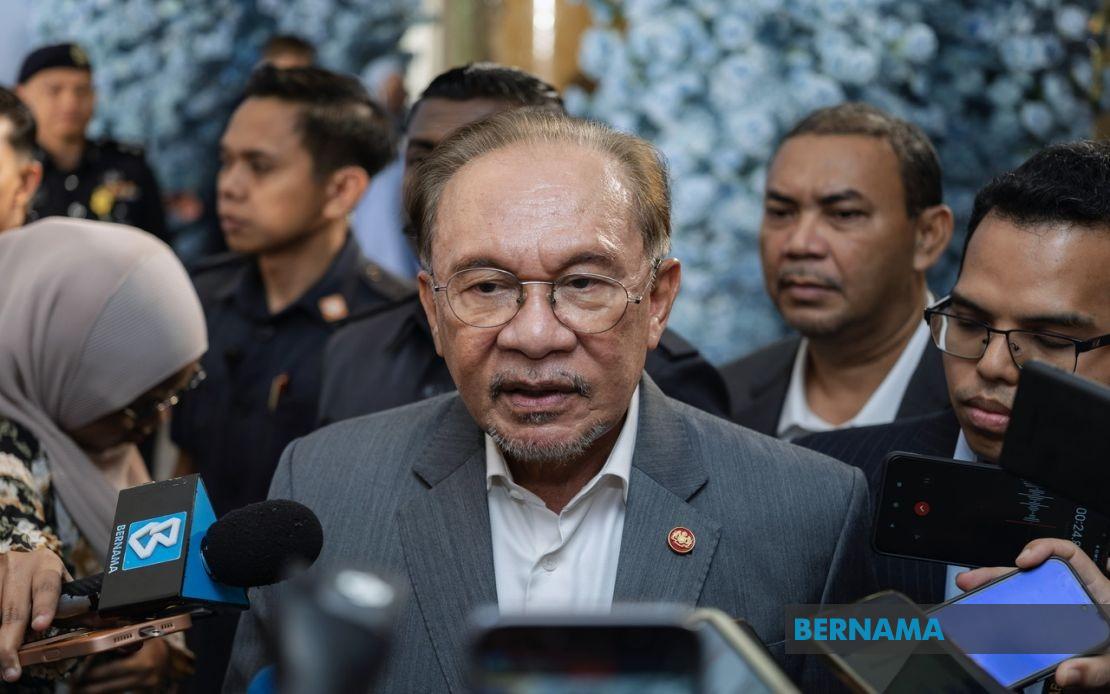
Prime Minister Datuk Seri Anwar Ibrahim remains without a formal briefing regarding the internal circumstances that prompted four Melaka DAP state assemblymen to abruptly step back from their positions within the state government, according to statements made here today. The development underscores the unfolding tensions within the coalition's Melaka administration and raises questions about communication channels between state and federal leadership during periods of political instability.
Anwar, who carries the dual responsibility of leading the federal government and serving as chairman of the Pakatan Harapan coalition, acknowledged that while he has not yet received comprehensive briefings on the matter, the coalition's senior decision-makers intend to address the situation in due course. His measured response suggests an attempt to allow space for internal processes to unfold before intervening at the highest levels, though the lack of immediate engagement may also signal the complexity of the political landscape in Melaka.
The four assemblymen—Allex Seah Shoo Chin from Kesidang, Low Chee Leong from Kota Laksamana, Leng Chau Yen from Banda Hilir, and Kerk Chee Yee from Ayer Keroh—announced their departure from the state government just hours after the Melaka State Legislative Assembly voted to amend the state constitution. The amendments would permit the appointment of additional assemblymen without requiring them to contest elections, a mechanism that fundamentally alters the composition and representational character of the chamber.
The timing of their withdrawal is particularly significant, as it appears to function as a protest against the constitutional amendments themselves. By stepping away, these representatives signalled their opposition to a governance framework they view as potentially undermining democratic principles or disrupting the balance of power within the state assembly. Their coordinated action suggests deliberate coordination rather than individual decisions, hinting at deeper factional disputes within Melaka's DAP branch.
This episode illuminates the persistent vulnerabilities in coalition governance that have plagued Pakatan Harapan since its formation. The coalition operates across multiple political parties with distinct organisational cultures, regional power bases, and strategic interests. When disputes arise at the state level, they rarely remain contained to that arena; instead, they reverberate through the entire coalition structure and complicate decision-making at the federal level. The apparent disconnect between Anwar and developments unfolding in Melaka suggests that state-level autonomy may be creating information gaps within the coalition's leadership hierarchy.
Melaka holds particular symbolic weight within Malaysian politics as a bellwether state. Its demographic composition, economic significance, and historical role in national governance mean that political developments there frequently foreshadow broader patterns. The instability demonstrated by the sudden withdrawal of four assemblymen raises concerns about the sustainability of coalition governments in states where power bases are fragmented or where mutual trust between coalition partners appears strained.
Interestingly, Anwar himself had publicly appealed to Melaka DAP just the previous day to reconsider their withdrawal, urging the party to postpone their decision so that attention could refocus on development initiatives and public welfare. This appeal appears to have carried limited weight, suggesting that the concerns driving the assemblymen's departure ran sufficiently deep to override calls for unity from the coalition's national leadership. The fact that his intervention proved unsuccessful raises questions about the extent of his influence over state-level party structures and whether the traditional hierarchical authority of the prime minister remains effective in resolving intra-coalition disputes.
The constitutional amendments that triggered this crisis deserve closer examination. Allowing appointed rather than elected assemblymen represents a departure from democratic norms and could concentrate power within particular factions. For DAP members committed to democratic accountability, such mechanisms may represent precisely the kind of governance shortcuts that the coalition pledged to eliminate when it campaigned against the previous administration. The withdrawing assemblymen's action thus reflects potential ideological tensions between party principles and pragmatic coalition politics.
The episode also illuminates the precarious position in which appointed officials often find themselves. These four DAP representatives, all holding seats won through the electoral process, were forced to choose between remaining within a government whose constitutional framework was being altered without their consent or withdrawing in protest. Their decision to exit suggests they viewed continued participation as complicity with an unacceptable governance development, even at the cost of losing their positions and influence.
As Anwar and the broader Pakatan Harapan leadership navigate this situation, they confront a fundamental challenge: how to maintain coalition cohesion while respecting the autonomy of state-level party branches and responding to legitimate concerns about democratic governance. The delayed briefing and promised follow-up suggest that the coalition is proceeding cautiously, aware that heavy-handed intervention might provoke further defections or deepen existing rifts. However, prolonged silence could equally undermine confidence in the coalition's ability to manage its internal affairs effectively.
The coming weeks will likely reveal whether this represents a temporary disruption in Melaka's political equilibrium or whether it signals more fundamental fractures within the coalition structure. The response of Pakatan Harapan's leadership, once they have absorbed the full scope of the situation, will provide important indicators about the coalition's capacity to weather internal disputes without sacrificing either democratic principles or political stability. For Malaysian voters concerned about governance quality at both state and federal levels, this situation demands careful attention.

