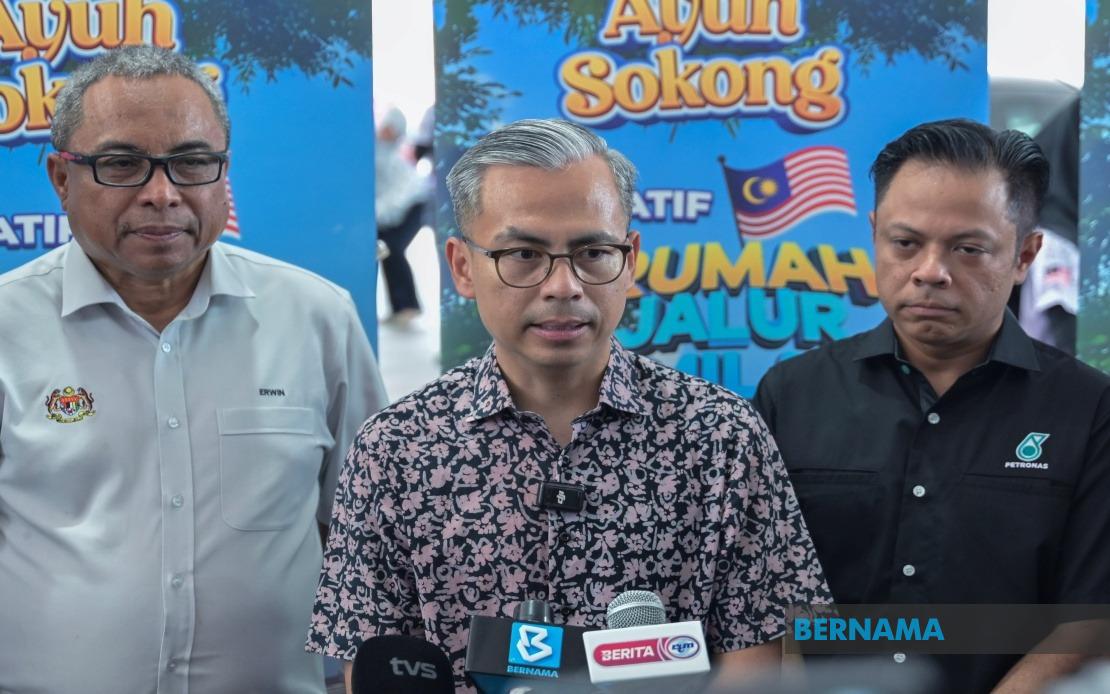
Prime Minister Datuk Seri Anwar Ibrahim has given a firm commitment to advancing the redelineation of Sarawak's electoral boundaries, signalling that the expansion of the State Legislative Assembly represents a priority for his administration. In directing the Election Commission to produce a fresh report on the initiative, Anwar has placed the onus on the electoral body to accelerate preparations for what would be a significant reshaping of Sarawak's political representation. The announcement came via MADANI Government spokesman Datuk Seri Fahmi Fadzil following discussions at a recent Cabinet meeting, where the matter was tabled as part of broader governance deliberations.
Fahmi emphasised that the Prime Minister's position is unambiguous: implementation will proceed. However, he acknowledged that no firm timeline has yet been communicated to Cabinet members, explaining that the government is currently awaiting specific documentation and technical analyses from the Election Commission before moving to the next phase. This sequential approach reflects the complexity of boundary redistribution exercises in Malaysia's federal system, which require careful coordination between state and federal authorities, demographic assessment, and electoral logistics.
The redelineation initiative centres on the Sarawak State Legislative Assembly (Composition of Membership) Bill 2025, which seeks to add 17 new seats to the chamber. The proposal would increase the total number of seats from the current 82 to 99, a substantial expansion that carries implications for both representation and campaign financing across the state's diverse constituencies. Sarawak, Malaysia's largest state by land area and home to a complex tapestry of ethnic communities and geographic challenges, has long experienced representation pressures as population patterns have shifted and urbanisation has concentrated voters in particular regions.
The push for Sarawak's electoral expansion gained momentum when Minister of Women, Family and Community Development Datuk Seri Nancy Shukri and Minister of Works Datuk Seri Alexander Nanta Linggi formally raised the issue during Cabinet proceedings. Their intervention signalled cross-party recognition of the need to address longstanding demographic imbalances in Sarawak's electoral system, where some constituencies have grown considerably while others remain relatively static in voter numbers. Such disparities can create operational inefficiencies and raise questions about the principle of equal representation, making redelineation a technically justified and politically expedient reform.
From a broader Malaysian perspective, Sarawak's redelineation assumes particular significance given the state's role as a crucial political player in federal coalition dynamics. Since the 2022 general election, Sarawak's parliamentary representation has been instrumental in determining the composition of coalitions in parliament. Any restructuring of state-level electoral boundaries inevitably influences the distribution of power at both state and federal levels, making this initiative a matter of strategic importance beyond Sarawak itself. The Anwar administration's willingness to prioritise this expansion suggests a recognition that consolidated federal stability requires attending to the needs and aspirations of major component states within Malaysia's federation.
Simultaneously, the government is mobilising its communications infrastructure ahead of the forthcoming Melaka state election, demonstrating its capacity to manage multiple electoral contests in parallel. Fahmi confirmed that his ministry, working in concert with the Malaysian Communications and Multimedia Commission (MCMC), is ensuring that internet connectivity requirements are met across all polling centres in Melaka. This technical preparation, informed by lessons drawn from recent elections in Johor and Negeri Sembilan, reflects a modernisation of Malaysia's electoral administration that places digital infrastructure at the centre of operational planning. Robust internet access at polling stations facilitates real-time communication, transparency, and efficient information dissemination during election day activities.
The coordination between MCMC and the Election Commission on Melaka's polling centre infrastructure represents a pragmatic integration of communications policy with electoral mechanics. By addressing connectivity requirements preemptively, the government seeks to prevent bottlenecks that could compromise vote-counting efficiency or the transmission of results. This approach also supports media operations, as news organisations require reliable connectivity to report on proceedings as they unfold. The identification and preparation of media rooms at polling centres further underscores the MADANI administration's emphasis on transparency and stakeholder engagement during electoral exercises.
Fahmi's role as both Communications Minister and Cabinet spokesperson positions him as a key coordinator of these parallel initiatives. His responsibility for ensuring that Melaka's electoral logistics meet contemporary standards while maintaining momentum on the Sarawak redelineation dossier illustrates the interconnected nature of modern electoral administration in Malaysia. The government's ability to juggle immediate electoral demands with longer-term structural reforms speaks to the operational sophistication now expected of the federal administration, particularly in an era when electoral contests occur with increasing frequency across Malaysia's states and federal territories.
The Election Commission, as the statutory authority responsible for all aspects of boundary delineation and electoral management, occupies a pivotal position in both initiatives. Its responsibility extends beyond merely providing the updated report on Sarawak to encompassing the technical and procedural groundwork necessary for boundary changes to take effect. The commission must assess demographic trends, evaluate existing disparities in constituency sizes, and model potential redelineation scenarios that balance representation principles with geographic and administrative feasibility. The scope of work involved explains why Anwar has sought a comprehensive fresh report rather than relying on earlier assessments.
For Sarawak's political stakeholders, the redelineation carries both opportunities and challenges. Additional seats will create new opportunities for candidates seeking election to the state assembly, potentially reshaping power distributions among existing parties and opening avenues for new political entrants. However, the process of boundary redrawing inevitably produces winners and losers in terms of electoral advantage, making the technical criteria and methodologies employed by the Election Commission matters of keen interest to all competing parties. Transparency in the commission's work and adherence to established principles of equity will be essential to maintaining electoral credibility throughout the process.
The broader context of Malaysian electoral reform extends beyond Sarawak alone. States and territories across Malaysia have experienced population shifts that have rendered existing electoral boundaries increasingly misaligned with contemporary demographic realities. The Anwar administration's willingness to tackle Sarawak's redelineation potentially signals openness to similar exercises elsewhere, though each state presents unique geographic, demographic, and political circumstances requiring careful analysis. The Sarawak initiative may thus serve as a pilot for more comprehensive national redistribution efforts in subsequent years.
As implementation timelines remain to be determined, the focus now falls on the Election Commission to produce the updated report and detailed analysis required to move the process forward. The government has signalled its commitment; the electoral machinery must now respond with the technical work necessary to transform policy intention into administrative reality. Only once the commission's findings have been reviewed and deliberated by Cabinet will clearer implementation windows emerge.

