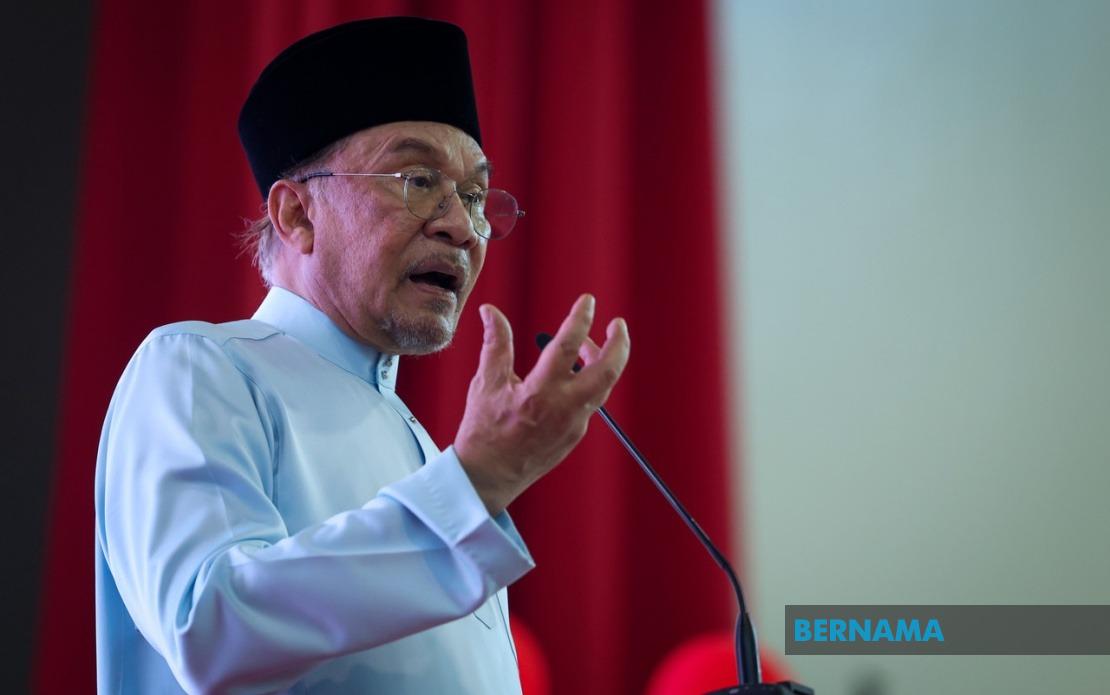
Prime Minister Datuk Seri Anwar Ibrahim has intervened decisively in a major asset disposal decision at the Federal Land Development Authority (Felda), refusing to approve the sale of a hotel owned by the statutory body after uncovering what he characterised as a deeply troubling financial loss. Speaking at a national unity event with the Malaysian Armed Forces at Terendak Camp in Melaka on August 7, Anwar disclosed that Felda management approached him two months earlier seeking his signature on the transaction, but he immediately halted the process upon reviewing the figures.
The proposed sale would have transferred the hotel for 100 million British pounds, substantially below the 160 million British pounds that the previous management had paid to acquire the property. This shortfall of 60 million pounds represents not merely a poor commercial outcome but, in Anwar's assessment, a failure of fiduciary responsibility by those entrusted with managing resources that ultimately belong to the Malaysian public. His refusal to rubber-stamp the transaction underscores a broader commitment to scrutinise asset management decisions at state-linked entities, particularly those where the financial logic appears fundamentally flawed.
Anwar, who holds the dual portfolio of Prime Minister and Finance Minister, has directed Felda's management to compile a comprehensive investigation into how the situation developed. This demand for accountability reflects his determination to understand not only what occurred but who authorised the initial acquisition at such a premium price and subsequently approved a disposal at such a severe loss. The inquiry will likely examine the decision-making processes, market assessments at the time of purchase, and the reasoning behind the subsequent disposal proposal, establishing whether poor judgment, mismanagement, or other factors precipitated the financial predicament.
The Prime Minister's objection carries particular weight given Felda's historical significance as an institution established to develop agricultural land and improve the livelihoods of settler communities. Felda settlers across the country continue to grapple with genuine economic hardship and inadequate basic infrastructure. During his visits to settler communities, Anwar heard directly of their struggles: requests for air conditioning in homes, repairs needed at local schools, and persistent concerns about insufficient household incomes. These testimonies starkly contrast with the casual manner in which institutional assets appear to have been mishandled at the administrative level.
The timing of this disclosure is strategically significant for Anwar's administration. Since assuming office, his government has attempted to project an image of fiscal discipline and institutional reform, positioning itself as corrective after years of previous leadership that observers often characterised as rife with mismanagement and financial impropriety. The Felda hotel case serves as a concrete example allowing the Prime Minister to demonstrate that watchfulness extends to statutory bodies and their senior management, not merely to political opponents or private sector actors who might be perceived as ideological adversaries.
Felda's trajectory mirrors that of several Malaysian statutory authorities that, despite their foundational importance and initial success, have encountered difficulties navigating contemporary economic complexities. Once a beacon of development policy and rural prosperity, the organisation now faces operational challenges requiring renewed strategic direction. The hotel investment decision—apparently made during the previous administration—exemplifies how institutional governance can deteriorate when oversight mechanisms weaken or become compromised. Without careful stewardship, even well-intentioned organisations risk becoming vehicles for value destruction rather than value creation.
The financial loss implicit in the proposed sale carries implications extending beyond Felda itself. Resources dissipated through poor asset management represent opportunity costs for the broader Malaysian economy. Capital squandered on unsuccessful ventures or disposed at distressed valuations cannot be redirected toward productive investments, infrastructure improvements, or programmes benefiting the constituencies these institutions serve. For Felda specifically, every million pounds lost to mismanagement is a million pounds unavailable for settler support, agricultural modernisation, or institutional renewal.
Anwar's intervention also signals to other government agencies and statutory bodies that ministerial tolerance for financial misadventure has diminished. Directors and senior management across the public sector will likely perceive increased scrutiny of major asset transactions and disposal decisions. While this may create additional administrative burdens, it potentially establishes necessary guardrails against decisions that, however they may be rationalised internally, fail basic tests of financial prudence. The requirement to justify major transactions to Finance Ministry oversight could prevent similar episodes at other institutions.
The public declaration of this matter demonstrates Anwar's willingness to criticise institutional failings openly rather than contain them within bureaucratic channels. This transparency serves multiple functions: it reassures the public that the government takes stewardship seriously, it signals to Felda management that accountability expectations have risen, and it establishes a narrative frame positioning the current administration as reform-minded. However, it also raises expectations that the promised investigation will yield substantive findings and, where appropriate, corrective actions or personnel decisions.
Looking forward, the Felda situation requires resolution addressing both immediate financial concerns and systemic governance improvements. The investigation must determine whether the hotel acquisition represented sound strategy inadequately executed, a fundamentally misconceived investment, or proper strategy compromised by subsequent mismanagement. Simultaneously, Felda's leadership structure and decision-making processes warrant examination to prevent recurrence of similar episodes. For Malaysian observers and investors, the government's handling of this matter will signal whether institutional reform rhetoric translates into sustained action.

