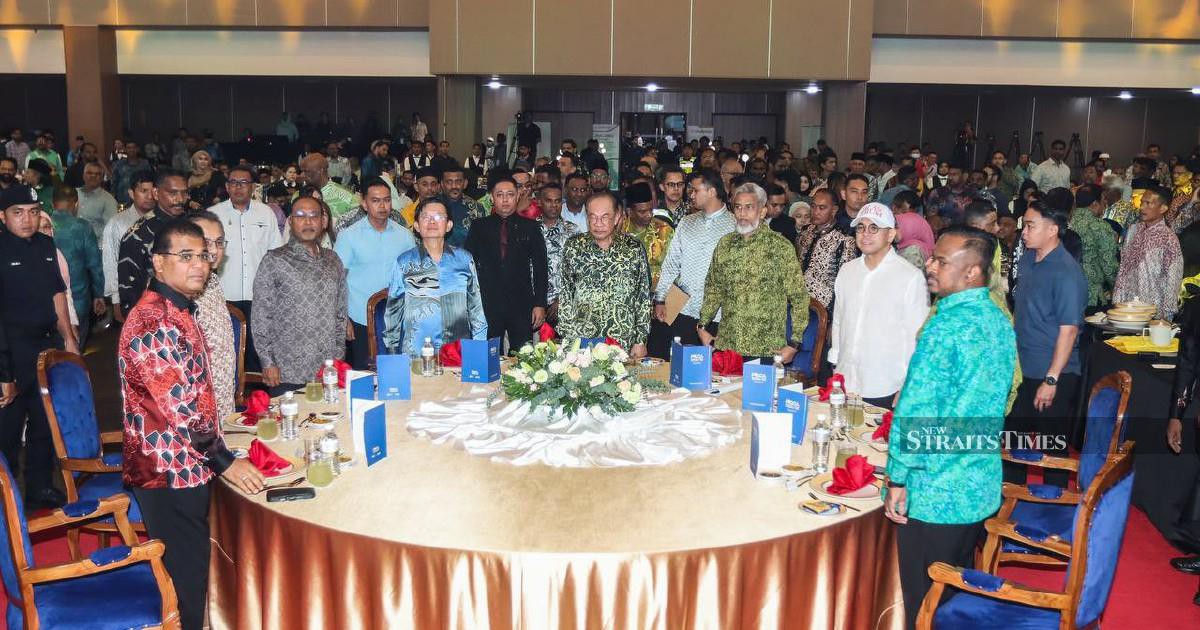
Prime Minister Datuk Seri Anwar Ibrahim has challenged Malaysia's Indian Muslim community to take on a pivotal role in driving constructive social change, advocating that collective action rooted in compassion and solidarity can reshape society for the better. Speaking in Butterworth, Anwar emphasised that communal strength emerges not from isolated efforts but from coordinated commitment to shared values and mutual respect.
The Prime Minister's appeal arrives amid growing recognition within government circles that minority communities possess considerable potential to influence national development when mobilised around common purposes. By directing his message specifically toward Indian Muslims, Anwar acknowledged the distinct position this demographic occupies within Malaysia's multicultural tapestry, where they represent a meaningful but often overlooked segment of the broader Muslim population and the Indian diaspora simultaneously.
Anwar's framing of unity as foundational to meaningful progress reflects a deliberate strategy to emphasise collective identity over fragmented individual interests. In the Malaysian context, where communal cohesion frequently determines policy outcomes and social stability, the Prime Minister's insistence on solidarity carries implications beyond symbolic rhetoric. Indian Muslims, numbering approximately 100,000 to 150,000 people nationwide, have historically navigated dual identities that sometimes create complex social positioning—belonging fully neither to the larger Muslim majority nor to the broader Tamil, Malayalam, and Telugu-speaking Indian community.
The compassion dimension of Anwar's message introduces a values-based approach to community activism that transcends purely material or political objectives. By emphasising empathy and understanding, the Prime Minister appears to be encouraging Indian Muslims to extend their advocacy beyond parochial community interests toward broader societal welfare. This framing potentially positions the community as bridge-builders capable of mediating between Malaysia's various demographic groups and fostering cross-communal understanding.
Constructive engagement, the third pillar of Anwar's appeal, suggests a preference for working within established institutional frameworks rather than pursuing confrontational or disruptive strategies. For minority communities in Southeast Asia, this emphasis on institutionalised participation carries significant practical weight, as it provides a pathway for legitimate political influence without triggering defensive responses from majority populations or state authorities. The framework implicitly rejects both withdrawal and radicalism in favour of measured, sustained advocacy.
The Butterworth address signals potential government recognition that inclusive policymaking produces more durable development outcomes than top-down mandates. By inviting Indian Muslims to become active architects of change rather than passive recipients of government initiatives, Anwar's rhetoric suggests a conception of governance that values grassroots input and community-led solutions. This approach aligns with contemporary development thinking across Southeast Asia, where governments increasingly recognise that communities themselves often possess the most sophisticated understanding of their own challenges.
For Malaysian policymakers, engagement with minority Muslim communities serves multiple strategic purposes. It strengthens the social contract by demonstrating that even smaller demographic groups have meaningful voice within national decision-making structures. Simultaneously, it leverages the credibility and institutional knowledge these communities possess within their neighbourhoods and networks. When Indian Muslim leaders champion government initiatives, their endorsement carries authentic weight unavailable through formal channels alone.
The regional context renders Anwar's outreach particularly significant. Across South and Southeast Asia, tensions between Muslim majority nations and religious minorities have periodically erupted into communal violence and forced displacement. Malaysia's relative success in maintaining intercommunal peace, despite demographic anxieties and periodic provocations, depends substantially on inclusive governance that prevents marginalised groups from becoming recruitment pools for extremist narratives. By actively engaging Indian Muslims in constructive national dialogue, the government reinforces inclusive citizenship norms.
Indian Muslims in Malaysia face distinctive challenges requiring targeted policy attention. Economic marginalisation remains endemic, with income levels and educational attainment typically lagging behind both majority Muslim and broader Indian community averages. Health outcomes, housing quality, and employment opportunities remain unevenly distributed. Anwar's call for community-driven change implicitly recognises that government resources alone cannot address these structural disadvantages—meaningful transformation requires community mobilisation, mutual support systems, and renewed investment in social infrastructure.
The Prime Minister's emphasis on unity within the Indian Muslim community itself deserves analytical attention. This demographic encompasses diverse linguistic backgrounds, regional origins, and socioeconomic circumstances. Fragmentation along these lines has historically diminished collective bargaining power. By urging unified action, Anwar advocates overcoming these internal divisions as prerequisite for external influence. This message carries particular resonance given demographic trends showing younger-generation Indian Muslims increasingly identifying primarily as Malaysian Muslims rather than as ethnic Indians, potentially reshaping community boundaries and institutional expressions.
Crusial to understanding Anwar's message is recognising compassion not merely as emotional sentiment but as practical orientation toward governance. Compassionate policymaking requires acknowledging suffering, understanding root causes, and crafting responses that address genuine needs rather than symptoms alone. When extended across communal lines, compassion becomes bridge-building mechanism capable of transcending historical resentments and mutual suspicions that sometimes characterise intergroup relations in multiethnic societies.
Moving forward, the extent to which Anwar's rhetorical invitation translates into substantive institutional change remains uncertain. Genuine inclusion requires not merely inviting minority participation but ensuring that community input meaningfully influences policy outcomes. For Indian Muslims in particular, translating unity and compassion into material improvements in living standards, educational access, and economic opportunity will determine whether this appeal resonates as authentic engagement or symbolic gesture.

