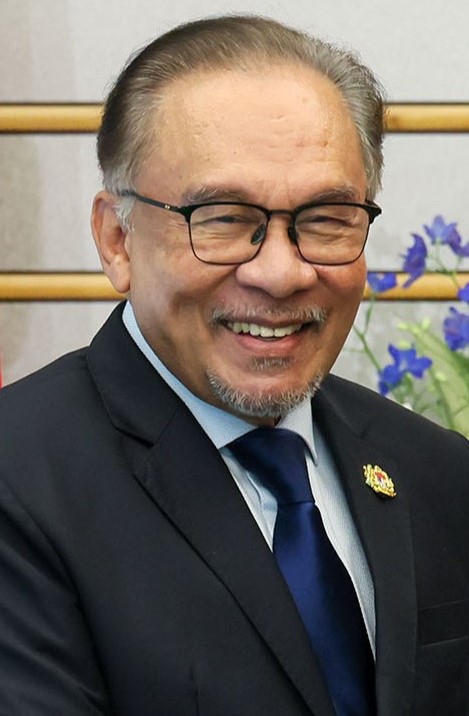
Prime Minister Datuk Seri Anwar Ibrahim has appealed to Malaysians to embrace the Hijrah spirit as a unifying force for national progress, emphasising how the historical Islamic concept extends beyond religious significance to encompass broader societal values centred on integrity, economic wellbeing and safety.
The invocation of Hijrah as a governing principle reflects an effort by Anwar's administration to ground policy direction in values that resonate across Malaysia's diverse population. Hijrah, traditionally understood as Prophet Muhammad's migration from Mecca to Medina in 622 CE, carries profound symbolic weight in Islamic thought as a transformative journey toward establishing a just society. By repositioning this narrative within a contemporary Malaysian context, the Prime Minister appears intent on casting government objectives through a lens that connects spiritual aspirations with practical governance outcomes.
The emphasis on truth represents a commitment to institutional transparency and accountability. For Malaysian readers, this carries particular relevance given ongoing discussions about governance standards, public trust in administration, and the mechanisms through which citizens hold their elected representatives responsible. The concept of truth-seeking as a governmental principle suggests alignment with anti-corruption frameworks and institutional reforms that have dominated policy discourse in recent years. This framing potentially addresses public concerns about administrative integrity whilst establishing a moral foundation for decision-making processes.
Prosperity, the second pillar highlighted by Anwar, directly addresses Malaysia's economic trajectory and the distribution of growth across different societal segments. In a regional context where competitors like Thailand, Vietnam and Indonesia aggressively pursue manufacturing and digital transformation, Malaysia's ability to generate sustainable, inclusive economic opportunity becomes strategically vital. The government's emphasis on prosperity suggests a development model that prioritises job creation, skill enhancement and enterprise development whilst managing wealth disparities that continue to shape public perception of fairness and opportunity.
Security, the third cornerstone of Anwar's vision, encompasses both physical safety and the psychological stability necessary for communities to thrive. Malaysia's experience with religious tensions, crime fluctuations and border security challenges makes this dimension particularly consequential. By integrating security into a philosophical framework rather than treating it as a purely technical law-and-order challenge, the government positions safety as integral to the social contract rather than merely a security apparatus function.
The timing of Anwar's appeal carries political significance within Malaysia's complex ethnic and religious landscape. As Prime Minister of a nation where Islam holds constitutional primacy yet where nearly 40 percent of the population identifies with other faiths, invoking Islamic principles whilst framing them as universally beneficial requires careful rhetorical navigation. This approach potentially allows the administration to draw from Islamic moral philosophy whilst maintaining inclusive governance narratives essential for multiethnic cohesion.
For Southeast Asian observers, Anwar's emphasis on these values occurs against a backdrop of regional competition for moral authority and soft power. Other regional governments similarly invoke cultural and religious principles to legitimise governance models. Malaysia's articulation of Hijrah as encompassing truth, prosperity and security positions the nation within an emerging discourse about values-based governance that distinguishes itself from purely technocratic administration.
The practical implications of embracing Hijrah spirit extend to institutional reform, resource allocation and policy prioritisation. Government agencies tasked with implementation must translate philosophical commitments into measurable outcomes regarding transparency metrics, poverty reduction targets and public safety statistics. This translation process determines whether Anwar's appeal functions as inspirational rhetoric or substantive governance reorientation.
Civil society organisations, business communities and religious institutions all become stakeholders in operationalising the Hijrah spirit. Educational institutions must incorporate these values into curricula, workplaces must embed them in corporate cultures, and community organisations must reflect these principles in their engagement with constituents. The success of such widespread adoption depends substantially on coordinated messaging and consistent demonstration of these values across government levels.
For Malaysian businesses, particularly those engaged in regional commerce, positioning the nation around these principles carries branding implications. A Malaysia demonstrably committed to truthful dealing, equitable prosperity and stable security becomes attractive to international investors and trading partners seeking reliable, trustworthy partners. This soft power dimension transforms philosophical appeals into competitive economic advantage.
Critical observers may question whether invoking Hijrah spirit addresses structural challenges requiring institutional reforms, resource reallocation and difficult political choices. The gap between rhetorical commitment and policy implementation determines credibility. Public perception will ultimately rest on whether government actions demonstrably advance truth through transparency mechanisms, prosperity through inclusive development outcomes, and security through effective and fair law enforcement.
The Hijrah spirit as articulated by Anwar represents an attempt to ground Malaysia's development trajectory in principled values whilst bridging the nation's religious and ethnic diversities. Whether this framework generates tangible improvements in governance quality, economic outcomes and citizen security remains to be demonstrated through sustained policy implementation and measurable results across these interconnected domains.