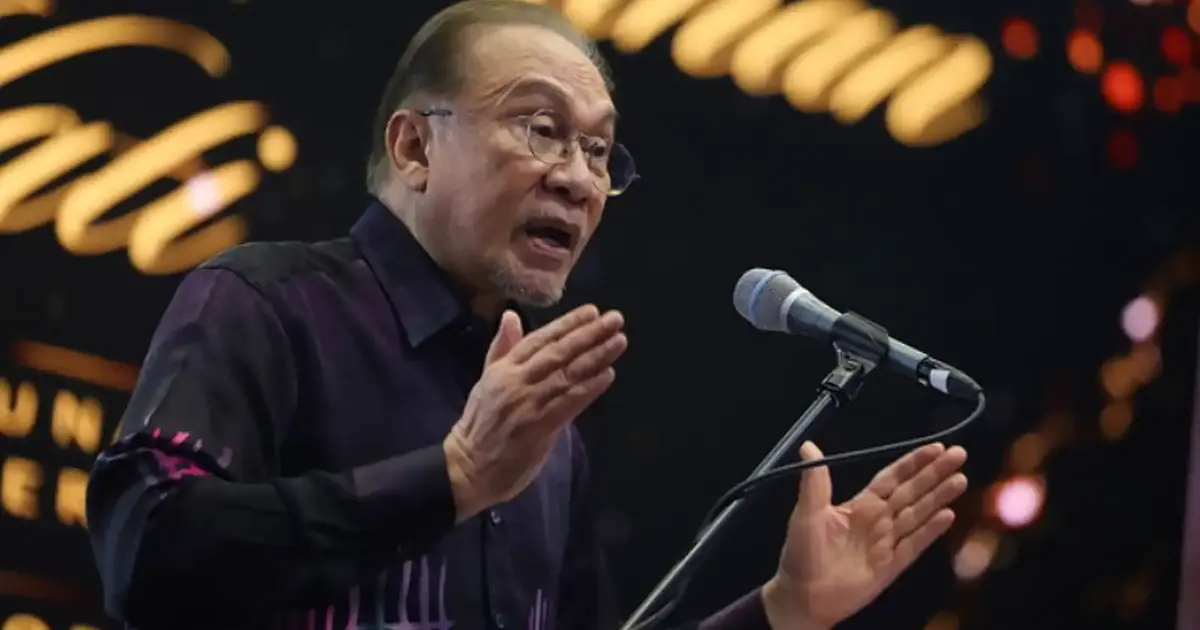
Prime Minister Anwar Ibrahim has made a forceful appeal to the Malaysian public to move beyond inflammatory rhetoric being promoted by specific political figures, positioning the nation's ethnic and cultural pluralism as a foundation for long-term prosperity and stability. His intervention underscores a broader political struggle over the country's identity and the direction of its social cohesion during a period marked by intensifying ideological divisions across the leadership spectrum.
Anwar's remarks came as Malaysia navigates a complex political environment where competing visions for national unity have become increasingly polarized. The Prime Minister's message appears directed at countering narratives that pit religious, ethnic, or cultural groups against one another—a tactic that has periodically surfaced in Malaysian politics. By framing ethnic diversity explicitly as a strength rather than a liability, Anwar is attempting to establish a different baseline for public discourse and policy orientation.
The characterization of Malaysia's multicultural society as an advantage carries significant weight in Southeast Asian context, where several neighboring nations have experienced ethnic conflict or struggled with identity questions. Malaysia's ability to maintain relative stability amid its Malay-Muslim majority, substantial Chinese and Indian populations, and sizeable communities of indigenous peoples represents an unusual achievement in the region. This accomplishment has not occurred by accident but through constitutional provisions, power-sharing arrangements, and deliberate political choices by successive generations of leaders.
Anwar's invocation of this historical success appears designed to remind Malaysians of what unites rather than divides them. The Prime Minister has consistently positioned himself as advocating for institutional reform and meritocracy, presenting an alternative vision to more ethno-nationalist or religiously-exclusive approaches that occasionally emerge within Malaysian political discourse. His call to reject hatred comes at a moment when social media amplification of divisive messages has intensified political tensions below the level of formal government pronouncements.
The reference to "certain leaders" suggests targeted criticism of political opponents or rivals who may be leveraging communal sensitivities for electoral advantage. Malaysian politics has long featured competitive appeals to different segments of the electorate, but the Prime Minister appears concerned that this competition has crossed into territory that threatens basic social cohesion. His intervention reflects a judgment that the political system requires recalibration toward more inclusive messaging.
For Malaysian readers and observers across Southeast Asia, Anwar's emphasis on diversity as strength carries implications for how future governments might approach critical issues including economic policy, resource distribution, religious affairs, and cultural governance. A leadership committed to pluralism typically approaches these domains differently than alternatives that emphasize narrow group interests or hierarchies based on ethnicity or faith.
The statement also resonates within Malaysia's civil society and among international observers who view political stability and ethnic harmony as prerequisites for economic development and social progress. Foreign investors, in particular, have historically favored Malaysia partly because of its track record of managing diversity without major conflict. Divisive domestic politics risks undermining this competitive advantage in a region where multiple countries are competing for investment and talent.
Anwar's position gains additional significance given his history as an activist for democratic reform and human rights. His calls for transcending hate-based politics align with long-standing advocacy for institutional accountability and rule of law, presented as universal values rather than instruments of particular communities. This framing contrasts with approaches that sometimes weaponize democratic mechanisms primarily to advance narrow group agendas.
The timing of such statements often matters considerably in Malaysian politics, where elections remain a potential flashpoint for elevated communal rhetoric. Whether Anwar's appeal will meaningfully shift the trajectory of political discourse likely depends on whether other leadership figures and political parties adopt similar stances, or whether they continue calibrating their messaging toward particular constituencies through divisive framings.
Looking forward, the success of Anwar's vision depends partly on whether his government can demonstrate concrete benefits from inclusive policies—whether in economic opportunity distribution, educational advancement, or public service representation. A multicultural nation functions best when citizens across different backgrounds perceive genuine stake in the existing system and see their interests reflected in governance outcomes. Rhetoric emphasizing diversity carries weight only when accompanied by policies and institutions that operationalize those values in tangible ways affecting citizens' daily lives and opportunities.

