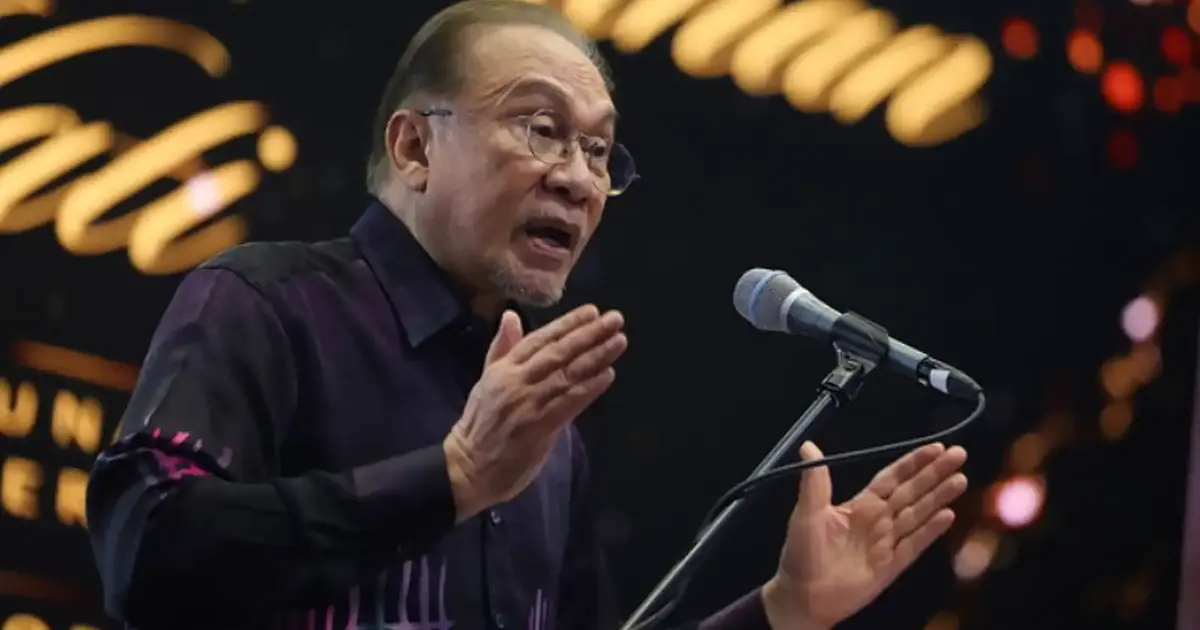
Prime Minister Anwar Ibrahim has made a forceful appeal to Malaysians to look beyond the divisive rhetoric being peddled by certain leaders, positioning the country's ethnic diversity as a defining source of national strength and prosperity. Speaking to the broader challenges facing the nation's social fabric, Anwar reinforced the government's commitment to preserving the multicultural foundations upon which Malaysia has built its stability and economic success over decades.
The prime minister's remarks arrive at a moment of heightened political polarisation across Southeast Asia, where appeals to narrow identities and sectarian interests have increasingly dominated electoral campaigns and public discourse. Malaysia, with its intricate tapestry of Malay, Chinese, Indian, and indigenous communities alongside growing immigrant populations, has historically navigated these tensions through constitutional frameworks and informal norms that prioritise interethnic accommodation. Yet recent years have witnessed a testing of these conventions, with fringe voices amplifying messages designed to isolate rather than integrate different population groups.
Anwar's intervention suggests the government recognises that permitting such narratives to proliferate unchecked poses tangible risks to the cohesion required for effective policymaking and sustained economic development. The prime minister appears to be signalling that unity is not merely a sentimental ideal but an operational necessity—a prerequisite for attracting investment, maintaining social order, and addressing pressing challenges from inflation to education reform that transcend communal boundaries.
The timing of these comments carries significance given Malaysia's trajectory of reform. Since Anwar's administration took office, considerable effort has been invested in stabilising institutions and rebuilding public confidence following years of political turbulence. A fragmented society along ethnic or religious lines would fundamentally undermine these stabilisation efforts, complicating consensus-building on taxation, spending priorities, and structural economic adjustments that the government believes necessary for Malaysia to remain competitive regionally.
Malaysia's diversity is indeed a distinctive asset within the Southeast Asian context. Unlike more homogeneous neighbours, the country's multicommunal character has fostered innovation across business, arts, and culture—strengths that become liabilities only when deliberately weaponised for political gain. The prime minister's assertion that this plurality constitutes a competitive advantage reflects recognition that global commerce and talent increasingly reward societies capable of bridging rather than fortifying differences.
The challenge facing Anwar's administration lies not in rhetoric alone but in demonstrating through policy that this commitment to inclusivity translates into material improvements in living standards across communities. Economic anxieties, particularly those affecting younger Malaysians navigating job scarcity and housing affordability, create fertile ground for politicians willing to blame outgroups for systemic failures. Counter-messaging from government must therefore be paired with demonstrable economic reform if it is to gain traction beyond urban, cosmopolitan constituencies already predisposed to pluralistic values.
Regionally, Malaysia's stance carries implications for how Southeast Asia addresses its own diversity challenges. Indonesia, Thailand, and the Philippines all grapple with tensions between central governments and regional, ethnic, or religious communities. Should Malaysia successfully model a multicommunal nation where political leadership actively resists divisive rhetoric while delivering equitable development, it strengthens the broader regional argument that diversity and prosperity are compatible rather than contradictory.
Conversely, should Malaysia permit hate peddling to expand—whether targeting specific ethnic groups, migrant workers, or religious minorities—it risks a cascade effect in which other leaders feel emboldened to adopt similar tactics. The Southeast Asian region has limited examples of functioning multicommunal democracies; those that survive do so partly because mainstream political figures treat divisiveness as delegitimising rather than electrifying.
Anwar's intervention also reflects evolving international expectations regarding minority protections and social cohesion. Malaysia faces periodic scrutiny from foreign governments and multilateral organisations regarding treatment of minorities and press freedom. A demonstrated commitment at the highest political level to stamping out hate rhetoric—and backing this with enforcement mechanisms and educational campaigns—provides a counternarrative to critics who argue Malaysia's pluralism is more theoretical than practiced.
The practical manifestation of Anwar's call will be observed in forthcoming months. Whether government follows through with measures against incitement, whether party discipline extends to controlling members who peddle divisive messaging, and whether budget allocations reflect commitment to equitable service delivery across all communities will determine whether his words possess substance. Political opponents will scrutinise these actions closely, seeking to identify contradictions between stated values and actual governance.
For ordinary Malaysians—particularly those invested in a stable, prosperous nation regardless of ethnic background—Anwar's message acknowledges a tension many feel daily: the gap between constitutional ideals of unity and the reality of political actors who gain followers through appeals to narrow interest. Whether leadership can effectively delegitimise such tactics depends partly on offering compelling alternatives that address the economic and social frustrations fuelling receptiveness to divisive narratives in the first place.

