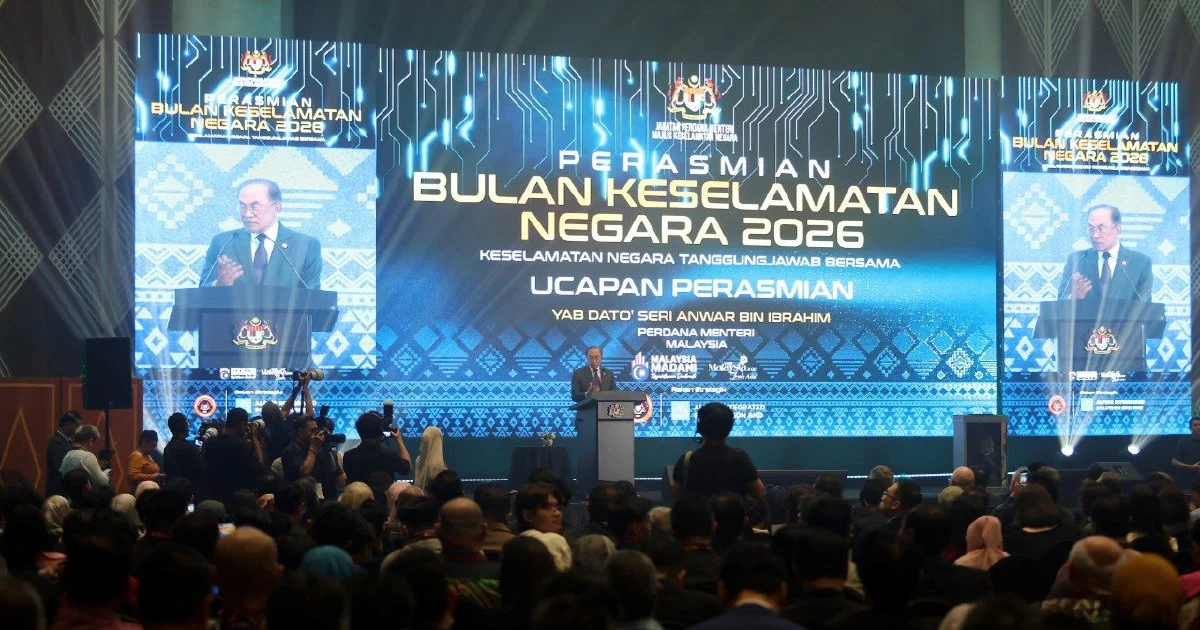
Prime Minister Datuk Seri Anwar Ibrahim has expressed grave concern about Malaysia's persistent entanglement in historical racial and regional narratives, cautioning that such divisive language threatens the nation's cohesion at a critical moment. Speaking in Putrajaya, Anwar highlighted the particular urgency of his warning as Johor approaches state elections, flagging the risk that electoral contests could become vectors for polarizing rhetoric that deepens communal fault lines rather than addressing shared developmental priorities.
The Prime Minister's intervention reflects a broader anxiety within the federal government about the trajectory of political discourse during election campaigns, particularly in high-stakes contests at the state level. Johor, as Malaysia's second-largest state by population and a significant economic hub with substantial manufacturing and logistics sectors, carries disproportionate influence in shaping national political momentum. Electoral contests there tend to attract intense scrutiny and mobilize political bases in ways that can either strengthen or fracture interethnic relations depending on the tenor of campaign messaging.
Anwar's remarks underscore a fundamental tension within contemporary Malaysian politics: while the nation's multiethnic composition demands coalition-building across racial lines, electoral incentives often reward politicians who accentuate communal grievances and ethnic identity concerns. The Prime Minister's warning signals his administration's desire to reset expectations around acceptable campaign conduct, though enforcement mechanisms remain weak and political actors at state level operate with considerable autonomy.
The reference to being "trapped" in old narratives carries particular weight given Malaysia's history. For decades, mainstream political discourse has been structured around racial categorization and communal accommodation frameworks established at independence. While these arrangements enabled nation-building consensus, Anwar's comment suggests frustration that political actors continue recycling these frameworks uncritically, without acknowledging how demographic shifts, urbanization, and economic transformation have reshaped Malaysian society and citizen priorities.
For Malaysian voters increasingly concerned with cost-of-living pressures, infrastructure quality, healthcare access, and employment opportunities, the continued prominence of racial and regional rhetoric in campaigns can feel disconnected from material concerns. Anwar's intervention implicitly frames such divisive messaging as a distraction from substantive governance questions—an argument that resonates particularly with younger urban voters and middle-income earners who prioritize competence and service delivery over communal positioning.
The timing of Anwar's warning matters significantly. Johor elections traditionally generate keen national attention because the state's political complexion has shifted substantially over recent election cycles, reflecting broader demographic and ideological realignments across Malaysia. The battle for Johor thus becomes a proxy for assessing shifting voter preferences and coalition strength at the national level. If the electoral campaign deteriorates into racial and regional posturing, it could undermine the Prime Minister's carefully constructed coalition and signal to voters that federal leadership cannot contain divisive tendencies during competitive electoral moments.
Anwar's comments also reflect evolving thinking within Pakatan Harapan about the limits of identity-based politics as a sustainable electoral coalition strategy. Unlike opposition parties that may benefit from sharpening communal divisions, Anwar's coalition depends on maintaining relatively broad interethnic support while managing tensions between different party factions and their respective vote banks. Racial polarization threatens this delicate equilibrium, particularly if it advantages components better positioned to mobilize along communal lines.
From a Southeast Asian perspective, Malaysia's internal political management carries regional implications. As the region's most diverse large economy with entrenched democratic institutions, Malaysian politics serves as a test case for whether multiethnic democracies can sustain inclusive governance frameworks or whether electoral competition inevitably drives communal fragmentation. Anwar's advocacy for moving beyond racial narratives positions Malaysia as attempting to evolve beyond historical settlement patterns—a potentially significant model if successful.
However, translating such warnings into changed behaviour requires more than rhetorical exhortation. Opposition parties have incentives to activate racial and regional appeals if they perceive them as electorally advantageous, while state-level political actors may view federal guidance as limiting their tactical options. The Prime Minister's ability to shape campaign norms depends partly on whether ruling coalition parties themselves demonstrate discipline in adhering to non-divisive messaging standards.
The Johor electoral calendar creates a testing ground for whether Anwar's vision of politics transcending race-based rhetoric can gain traction. If the campaign proceeds largely along traditional communal lines despite the Prime Minister's warning, it would suggest that structural incentives within Malaysian political competition remain stronger than federal leadership appeals for change. Conversely, evidence of campaigns emphasizing bread-and-butter issues and competence rather than ethnic positioning would validate the assertion that voter priorities have shifted sufficiently to make such approaches viable.
Moving forward, Anwar's intervention will be measured against outcomes in Johor. The state election will reveal whether warnings from the highest political authority can meaningfully constrain the rhetoric and tactics that candidates, parties, and activists deploy during competitive electoral moments. For Malaysian citizens hoping their politics might gradually evolve toward less divisive terrain, the Johor campaign will provide concrete evidence of whether such evolution remains possible within the current institutional and competitive context.

